
How to Travel Alone as a Woman for the First Time: The Short Answer
Pick an easy, well-travelled first destination, read the official FCDO or State Department advice, book the first night and airport transfer before you land, leave a daily check-in plan at home, and arrive in daylight. The rest of this guide is the nine steps that make each of those happen.
Step 1: Choose Your First Destination
Your first solo trip should be easy, not impressive. Choose a place with good public transport, plenty of hostels and hotels, and other travellers everywhere. Start small: an easy, walkable city like Lisbon or Kyoto, before anything ambitious, and short-haul enough to come home easily if it is not for you. The shortlist on this site is Portugal, Japan, Thailand, South Korea and Costa Rica, and each one has a full safety guide linked here. Save Egypt, Morocco on your own and overland South America for trip two or three, when you know how you travel alone. Check whether your passport gets you in visa-free, and whether the flight is short enough that coming home early is cheap, because a first trip that can end early is a first trip you will actually take. The decision at this step is simple: easy first, ambitious later.
Step 2: Read the Official Advice
Read the official advice for your destination before you book anything. The UK Foreign Office advice for women travelling abroad was updated on 8 September 2026, and its solo and independent travel advice on 12 June 2025. Read the safety and local-laws sections, and research how women travellers are treated in the place you are going, because local culture and laws shape the trip more than any packing list. Check healthcare and medication rules too, especially if you take prescription medicine. The country guides on this site link to the official advice for each place, so start with the guide for the country you chose in Step 1 and follow its links. If the official advice names a region to avoid, believe it, and plan around it rather than through it. The decision at this step is whether the destination still feels right after you have read the advice, not before.
Step 3: Book the Skeleton First
Book the skeleton before the fun stuff. The skeleton is three things: the first night, the airport transfer, and the insurance. Book the first night somewhere central and well-reviewed, and book the airport transfer with the hotel or a ride-hailing app before you land. Buy appropriate travel insurance even for a familiar destination, because the official advice asks for it and it matters more when you are alone. Only after the skeleton is booked should you plan the restaurants, the tours and the day trips. Screenshot the booking confirmations and save them offline, because airport wifi fails at the worst moment. And read the cancellation policy before you pay, because a first trip sometimes needs to change, and a flexible booking is worth more than a cheap one. The decision at this step is what “safe enough” looks like for your first night, and the answer is central, reviewed and booked in advance.
Step 4: Money and Documents
Sort money and documents before you pack. Take two bank cards from different accounts if you can, and keep them in different places, one in your wallet and one in your bag, so a stolen or blocked card does not end the trip. Tell your bank you are travelling, so a foreign transaction does not freeze your card on the first day. Photograph your passport, your visa, your insurance and your bookings, and keep the copies in your phone and in your email, with the originals in the hotel safe. Check your passport has six months of validity left, because many countries will not let you in with less. Enrol in STEP, the US State Department’s Smart Traveler Enrollment Program, before departure, and sign up for your own government’s travel alerts. The decision at this step is whether you could still travel if you lost your wallet, and the answer should be yes. Keep a small amount of local cash for the first day, because not every taxi takes a card, and the airport ATM queue is the longest queue you will meet. A hundred dollars in local currency, changed before you fly or at the airport, covers the first taxi and the first meal.
Step 5: Pack for One
Pack light enough to carry your own bag up stairs and onto buses, because nobody is carrying it for you. Pack a rubber door wedge, because the official advice recommends it for rooms where the lock, spyhole or chain is weak, and it weighs nothing. Pack copies of your documents and two cards kept apart, as Step 4 describes. And do not pack pepper spray if you are travelling from the UK: it is a prohibited weapon in England, Wales and Scotland, and it is banned in UK hand and hold luggage, so it will be taken from you at the airport and it could get you into trouble. The decision at this step is what you leave behind, not what you take, because a light bag is a free pair of hands. Wear the heaviest shoes on the plane, because they are the heaviest thing in the bag. And leave room in the bag for the things you will buy, because every first-timer buys something, and a bag that is full on the way out is a problem on the way home.
Step 6: Arrive Well
Plan your flights and buses so you arrive in daylight, every time. A new city in daylight is a place you can read. The same city at midnight is a place you cannot. Use a licensed taxi or a pre-arranged transfer from the airport, or a ride-hailing app like Uber, Bolt or Grab, which gives you a tracked route and a driver plate, rather than hailing a street taxi. When you check in, lock the room, use the spyhole and the chain, and check where the fire exits are. Eat something, drink water, and take a slow first evening. The decision at this step is whether your first night feels calm, and if it does not, the fix is a hotel, not a plan. If the hotel offers a free airport shuttle, take it, because it is the easiest arrival of all. And eat something before you sleep, because a hungry first night feels worse than it is, and a fed one feels like the trip has started.
Step 7: Your Daily Routine Alone
Build a daily routine that makes the trip easy. Start the morning with a plan, even a small one: one place, one meal, one thing to see. Eat alone without apology, at a counter, in a market, or at a cafe with a book. Take a walking tour on the first morning, because it is the fastest way to meet other travellers and learn the city at the same time. In the evening, come back before dark, or take a booked car, and do not walk the quiet streets alone at night. Save the local emergency number in your phone before you land: 112 across the EU, Costa Rica 911, Colombia 123. Save your accommodation address in the local language too, so you can show it to a taxi driver. After the second dinner alone, the trip gets easier after that. Keep one evening free with no plans, because the best part of a solo trip is the evening you did not plan. Sit in a square, watch the city, and let the trip happen to you for an hour.
Step 8: If Something Goes Wrong
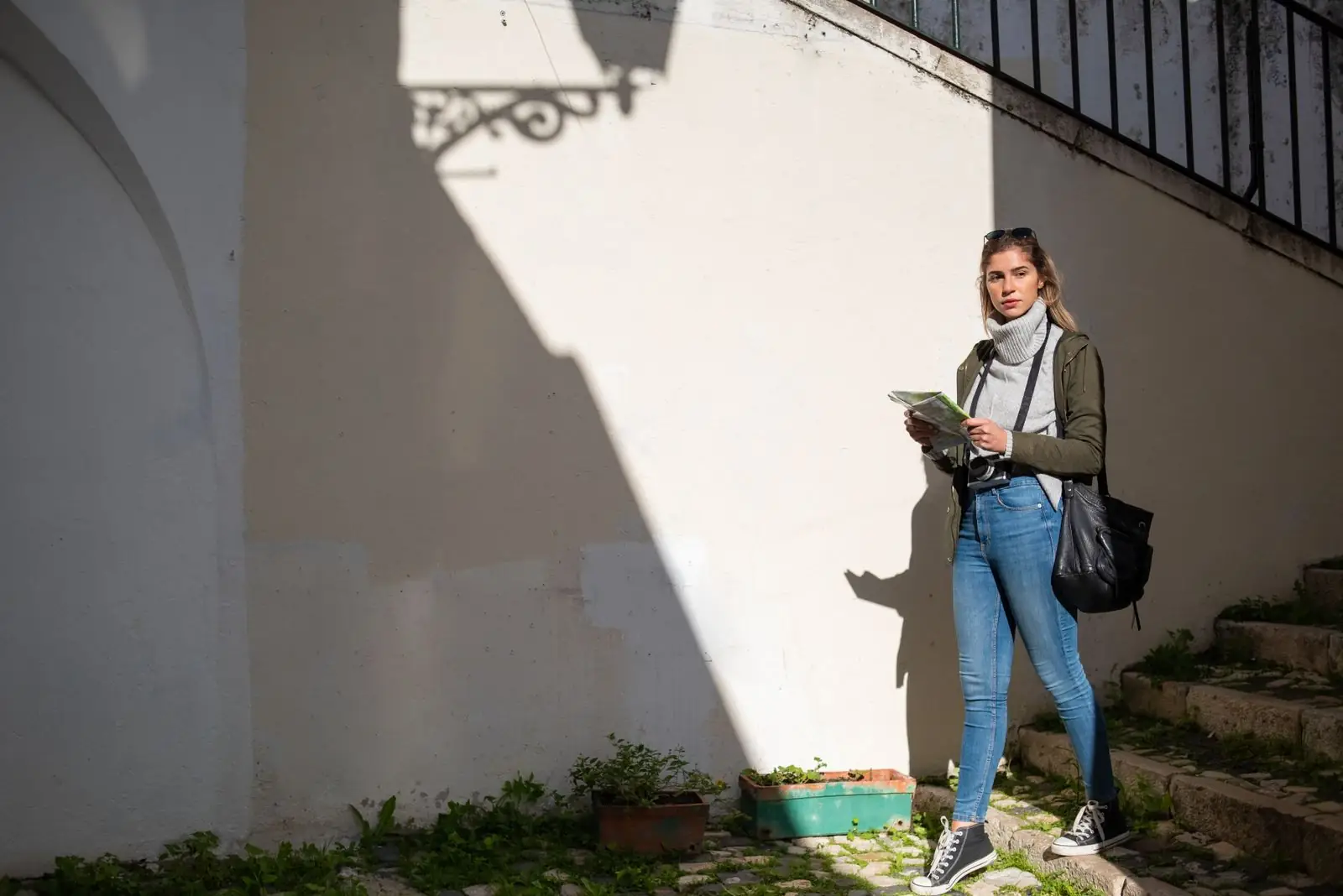
Know what to do if something goes wrong, so you do not have to decide in the moment. Go to a busy, lit place first. Then call your insurer’s 24-hour emergency line, then your consulate. If someone follows you or will not stop, step into the nearest hotel entrance or shop and say so. Hotel entrances have security, and they are safe places to step into. Trust your gut and leave any situation that feels wrong, because no politeness is owed to a stranger who makes you uncomfortable. Do not tell strangers where you are staying, do not hitchhike, and check in with your first initial and no title, as the US State Department recommends. The decision at this step is already made: leave first, explain later. If your phone is stolen, the hotel can call your insurer for you, and the consulate can help with emergency travel documents. The numbers in your phone matter, but the people around you matter more, and a hotel receptionist has helped a hundred travellers before you.
Step 9: Coming Home
Coming home is part of the trip, not the end of it. Keep the notes you made along the way, the hotel that worked, the neighbourhood that felt safe, the tour that was worth it, because they are the plan for your next trip. Write the reviews that would have helped you before you went, and say you travelled alone, because the next first-timer reads those reviews and your trip makes hers easier. Then start thinking about trip two, because the first one is the hardest and the second one is the one you actually enjoy. Keep the friendships too. The people you met on the walking tour, the hostel and the cooking class are the ones who will tell you where to go next, and the group chat that survives the trip is the best souvenir it gives you. Our first time solo female travel tips hub has the 25 tips in one place, and our best places to solo travel list shows where first-timers usually go next. The complete checklist version of this guide is live in our how to plan your first solo trip as a woman. The mistakes to avoid are in our solo female travel mistakes to avoid.
FAQs: How to Travel Alone as a Woman for the First Time
Pick an easy, well-travelled first destination, read the official FCDO or State Department advice, book the first night and airport transfer before you land, leave a daily check-in plan at home, and arrive in daylight. The nine steps in this guide take each of those in order, from choosing the destination to coming home.
Portugal, Japan, Thailand, South Korea and Costa Rica are the first-timer shortlist on this site, and each has a full safety guide linked in Step 1. Start with an easy, walkable city like Lisbon or Kyoto, and save Egypt, Morocco on your own and overland South America for trip two or three.
Yes, if you pick an easy first destination and plan the way this guide describes. Book the first night and the airport transfer before you land, use ride-hailing or licensed taxis instead of street taxis, stay central and well-reviewed, and leave a daily check-in plan at home. Our safest countries guide and the country safety guides on this site show where first-timers usually start.
Choose a place with 24-hour reception, keycard entry and an in-room locker. Female-only dorms are worth choosing for a first trip. When you check in, lock the room, use the spyhole and the chain, and pack a rubber door wedge for rooms where the lock is weak. Keep the originals of your documents in the hotel safe.
Leave. Go to a busy, lit place, step into the nearest hotel entrance or shop, and say so. Then call your insurer’s 24-hour emergency line, then your consulate. No politeness is owed to a stranger who makes you uncomfortable, and the decision is already made: leave first, explain later.
Not if you are travelling from the UK. Pepper spray is a prohibited weapon in England, Wales and Scotland, and it is banned in UK hand and hold luggage. It will be taken from you at the airport. Check the rules for your own country and destination before you pack anything for self-defence.
Take a walking tour on the first morning, and book one or two small-group activities early, a cooking class, a surf lesson, a guided hike. The shared kitchens in hostels and the group tours are where the other solo travellers are. A solo trip does not have to be a lonely one, and in the first-timer destinations it rarely is.