Is South Korea Safe for Solo Female Travellers? The Short Answer
Yes. South Korea is one of the safest countries in the world for a woman travelling alone, and Seoul is one of the safest big cities you will ever walk in at night. Violent crime is rare, the streets are lit and busy late, and the public transport runs on time. But safe does not mean simple. South Korea has two risks that are specific to it, and a guide that skips them is not honest. The first is molka, hidden-camera crime, which the country has spent years fighting with real laws and real prison time. The second is the nightlife and dating-app scene, where the low crime rate can make you drop your guard in exactly the wrong place. This guide gives you both halves: how safe the country is, and the specific playbook that keeps it that way.
What the Official Advice Says
The numbers put South Korea firmly in the safe group. The Global Peace Index 2026 ranks it 57th of 163 countries, with a score of 1.839. That is a drop from 41st in 2025, and it is worth saying plainly rather than hiding it, but 57th still sits well inside the safer half of the world. The Women, Peace and Security Index for 2025/26 ranks South Korea 37th of 181 countries, with a score of 0.815. The US State Department rates the country Level 1, Exercise Normal Precautions, in advice reissued on 11 August 2025. That is the lowest of the four levels, the same as Japan, Portugal and Iceland. The UK Foreign Office, whose advice was updated on 14 May 2026, gives no advice against travel to South Korea. None of the major advisories treat the country as a risk destination. They treat it as a normal one, with specific warnings inside it, and that is exactly how this guide treats it too.
For the wider picture, our guide to the safest countries for solo female travellers puts South Korea in context with the other places on this site. The habits in our solo female travel safety tips guide apply here as they do everywhere, though in Seoul most of them will feel like a formality. That is the point. The country is safe enough that the precautions are about the exceptions, not the rule.
Seoul at Night: What It Actually Feels Like
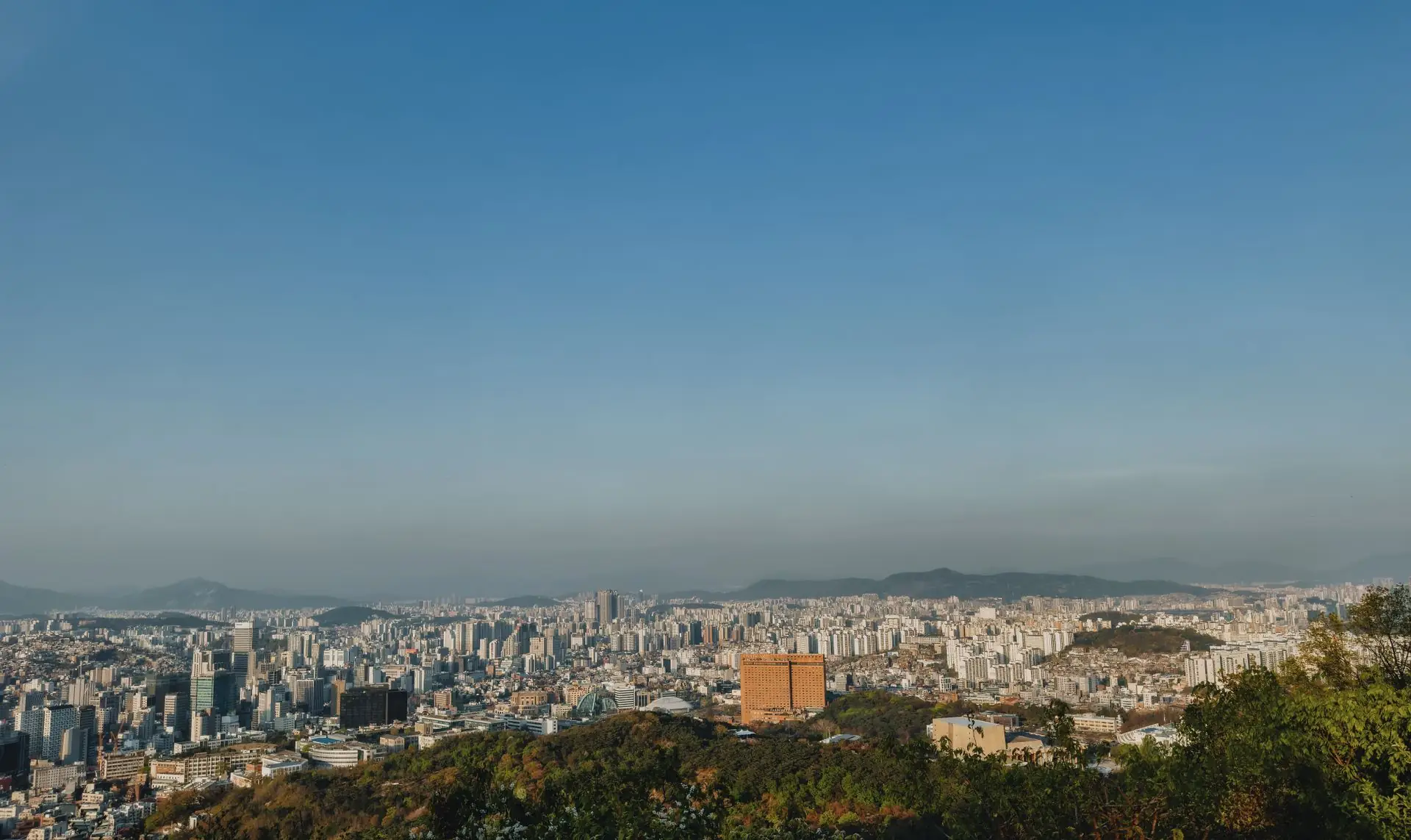
Seoul is a city of nearly 10 million people that stays awake. The streets are lit, the convenience stores are open all night, and the subway runs until midnight. Women who have travelled there alone describe the same feeling again and again: walking home late through Hongdae or Myeongdong and realising they had stopped scanning the street, because there was nothing to scan for. The city runs about 1.3 million CCTV cameras, and while cameras do not stop crime on their own, they are part of why the streets feel watched over rather than empty. Violent crime against strangers is rare enough that the US State Department describes it plainly: for most visitors, South Korea is a very safe country, and violent crime or crimes against property are rare.
That does not mean switching your brain off. Keep your drink in view in bars, the way you would anywhere, and take a licensed taxi or a booked car after a late night rather than accepting a lift. Petty theft exists, mostly opportunistic, mostly in crowded places. But the scale is small, and the feeling of the city is the thing travellers remember. If you have ever wanted to know what it feels like to walk home alone at 1 in the morning without quickening your pace, Seoul is where you find out. It is the city that teaches you what safe feels like.
Molka: The Crime You Need to Know About
Here is the part most Korea guides either skip or sensationalise, so let us get it right. Molka is hidden-camera crime: someone films another person without consent, usually in a bathroom, changing room or hotel room, and sometimes shares the footage online. It is a real problem in South Korea, and it is also a problem the country has attacked harder than almost anywhere else. The law is Article 14 of the Act on Special Cases Concerning the Punishment of Sexual Crimes. Non-consensual filming carries up to seven years in prison or fines of up to 50 million won, according to Pureum Law Office in an update from 27 October 2026. A second 2026 source, TaeShin, puts basic filming at up to five years and distribution at up to seven. The honest way to state it is as a range: filming can bring up to five years, and distribution up to seven, with fines up to 50 million won. Foreigners convicted of these offences can also face visa cancellation, deportation and an entry ban.
What does that mean for your trip, in practice? Seoul has run daily inspections of public bathrooms since September 2018, with about 8,000 inspectors checking more than 20,000 bathrooms. Here is the detail that matters: inspectors have found no recording devices in public restrooms since at least 2016. That does not mean the crime does not happen. It means the inspection programme is a reassurance effort, not a record of cameras being found, and you should read it that way. The practical habits are simple. Check a bathroom or changing room before you use it, the way Korean women do, and look for anything that seems out of place. If you suspect you have been filmed, report it to the police on 112. Devices are typically seized for forensic examination, and the police take these reports seriously. Molka is the reason this guide exists in this form. It is not a reason to stay home. It is a reason to know the law, the number, and the check.
Nightlife: Drink Spiking in Itaewon and Hongdae
The second specific risk is the nightlife. Australia’s Smartraveller advice warns that sexual assault and drink spiking can occur around nightlife venues, including Seoul’s Itaewon and Hongdae districts. The US State Department says the same thing in different words: most sexual-assault cases reported by American citizens involve young women assaulted by people they met on social media or dating and messaging apps, alcohol is often involved, and South Korea’s low overall crime rate can create a false sense of security. That last sentence is the one to remember. The danger is not the street. It is the moment you decide the country is so safe that the normal rules do not apply.
The rules are the same ones that work everywhere, and they work in Seoul too. Keep your drink in view and never leave it unattended. Do not accept drinks from strangers. If you feel unwell or strange after a drink, tell the bar staff or call a friend immediately, and do not leave with someone you just met. Pre-book your taxi through an app rather than flagging one down after a late night. Itaewon and Hongdae are fun, busy, and full of solo travellers. They are also the two places where the drink-spiking warning is specific. Enjoy them, and keep your glass where you can see it.
Dating Apps and Social Media Meetups
This section follows directly from the last one, because the US advisory draws the line clearly. Most reported assaults on American women in South Korea did not happen on the street. They happened after meeting someone on a dating app or a messaging app, usually with alcohol involved. The pattern is not unique to Korea, but the false sense of security is. When a city feels this safe, it is easy to treat a stranger met online the way you would treat a friend. Do not.
If you meet someone from an app, meet in public, in daylight, in a busy place, and tell someone where you are going. Do not go to a private home or a hotel room on a first meeting. Do not let someone order for you or bring you a drink you did not see poured. And if anything feels wrong, leave. You do not owe a stranger an explanation, and you do not owe a date a second drink. Specialised hospital units and police are available in South Korea to assist victims, though the US advisory notes that services in English and responsiveness can be inconsistent. The domestic violence hotline is 1366, and it runs 24 hours. The emergency number for police is 112.
Honbap: Eating Alone Is Normal Here
Now the good news, and it is genuinely good. South Korea has a word for eating alone: honbap, from hon, meaning alone, and bap, meaning rice, and by extension a meal. There is a matching word for drinking alone, honsul. Solo dining is not a concession here. It is a normal, named part of daily life, and Seoul is one of the easiest cities in the world to eat alone in, once you know which restaurants welcome one person and which do not.
The rule is simple. If the dish arrives in its own bowl or tray, one person is usually fine. Noodle shops, gimbap chains, gukbap soup-and-rice places, baekban set-meal restaurants, food markets and convenience stores all serve single portions and seat solo diners without a second thought. Myeongdong Kyoja, famous for its handmade kalguksu knife-cut noodles and mandu dumplings, runs like clockwork and welcomes solo diners. The hard cases are the group dishes: Korean barbecue, where a two-portion minimum is common, and shared pots like dakgalbi, jjimdak, budae jjigae and shabu-shabu, which are cooked in the middle of the table for two or more. For barbecue, you have three workarounds. Order two portions yourself, which is usually 150 to 180 grams each and costs roughly 30,000 to 36,000 won. Go to a solo barbecue spot like Hongojib in Mapo, which has personal grills, self-order kiosks and private seating built for one. Or go at lunch or off-peak, between about 13:30 and 16:30, when restaurants are quieter and more flexible. To find solo-friendly places, search the words honbap, 1-in sikdang, or 1-inbun ganeung on Naver Map or KakaoMap, plus the food you want. The trend is moving your way: restaurants with a dedicated one-person menu rose from about 9.7 percent in March 2024 to about 10.4 percent in March 2025. Eating alone in Seoul is not something you endure. It is something the city is built for.
Getting Around: Subways, Taxis and Late Nights
Seoul’s subway is clean, cheap, frequent and easy to navigate in English, and it is the best way to move around the city. It runs until midnight, so plan your last train if you are out late. After midnight, use Kakao T, the taxi app most Koreans use, or ask your hotel to call a licensed taxi. Avoid unlicensed cars, especially around nightlife areas. The subway is safe at night, the stations are staffed, and the cars are busy even late. One practical note: the subway does not run all night, and the weekend 24-hour pilot lines cover only some routes, so do not assume you can train home at 3 in the morning. Get a T-money card at the airport or any convenience store, load it, and tap in and out. It works on the subway, buses and even in some taxis. If you need help, the international call centre on +82-2-3210-0404 connects you to an English-speaking operator who can reach the emergency services for you.
Where to Stay as a Solo Woman
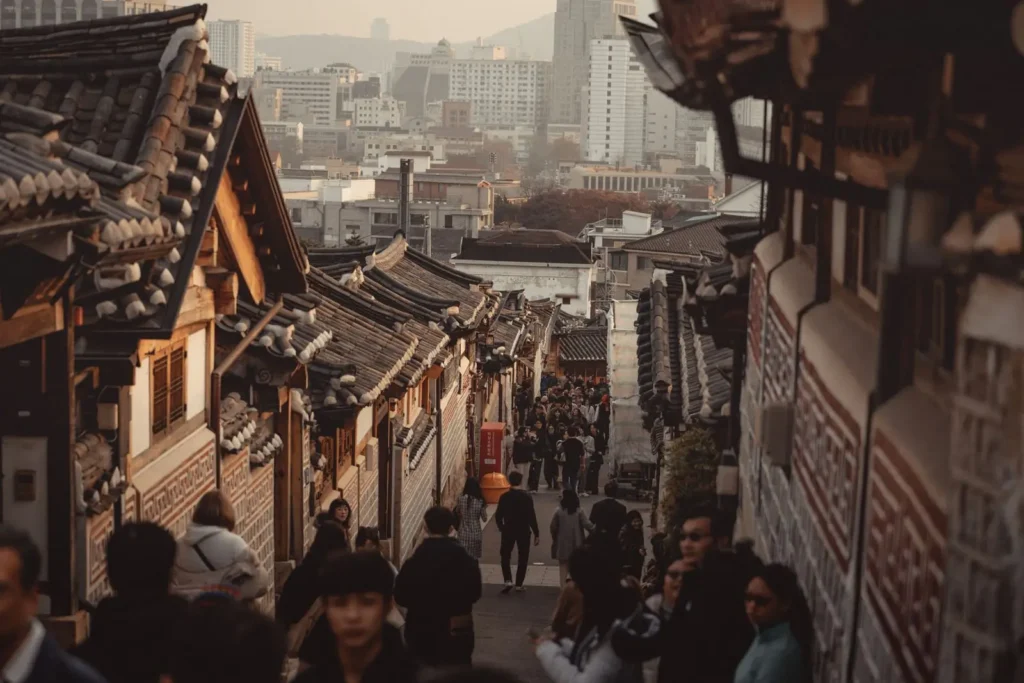
Seoul’s neighbourhoods each suit a different kind of solo trip. Hongdae is young, busy and full of hostels and guesthouses, and it is the easiest place to meet other travellers. Myeongdong is central, well lit and packed with shops and restaurants, and it is a good base for a first visit. Itaewon is international, with the widest range of food and the most English spoken, and it is also the nightlife district, so pick a quiet side street if you want to sleep. Gangnam is polished and expensive, and it suits travellers who want comfort and order. Wherever you stay, read reviews written by solo female travellers before you book, and look for hostels with female-only dorms, which are common in Seoul and worth booking ahead in busy seasons. A hotel or hostel that other solo women recommend is worth more than any star rating. For the neighbourhood-by-neighbourhood breakdown, read our Seoul stays guide.
North Korea and the DMZ: Keep It in Its Box
Every South Korea guide has to mention the North, so here is the honest version. Tensions on the Korean Peninsula remain high, and North Korea continues to conduct missile launches and other military activities. The South Korean government runs civil emergency drills through the year. None of that affects daily life in Seoul. The city does not live in fear of the border, and neither should you. The DMZ, the demilitarised zone between the two Koreas, is a popular day trip from Seoul, and it runs as an organised tour with a guide, a bus and a strict itinerary. It is not a place you wander into on your own, and it is not a risk to a tourist in Seoul. Keep the North in its box: a border story, a day trip, and a reason to watch the news, not a reason to change your plans.
Practical Safety Kit for Solo Women in South Korea
Most of what keeps you safe in South Korea fits in a small bag and a phone. Save the numbers before you land: police 112, ambulance 119, domestic violence hotline 1366, and the international call centre +82-2-3210-0404 for an English-speaking operator. Get a local SIM or an eSIM at the airport so you have data for maps, Kakao T and Naver Map, because you will use them constantly. Download Naver Map before you arrive, because Google Maps works poorly in South Korea, and Papago for translation, because it handles Korean far better than most apps. US passport holders do not need a visa for stays of 90 days or less, and the K-ETA exemption for US passport holders runs through 31 December 2026, with a K-ETA required from 1 January 2027, so check the rules for your own passport before you fly. Tap water is safe to drink in Seoul. Pharmacies are marked with a green cross. And keep your passport in the hotel safe, carrying a photo of it instead, because a lost passport costs you days.
For the general habits that work everywhere, our tips for solo female travellers cover the basics, and our best places to solo travel list shows where South Korea sits among the other destinations on this site. Japan is another Level 1 country in this series, and the two make a useful comparison: both are among the safest places on earth, and both reward travellers who prepare for the specific risks rather than the general ones.
Yes. South Korea ranks 57th on the Global Peace Index 2026 and the US State Department rates it Level 1, the lowest level. Violent crime is rare and Seoul feels safe at night. The risks that matter are specific: hidden-camera crime, drink spiking in nightlife areas, and assaults linked to dating apps, not street crime.
Molka is hidden-camera crime, filming someone without consent, usually in bathrooms or changing rooms. It is a real problem, and South Korea punishes it hard: Article 14 of the sexual crimes act carries up to five years for filming and up to seven for distribution, with fines up to 50 million won. Check bathrooms before use, and report suspected filming to police on 112.
Yes, easily. Eating alone is called honbap and it is completely normal. Noodle shops, gimbap chains, soup-and-rice places and markets all welcome solo diners. Korean barbecue and shared hotpots are harder, because many have a two-person minimum, but solo barbecue spots exist, and ordering two portions works.
Yes. Seoul’s streets are lit and busy late, the subway runs until midnight, and violent crime is rare. Take the normal precautions: keep your drink in view in bars, pre-book taxis late at night, and stay aware in crowded nightlife areas like Itaewon and Hongdae.
Police 112, ambulance 119, and the 24-hour domestic violence hotline 1366. For an English-speaking operator who can connect you to emergency services, call the international call centre on +82-2-3210-0404.
US passport holders do not need a visa for stays of 90 days or less, and the K-ETA exemption runs through 31 December 2026. A K-ETA is required from 1 January 2027, so check the rules for your own passport before you fly.
Yes. The DMZ is visited on organised tours from Seoul with a guide and a fixed itinerary. It is not a place you visit alone or unescorted, and it poses no risk to a tourist staying in Seoul. Tensions on the peninsula are real, but they do not affect daily life in the city.