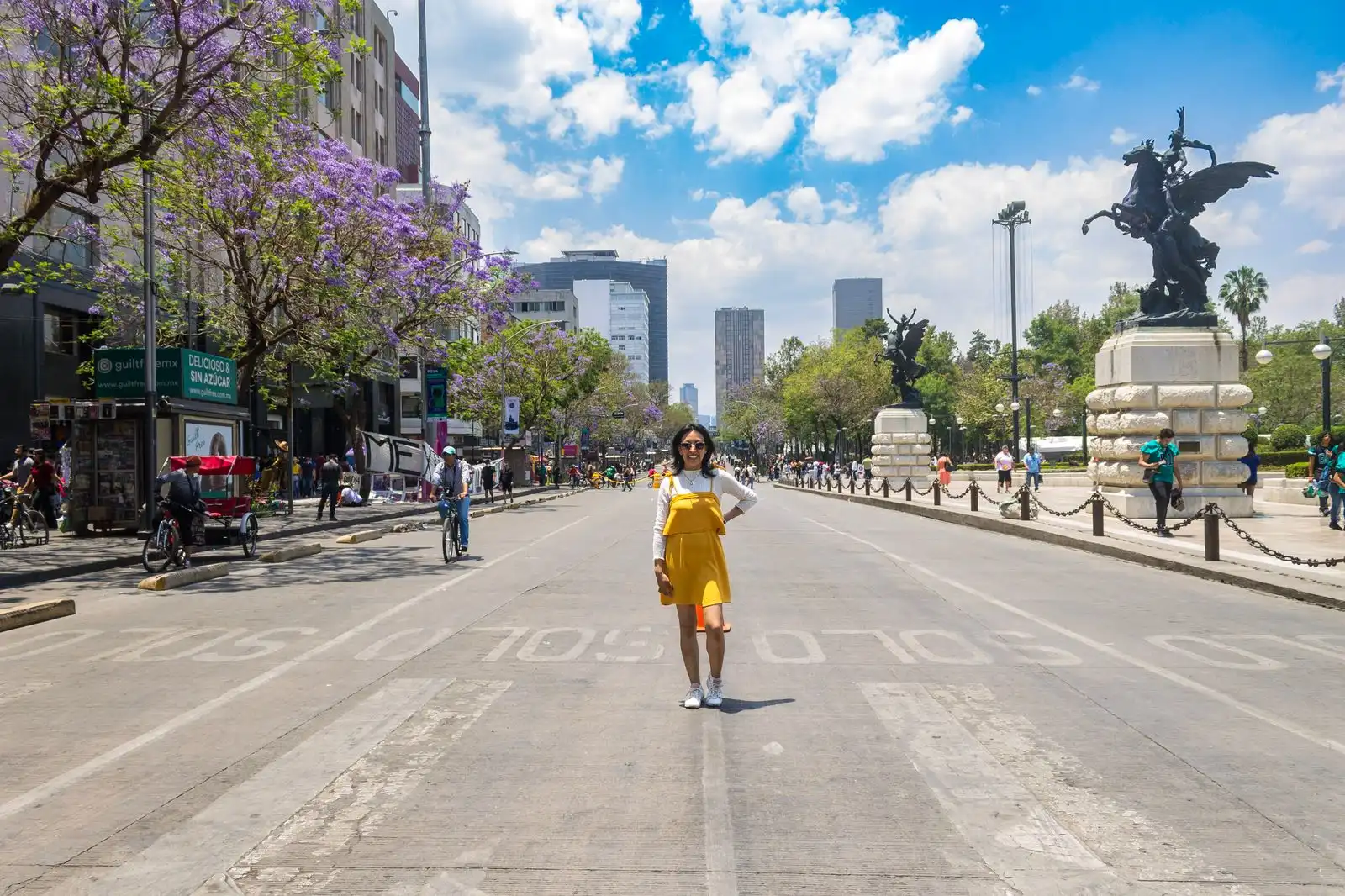
Yes, Mexico City is safe for a solo woman who bases herself in the right neighbourhoods and uses app rides at night. The US State Department rates the city Level 2, “Exercise Increased Caution”, the same level it gives France, Germany and the UK. The solo female travel safety tips on this site cover the precautions; what follows is Mexico City itself.
The city is big, and how safe it feels changes by neighbourhood. Roma Norte, La Condesa and Polanco are the safest bases for a solo woman, Coyoacán and Centro Histórico work by day, and Tepito, Doctores and Iztapalapa are the areas to avoid, especially at night. Here is the detail: the neighbourhoods, the transport, the costs and the plan. The best solo female travel destinations page covers the year-round shortlist.
Key takeaways
- Level 2, the same as France, Germany and the UK.
- Base in Roma Norte, La Condesa or Polanco.
- Use Uber or DiDi, never hail a street cab.
- Emergency number is 911; tourist assistance is 078.
- Four days is the right length for a first trip.
The short answer
Yes, with the usual precautions. Mexico City is safe for solo female travellers at Level 2, the same level as France, Germany and the UK, and many women travel solo here. Base in Roma Norte, La Condesa or Polanco, use Uber or DiDi at night, and use the women-only Metro cars when the trains are crowded.
The safest neighbourhoods: Roma Norte, La Condesa and Polanco
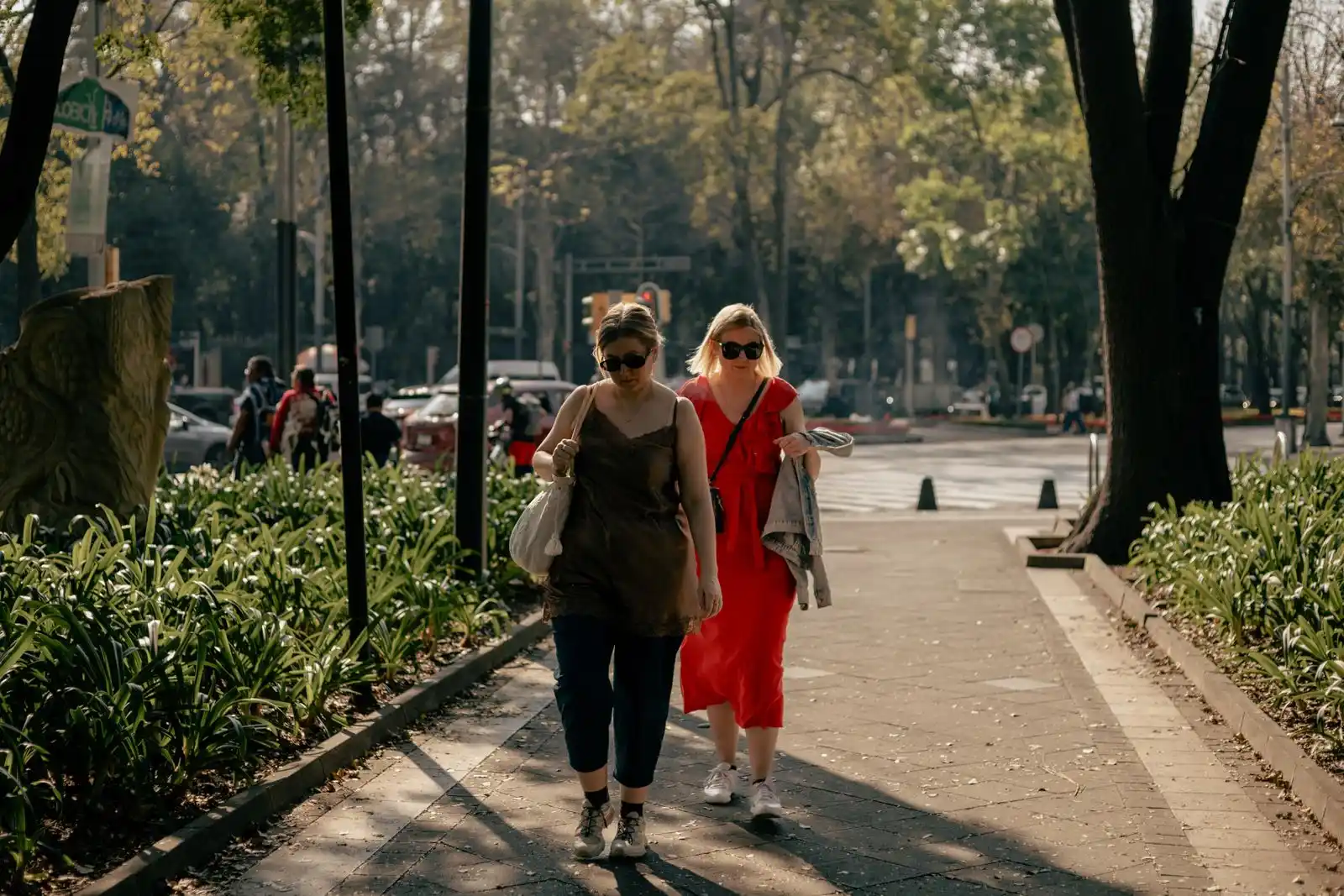
Roma Norte, La Condesa and Polanco are the safest neighbourhoods for a solo woman in Mexico City, and they are the best bases for a first trip. Roma Norte and La Condesa sit next to each other, with tree-lined streets, cafes, parks and galleries. Polanco sits to the west, with wider streets, museums and the city’s best hotels.
All three are walkable by day and in the early evening, and all three are where other solo women base themselves. Roma Norte is the first-time pick: the most walkable of the three, with cafes on every corner and life on the street, and the cheapest of the three to stay in. La Condesa is the quieter neighbour, with Parque Mexico at its centre and the most residential feel. Polanco is the most polished of the three, with the museums and the shopping, and it is the priciest.
Coyoacán and Centro Histórico by day
Coyoacán and Centro Histórico are worth a day each, and both work for a solo woman by day. Coyoacán is the old village south of the centre, with the Frida Kahlo museum, the markets and the quiet squares, and it is at its best in the morning and the afternoon.
Centro Histórico is the old centre, with the Zocalo, the cathedral and the museums, and it is at its best in the morning, when the crowds are thin and the police are everywhere. The markets in Coyoacán are the place for lunch, and the squares are the place to sit for an hour before the afternoon.
Both need a plan for the evening. Centro Histórico empties after dark, and the streets around the Zocalo are not the place to walk alone at night. Coyoacán is quieter after dark too, and the trip back to Roma Norte or La Condesa is best by Uber rather than on foot. Visit by day, eat lunch there, and go back to base before dark.
Areas to avoid: Tepito, Doctores and Iztapalapa
Tepito, Doctores and Iztapalapa are the areas to avoid, especially at night. Tepito is the market district east of Centro Histórico, and it is the one place nearly every guide names as a no-go for a solo woman: the crowds are thick, the pickpockets are active, and the area is not a place to walk alone.
Doctores sits south of Centro Histórico, and Iztapalapa sits to the east, and both are residential areas with no reason for a visitor to go there. Stay in the named neighbourhoods, and the city feels like a different place.
The rule is simple: if a place is not one of the named neighbourhoods, do not go there alone at night. The advisory urges extra caution at night outside the popular tourist areas. The police patrol those areas most often, and petty crime is frequent in both tourist and non-tourist areas.
Getting around: Uber, the Metro and women-only cars
Getting around Mexico City is easy and cheap, and the rules are simple. Use Uber or DiDi for every ride, never take a street cab, and use the Metro by day with the women-only cars when the trains are crowded. The safety tips guide covers the rest, and these are the transport rules that matter most.
Never hail a street cab. The pink-and-white taxis on the street look legitimate, and many are, but unauthorised cabs carry the risks of altered meters and express-kidnapping scams that force ATM withdrawals. Uber and DiDi both work reliably across the city and are affordable. Always match the licence plate, the vehicle model and the driver’s face on the app before opening the door, and use the in-app “Share Trip” feature when riding late.
The Metro is inexpensive and efficient, and it costs MXN 5 per ride, about USD 0.25. The front carriages of the trains are reserved for women and children under 12, under the “Let’s Travel Safely” program, which sets aside three of the nine Metro cars; they are marked with pink signs and barriers, and the police monitor the platform section. The Metrobus has a women’s section at the front of the bus too.
The cars exist because harassment on crowded trains is a known problem, and they are the simplest way around it.
Rush hours run 7:30 to 9:30 in the morning and 6:00 to 8:30 in the evening, and the platforms become crushingly crowded then; ride off-peak when you can, and keep your bag in front of you. The Metro’s Line 5 serves Terminal Aérea station near Terminal 1, with a change at Oceanía to Line 1 for the city centre, and it is fine during the day for the airport trip.
Plan the airport trip before you land. At the main airport, buy an authorised taxi ticket at a booth inside the terminal and hand it to the driver at the rank; never accept a ride from someone who approaches you in arrivals. Do not count on an Uber at the airport, where app pickups are restricted.
Check your ticket says MEX, not NLU.
Sort data before you land, because Uber, DiDi and maps all need it. Set up an eSIM before you fly, or buy a local SIM at the airport, and download the offline map of the city while you still have Wi-Fi. Keep the hotel address saved on the phone, so you can show it to a driver without a signal.
What it costs
Mexico City is a cheap city by the standards of the cheap destinations on this site. The Metro costs MXN 5 per ride, about USD 0.25, and it is the cheapest way across the city. Uber and DiDi are affordable across the city, and the rides are the one cost that adds up.
A week of app rides costs more than a week of Metro rides, and the trade-off is safety at night against money by day. Street food is cheap, and the cafes in Roma Norte and La Condesa are the priciest food on the trip. The cheap destinations post carries the daily budgets for the places outside the US, and Mexico City’s Metro fare and street food keep the daily spend low.
Cards work in the hotels, restaurants and cafes of Roma Norte, La Condesa and Polanco, but carry small peso notes for the markets, the street food and the Metro. Use an ATM inside a bank or a shopping mall, not one on the street, and tell your bank before you fly, so a card is not blocked mid-trip.
How many days and a sample plan
Four days is the right length for a first trip to Mexico City. Day one is Roma Norte and La Condesa, on foot, with lunch in Roma Norte. Day two is Centro Histórico in the morning and Polanco in the afternoon: the Zocalo and the cathedral first, then the museums, and back to base before dark.
Day three is Coyoacán: the Frida Kahlo museum in the morning, the markets at lunch, and an Uber back. Day four is the free day: the neighbourhood you liked best, the market you missed, or a second museum.
The city sits 2,240 metres above sea level, and the thin air can leave you short of breath on the first day. Walk slowly, drink water, and keep day one light: the plan already does that, with Roma Norte and La Condesa on foot. The sun is strong at this height too, so sunscreen belongs in the day bag.
If you add a fifth day, spend it at Teotihuacan, the pyramids 50 kilometres north-east of the city. Buses leave Terminal Norte, on Metro Line 5, every 15 to 20 minutes and take about an hour. Go early: the gates open at 8, the site closes at 5, and there is almost no shade on the Avenue of the Dead.
The best travel insurance guide covers the cover before you book.
Staying safe after dark
Night is when Mexico City changes, and the rules change with it. Walk the neighbourhood in daylight before going out at night, keep the phone charged and out of sight near the street and the Metro doors, and take an Uber rather than walking the empty streets after midnight.
Phone snatching is a common petty-crime style, and the phone is the one thing a solo woman can least afford to lose.
The other scams are quiet ones: card skimmers on stand-alone ATMs, street money changers who short-change or hand over counterfeit bills, and bar tabs with an extra round added for foreign customers. Use ATMs inside bank branches, change money at banks or your hotel, and check the bill against what you ordered before paying.
In bars, keep your drink in your hand and never leave it unattended: drink spiking is reported in bars and clubs, and a drink from a stranger is the usual route. Watch it being poured, and if you feel unusually dizzy or confused, tell the venue staff and call someone you trust rather than leaving alone.
If the phone or wallet does go, the fix is preparation, not panic: split cards and cash between two places, keep copies of the passport and bookings in cloud storage, and know how to lock the phone remotely before you travel. Report the theft if insurance needs the paperwork, and freeze the cards from a trusted device.
Share the trip with someone at home before the ride, and have the hotel name ready for the driver. If a street feels empty, walk into the nearest hotel or restaurant and order a ride from inside. The emergency number is 911, and tourist assistance is 078; save both before you arrive, and keep the US Embassy number, +52 55 2579 2000, in the phone too.
At a glance
Yes, with the usual precautions, at Level 2, the same level as France, Germany and the UK. Roma Norte is the best first base, the season is year-round, and the main risk is petty crime and harassment on crowded transport. Read the table before you book, and check the current advisory on the State Department page.
| Verdict | Yes, with the usual precautions |
|---|---|
| Advisory level + date | Level 2 (Exercise Increased Caution), reissued 29 May 2026 |
| Emergency number | 911 (police, fire, ambulance); tourist assistance 078 |
| Best first base | Roma Norte |
| Best season | Year-round |
| Main risk | Petty crime and harassment on crowded transport |
How this guide was made
Research-based. No trip is claimed. The advisory level (Level 2) and the neighbourhood, transport and emergency facts are from multiple consistent sources, checked 23 November 2026. Advisory date verified 28 November 2026: US State Department Mexico advisory, reissued 29 May 2026, Mexico City Level 2.
FAQs
Yes, with the usual precautions. It is a Level 2 destination, the same level as France, Germany and the UK. Stick to the named neighbourhoods, use app rides at night, and the city works well for a first solo trip.
Roma Norte, La Condesa and Polanco are the safest, and the best bases for a first trip. Coyoacán and Centro Histórico work by day.
Tepito, Doctores and Iztapalapa, especially at night. Tepito is the market district east of Centro Histórico, and it is the one place to skip entirely.
Yes, if you ride the Metro. The front carriages are for women and children under 12, and the Metrobus has a women’s section at the front too.
Only an app ride. Never hail a street cab: unauthorised cabs carry the risks of altered meters and express-kidnapping scams. Book on Uber or DiDi and check the plate and the driver before opening the door.
911 for police, fire and ambulance. Tourist assistance is 078, and the US Embassy in Mexico City is +52 55 2579 2000.
Four days is the right length for a first trip. That gives you a day each for Roma Norte and La Condesa, Centro Histórico and Polanco, and Coyoacán, plus a free day for the place you liked best.