
Let me be honest with you. The first time someone said “swim with sharks,” I laughed nervously and said no thanks. Then I started researching the Maldives properly. And everything changed. You can go swimming with sharks and dolphins in the Maldives — real wild ones. Spinner dolphins, nurse sharks, reef sharks drifting past like they own the place. And here’s the part nobody tells you upfront: most of them are gentle, curious, and completely uninterested in you. Is it safe for solo female travellers? Yes. Genuinely. This guide covers where to go, what it costs, and what I’d skip. No fluff, no overhyping. Just the honest version, so you can book your swim and actually enjoy it.
Can you swim with sharks and dolphins in the Maldives? Yes. You can safely snorkel with wild nurse sharks, reef sharks and spinner dolphins across the Maldives, with no diving certificate required. Local islands like Fulidhoo and Ukulhas run affordable small-group excursions, while the calm dry season from December to April delivers the clearest water and gentlest conditions for first-timers.
| Quick Facts | |
| What you’ll see | Nurse sharks, reef sharks, spinner dolphins, manta rays |
| Best islands | Fulidhoo, Ukulhas, Maafushi, South Malé Atoll |
| Best time | Dry season (Dec–Apr) for clear water; May–Nov for mantas |
| Do you need to dive? | No — snorkelling only |
| Is it safe? | Yes, with a guide — the species are harmless |
| Typical cost | Local islands cost far less than resorts |
Can You Really Swim With Sharks and Dolphins in the Maldives?
Can you really go swimming with sharks and dolphins in the Maldives? Yes, and it is both safe and genuinely possible. Across the country’s atolls, you can snorkel beside wild nurse sharks, reef sharks and spinner dolphins in warm, shallow water. No cage, no dive certification, no nerve of steel required.
Why It’s Safer Than It Sounds
The fear is understandable. The reality is gentler. The animals you meet here are not vicious predators — they are curious, calm and largely indifferent to people.
- Nurse sharks are slow and docile, far more like dogs than hunters
- Blacktip and whitetip reef sharks are shy and non-aggressive
- Spinner dolphins keep their distance unless they choose to come closer
Reef sharks pose almost no threat to swimmers and tend to avoid people entirely. Treat them as wildlife, not a petting zoo, and the risk stays tiny.
Do You Need to Dive or Even Swim Well?
Here’s the reassuring part for solo travellers and nervous first-timers. Most of this happens at the surface.
- Snorkelling is enough — no diving qualification needed
- Many sites sit close to shore in shallow, calm water
- Trips suit all levels, and weak swimmers can wear a buoyancy aid
Is it safe for families and children? On guided trips, yes — operators run educational briefings and keep groups small. The one rule that matters: respect the wildlife, keep your distance, and let the animals set the pace. If you are scuba-certified, many of these sites can be dived as well as snorkelled — but you never need to. If you’re going it alone, my honest tips for solo female travellers cover the rest.
Why Fulidhoo Island Is Where I’d Point You First
Where should you go swimming with sharks and dolphins in the Maldives? Start at Fulidhoo Island. This small local island sits in its own atoll, beside shallow water full of nurse sharks, stingrays and dolphins. You get close views of marine life, easy snorkelling, and a fraction of the cost resort islands charge.
The Maldives spreads across 26 atolls of coral and white sand. Fulidhoo is one of its calmest corners. It quickly became my favourite island to research, and it is easy to see why.
What makes this tiny island special:
- Fewer than 300 residents, a single car, and lanes that are really just swept sand
- You kick your sandals off at the jetty and forget they exist
- Warm, easy-going locals, big open-ocean views and genuinely lovely beaches
- Water so clear it does half the work of any snorkel trip
Looking for things to do in Fulidhoo beyond some genuinely incredible beaches? That is where the water comes in.
Where to Stay
On a small island like Fulidhoo you stay in a guest house, not a resort — and that’s the whole appeal. One family-run place, The Pearl Seaview, comes up again and again in traveller reviews and runs its own snorkelling excursions, so you can book the water straight from your room.
I’ve researched this island rather than slept on it, so I’ll be honest: what sells me is the shape of a trip here. Slow mornings, warm hosts, the reef a few steps from your door. That barefoot, local feel is something a resort can’t sell you — and for a solo traveller, a small guest house where the hosts learn your name is a safer, friendlier base.
What You’ll See in the Water
So what will you actually see? Plenty, often just off the shore:
- Dozens of sharks and dolphins gathered close to the island
- A quiet sandbank you can almost have to yourself
- Rays sliding past beneath you and turtles cruising the shallows
- The odd shark weaving through the coral
Snorkelling here is gentle — the shallow water does the work. The real surprise is after dark: walk out onto the jetty and the island’s lights draw the marine life in close, so you can watch sharks and rays glide below without even getting wet.
Is It Actually Safe?
Worried about safety? I’ve covered it in full above. In short: the nurse sharks here are slow, docile and uninterested in people. Give them space, keep your hands to yourself, and they’ll treat you like part of the scenery.
What It Costs and How to Book
How much does a sharks and dolphins excursion cost? Less than you’d fear on a local island. Guest houses run their own speedboats, so the trip out is a short hop rather than a long, packed day, and you can pick a tour to suit your time.
Here’s the difference that matters most:
- A customised excursion often means you’re the only ones on the boat
- That beats sharing with 20-plus strangers every time — far more personal
- On the resort circuit I researched, boats routinely carried that many at once
That is the small-group-versus-crowd decision in a nutshell. For a genuinely personal swim, a local island like Fulidhoo is where I’d send you.
Which Sharks and Dolphins You’ll See
Beyond the nurse sharks and spinner dolphins, the Maldives serves up a far richer cast. On a single trip you might glide over reef sharks, watch manta rays cruise past, and lose count of the turtles. Love this kind of encounter? You can also swim with whale sharks in Mexico — gentle giants, no cage, same solo-friendly thrill. Here are the two headline encounters worth planning around.
Reef Sharks
Reef sharks are the ones you’ll spot most often, and they are shy rather than scary. They patrol the drop-offs and keep their distance.
- Blacktip and whitetip reef sharks are the regulars, commonly spotted on snorkel and dive sites
- Grey reef sharks turn up on deeper reefs and around busier channels
- They share the water with eagle rays, moray eels, parrot fish and the odd octopus
None of these treat you as prey. Reef sharks are naturally wary of people and rarely approach swimmers. Keep calm, keep back, and you’ll simply be part of the reef.
Manta Rays
If you see one creature here, make it a manta. Manta rays are harmless filter-feeders and genuinely jaw-dropping up close.
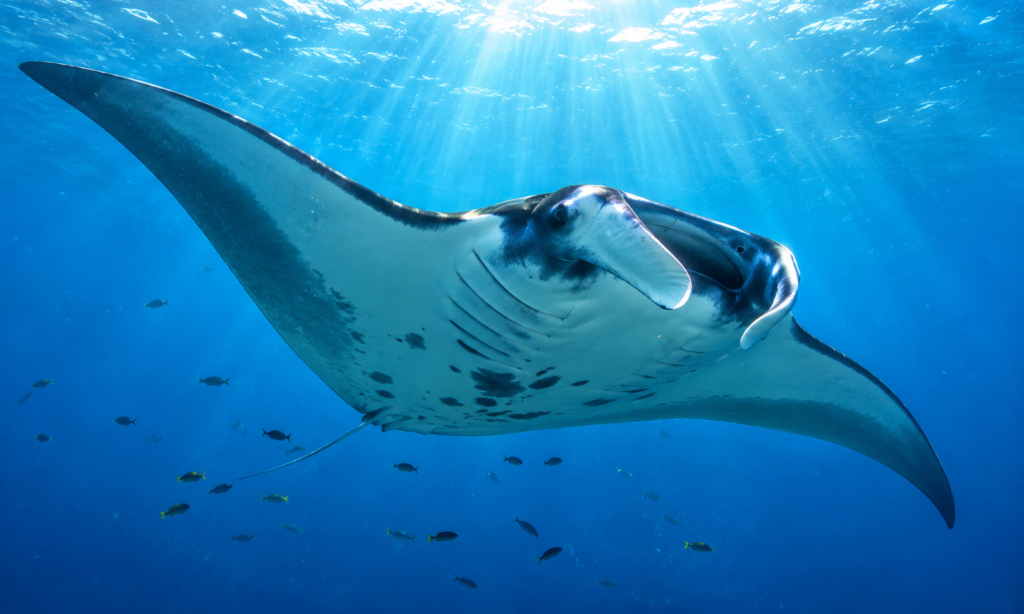
- Among the ocean’s largest fish, with a wingspan that can reach about 7 metres
- Astonishingly graceful for their size — they glide rather than flap
- From a base like Ukulhas, the manta sites are a short speedboat hop, often 10–15 minutes
Most manta snorkels run a couple of hours, gear usually included. Watch one of these giants pass overhead, calm and silent, and it stays with you for life. For how to behave around them, the Manta Trust is clear: no touching, no chasing, approach from the side.
Swimming With Dolphins Near Fulidhoo Island
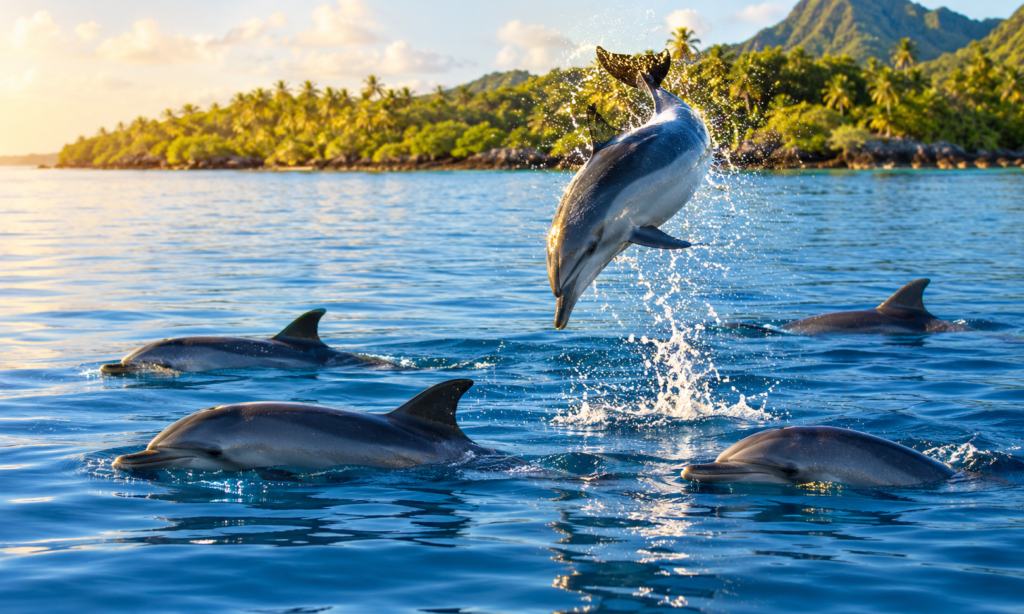
What is swimming with dolphins near Fulidhoo Island actually like? It means sharing a warm, sheltered lagoon with wild spinner dolphins — sometimes more than 100 dolphins in one spot. You join a small boat tour, slip into calm water, and watch pods glide past. No tanks, no tricks, just dolphins.
How Many Dolphins You’ll See
The numbers are what give this swim its reputation. Travellers who’ve done it describe pod after pod on a single morning — a cluster of ten gliding past, then a larger group further out, and on the best days well over a hundred dolphins sharing one lagoon.
Why so many? Spinner dolphins live in large, social groups, and this sheltered water suits them. You don’t chase them — you slip in quietly and let the pod decide how close it comes.
Why a Small Group Beats the Crowds
Here’s the part that genuinely changes your day. A small-group tour beats a packed one, and it comes down to how dolphins behave.
- Loud crowds and constant splashing scare the pods off
- A big boat only stops so many times, so you load on and off less often
- That often leaves large groups just two or three chances in the water
A small operator runs the opposite way — a handful of guests, closer to a private tour. Fewer people means you swim for as long as the dolphins linger, and some mornings you’re the only one in the water with them.
What It Feels Like in the Water
So what’s it like once you’re in? Unforgettable, by every account I trust. Spinner dolphins earn their name — they twist and spin as they swim, pure play.
- One might launch clear of the water and corkscrew through the air
- A whole pod can wheel round and circle you, calm and curious
- For a few seconds you feel, oddly, like part of the group
It’s the kind of morning travellers say they never forget. On the dolphins’ terms, in their home — that’s the whole point.
Swimming With Nurse Sharks at Fulidhoo
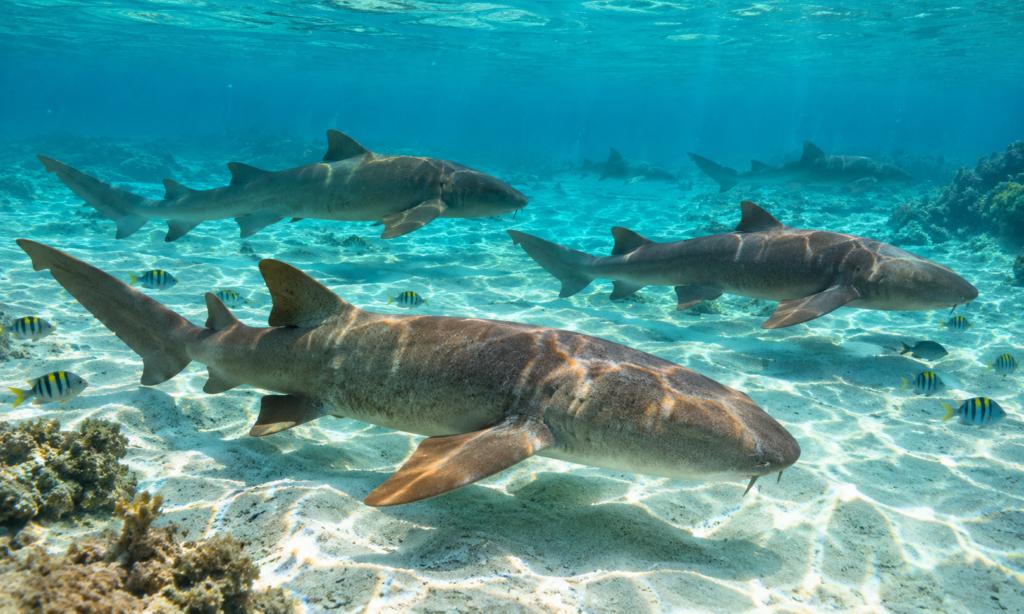
Is it safe to swim with nurse sharks? Yes — remarkably so. Nurse sharks are slow, bottom-dwelling and far more like dogs than vicious predators. Around Fulidhoo Island you can be in the water with dozens of them swimming around you, and they simply carry on with their day.
Why So Many Gather Here
Nurse sharks are common all over the Maldives, but Fulidhoo holds a real concentration — one sheltered patch is home to more than 100 of them in a fairly tight area. The reason is refreshingly simple.
- For generations, local fishermen cleaned their catch in these waters
- The sharks learned to gather for the scraps
- The habit stuck, and so did the population
It’s a rare case of a daily fishing routine quietly creating one of the country’s best spots for nurse sharks.
What It’s Like in the Water
So what does it feel like to float among them? Calmer than you’d ever guess. Travellers describe sharing the water with 30 or more at once while the sharks barely register them.
- They slide past as if you were just another one of the shoal
- Look any direction and there’s another cruising by
- No circling, no drama — simply one of the coolest animal encounters going
Nurse sharks are not aggressive and don’t see people as prey (Florida Museum on nurse sharks). Give them space, and they return the courtesy.
One honest caveat: “harmless” doesn’t mean “handle them.” Nurse sharks are docile and ignore people, but they can bite hard if grabbed or cornered, and bites rise where operators feed them. Keep your hands to yourself, skip any trip that baits the water, and you’ll be fine. These are wild animals, so treat this as general guidance, not a safety guarantee — always follow your licensed guide.
Booking It Safely
How do you do this without ending up in a crowd? Go with a small, licensed local operator who knows the water. On Fulidhoo, family-run guest houses like The Pearl Seaview keep coming up, and the reasons are simple.
- Their guides know where to go to dodge the crowds
- Small numbers mean someone can actually keep an eye on you
- The hosts are friendly, and the trips suit calm floats and bigger thrills alike
Whether you want a gentle swim or a jolt of adventure, a quiet island like this is where I’d start.
Best Islands and Atolls for Sharks and Dolphins
Which islands are best for swimming with sharks and dolphins in the Maldives? Four stand out: Fulidhoo, Ukulhas, Maafushi and the South Malé Atoll. Each is a local island or resort base with easy access to reefs, sandbanks and marine life. If you’ve done a DIY island trip before — like getting to Balabac in Palawan — this will feel familiar.
Fulidhoo, Vaavu Atoll — Best for Nurse Sharks
Fulidhoo gets its own full section above, so I’ll keep this short. It’s my top pick for nurse sharks: calm, shallow lagoons, spinner dolphins a short boat ride away, and budget guest houses instead of pricey resorts. If you only visit one island on this list, make it this one.
Ukulhas, Ari Atoll — Best for Manta Rays
Head to Ukulhas in the Ari Atoll if mantas are your dream. The dive sites here are superb, and the big stuff sits remarkably close.
- Manta rays reached by speedboat in roughly 10-15 minutes
- Reef sharks and turtles common on the surrounding reefs
- A relaxed local island with a strong diving and snorkelling scene
Maafushi — Best for Easy Access
Maafushi is the practical pick. How far is it from the capital? Close — it is a popular excursion departure point and the easiest base for a quick trip.
- Day tours often leave around 9:30 am by scenic boat ride
- Classic route takes in Shark Bay, then Dhiggiri Sandbank
- Expect blacktip reef sharks in clear, calm waters with crystal visibility
South Malé Atoll — Best for Resort Comfort
Prefer a resort over a local island? The South Malé Atoll blends luxury with genuinely good marine life. A resort like Anantara Dhigu sits roughly 35 minutes by speedboat from Malé Airport.
- No seaplane needed — a simple speedboat transfer gets you there
- Reef sharks and dolphins reachable without long journeys
- A picnic island and house reefs right on your doorstep
The Maldives has far more atolls to explore, so this is only the start. But for the local island vs resort question, these four cover every kind of traveller — from shoestring snorkeller to honeymoon splurge.
What a Sharks and Dolphins Excursion Looks Like
What actually happens on a sharks and dolphins excursion? A typical full-day trip runs around 5 hours, roughly 9:30 am to 3:00 pm. You set off by speedboat from Maafushi, snorkel with dolphins and reef sharks, visit a local island, and finish on a sandbank. Here’s the hour-by-hour shape of it.
The Route, Stop by Stop
A typical full-day tour out of Maafushi runs roughly 9:30 am to 3:00 pm, looping between a few carefully chosen stops by speedboat:
- Dolphin spot — slip in beside pods of spinner dolphins in calm, open water
- Shark Bay — watch blacktip reef sharks cruise past, curious but keeping their distance
- A local island — a short guided wander through a traditional Maldivian village
- A sandbank — a strip of white sand ringed by lagoon blue, for a swim and a breather
It’s an easy, varied day rather than a rushed one, and the best operators keep groups small so the wildlife stays relaxed.
What’s Included
Before you book, check what the price actually covers. A good operator wraps most of it in.
- Snorkelling gear and beach towels provided
- A proper Maldivian-style lunch — yes, lunch is included
- Underwater photos and videos of your swim
- A local guide and crew throughout
How Big Is the Group?
This is the detail that makes or breaks the day. Smaller is always better.
- Many tours cap numbers at a max group size of around 25
- The best run a genuine small-group setup for a calmer snorkelling experience
- Fewer swimmers means a more authentic, less crowded day on the water
The operators worth your money also build in responsible wildlife interaction — keeping distance, never chasing, letting the animals lead. That is the mark of a trip run properly, and it is what turns a good excursion into one you’ll talk about for years.
How Much It Costs
How much does a sharks and dolphins excursion cost in the Maldives? It depends entirely on where you book. Local-island trips cost a fraction of resort prices. A premium combo like Murakabay’s dolphin, manta and nurse sharks excursion is priced near $950 for a small private group — a few hours by speedboat from Ukulhas.
What You Actually Pay For
Price alone tells you little; what’s bundled in matters more. A fair tour usually covers the essentials.
- Snorkelling gear and equipment included, not hired on top
- Lunch and a local guide on full-day trips
- The speedboat, fuel and all stops along the route
So a higher headline price often means a private boat, a group of 6-8 rather than a packed 25, and far more time in the water.
Local Island vs Resort Prices
Here’s where you save real money. Local islands charge a fraction of the cost of the resort circuit.
- Guest-house excursions are markedly cheaper than resort prices
- Resorts bill a premium for the same reefs and the same animals
- A budget snorkeller gets genuine value for money on a local island
Is swimming with sharks expensive in the Maldives? Not if you base yourself on a local island — that single choice is the biggest lever on your spend.
Booking and Payment Tips
A few practical notes before you hand over your card.
- Many operators add a 3.5% card charge, so carrying some USD cash saves you money
- Ask about group discounts — numbers often bring the per-person price down
- Confirm what’s included in the price in writing, so there are no surprises on the day
Clarify the duration too. A 2-hour combo and a 5-hour full-day tour sit at very different price points, and knowing which you’re paying for keeps the whole thing honest.
Resort vs Local Island: Which Is Better?
Should you stay on a local island or a resort to swim with sharks and dolphins? For most solo travellers, a local island wins — it is far cheaper and more personal, with access to the very same reefs. Resorts buy you luxury and convenience, not better marine life. Here’s how they truly compare.
Side by Side
| Factor | Local Island | Resort Island |
| Cost | A fraction of the cost, budget-friendly | Premium, luxury pricing |
| Group size | Small group, often 6-8 people | Shared excursions, sometimes 20+ people |
| Transfer | Short speedboat hop | Speedboat or seaplane |
| Feel | Barefoot, authentic, relaxed | Polished, private, pampered |
| Marine life | Same reefs, same animals | Same reefs, same animals |
The last row is the one people miss. A resort does not hand you rarer sharks or more dolphins — the nurse sharks, reef sharks and spinner dolphins are the same either way.
Why I Lean Local
For honest value, a guest house on a place like Fulidhoo is hard to beat.
- You pay far less for the same marine life close to shore
- Trips stay small and more personable, with fewer tourists and real privacy
- You get local culture — you meet locals, eat local, live barefoot
Love a laid-back island base? The best Caribbean island for solo women has the same easygoing, local-first feel if the Maldives is on your someday list.
When a Resort Makes Sense
That said, a resort like Anantara Dhigu earns its keep in a few cases.
- You want convenience and zero logistics
- You’ll use the spa, the house reef and the comfort as much as the wildlife
- Transfer time and seamless service matter more than saving money
So, is a resort worth it? Only if you’re buying the comfort. For the sharks and dolphins alone, the local island gives you more experience for less — my pick every time for women travelling solo.
How to Pick a Good Excursion Operator
How do you choose a safe excursion operator for sharks and dolphins? Look for a licensed, experienced outfit that runs its own speedboat, keeps groups small, and treats the wildlife with respect. The right operator turns a nerve-wracking first swim into an easy one. Here’s exactly what to check before you book.
Safety First
This is non-negotiable, especially travelling alone. A trustworthy operator can prove its credentials.
- Guides and crew who are first-aid trained and sea-rescue ready
- Qualified, licensed instructors with genuine local knowledge
- A comfortable, well-kept boat rather than a tired old dinghy
Small Groups and Respect for the Sea
Group size shapes your whole day, and so does how the operator treats the animals.
- A small-group setup — think a group of 6-8, not a packed boat of 20+ people
- A clear commitment to avoid crowds and busy sites
- Real responsible wildlife interaction: no chasing, no touching, keeping distance
Operators who respect the sea life give you a calmer swim and protect the reefs you came to see.
Check the Reviews Before You Pay
Reputation is the easiest thing to verify, so do it.
- Read recent reviews and testimonials, not just the website’s own words
- Confirm snorkelling gear is included and ask about underwater photos
- Ask about group discounts — and whether you should book in advance
What makes a good operator, in one line? A trusted name, a small boat, a safety-first crew, and honest reviews. Tick those, and you’ve found a trip worth your money.
Best Time of Year to Go
When is the best time to swim with sharks and dolphins in the Maldives? The dry season, roughly December to April, is best for calm seas and clear water. But if manta rays are your dream, the wet season from May to November is when they gather in their hundreds. Dolphins appear year-round, so there’s no truly bad time.
Dry Season (December–April): Best All-Rounder
This is the season most people picture, and for good reason. The dry northeast monsoon brings the least rain, the calmest ocean and underwater visibility of over 30 metres.
- Calmest seas — ideal for nervous or first-time snorkellers
- Best visibility for spotting nurse sharks and reef sharks
- Sunset dolphin cruises on traditional dhoni boats are especially rewarding, with a good chance of spotting dolphins
The catch? This is peak season and the busiest, most expensive time of year.
Wet Season (May–November): Manta Magic
Don’t write off the “off” season. It is quieter, cheaper, and home to the Maldives’ greatest wildlife show.
- At Hanifaru Bay in Baa Atoll, hundreds of mantas gather to feed on plankton from May to November
- Manta aggregations peak between August and October
- Lower prices — resort and tour rates drop noticeably
One rule worth knowing before you go: all visits to Hanifaru Bay are snorkel-only, limited to 45-minute sessions with a certified guide. Pack a little patience for the odd afternoon shower.
Dolphins: Good All Year
Here’s the reassuring part. You don’t have to time your trip around dolphins at all.
- Pods of spinner and bottlenose dolphins are regularly spotted on sunset cruises
- They turn up in every season, dry or wet
- Calm dry-season water simply makes them easier to see
My Pick
So when would I book? For the safest, clearest swim, aim for March or April — great weather without the December crowds. Chasing mantas on a budget? Take September — and see our best places to travel in September for more ideas. The water sits at a warm 27–30°C all year, so whenever you land, it’ll feel like stepping into a bath.
Tips for a Safe and Responsible Experience
How do you swim safely — and ethically — with sharks and dolphins? The golden rule is simple: keep your distance, never touch, and let the animals come to you. These creatures are wild, harmless when respected, and easily stressed. A little care keeps you safe and protects the reef for the next traveller.
Rules for You
Your own safety comes first, and most of it is common sense. Always listen to your guide and pay attention to the pre-swim safety briefing, because the people running the trip know these waters far better than you do. Stay calm once you’re in, move slowly, and never chase a shark, ray or dolphin. And be honest about your limits — if you’re not a confident swimmer, wear a buoyancy aid and stay within easy reach of the boat. Panic and splashing are exactly what scare the wildlife away, so slow and steady wins every time.
Rules for the Wildlife
Being a responsible snorkeller matters just as much as being a safe one. Can you touch the sharks? No — never, however tempting it looks in other people’s photos. Keep your hands to yourself, skip the flash photography that disturbs dolphins and rays, and never grab or ride an animal. Watch your fins near the bottom, too, and never stand on the coral — it’s alive, and it breaks in seconds. This is the heart of responsible wildlife interaction: you are a guest in their home, nothing more.
Protect the Reef Itself
A few small choices leave the ocean better than you found it. Wear reef-safe sunscreen so harsh chemicals stay out of the water — our solo female travel packing list covers it and the rest — and choose operators who run small groups and deliberately avoid the crowded sites. Follow a simple leave-no-trace habit — take only photos, leave only ripples. Is it ethical to swim with sharks and dolphins? Completely, as long as you go with an eco-minded operator and treat the marine life with the respect it deserves.
Doing This Solo: What I’d Tell a Friend
Can a woman do this alone? Easily — it’s one of the gentler solo adventures out there. You’re never really alone on the water: you’re with a licensed guide and a small group, in warm, shallow sites close to shore. A few honest habits just make it better.
Book through your guest house or a licensed local operator, never a stranger on the beach. Tell your host which trip you’re on and when you’ll be back — on a tiny island, that word-of-mouth net is real safety. If you’re not a confident swimmer, say so before you board and ask for a buoyancy aid; good operators carry them. And pick a small boat over a packed one — fewer people means a calmer swim, closer wildlife, and a guide who can actually keep an eye on you. For the rest, my solo female travel safety tips still apply at sea.
Here’s the part most guides skip. Swimming with wild dolphins is a privilege, not a right. In places like Hawaii it’s now illegal to chase or crowd spinner dolphins, because constant human pressure robs them of the daytime rest they need (NOAA Fisheries). The Maldives is more relaxed, but the ethic travels: never chase, never corner a pod, and let the animals set the pace. The best mornings all share one thing — the swimmers waited, and the dolphins came to them.
Beyond the Basics: What Most Guides Won’t Tell You
Here’s the honest trade-off nobody mentions. Manta season and perfect visibility rarely arrive together. The mantas swarm because the southwest monsoon (May–November) floods the atolls with plankton — and that same plankton clouds the water. So you’re choosing: glassy, see-forever conditions in the dry season, or hundreds of feeding mantas in murkier green water. Both are magic. Just know which you’re booking.
Can’t swim confidently? You can still do this. The gentlest sites sit in waist-deep, calm lagoons and over shallow sandbanks, where you can stand or hold the boat line. Ask your operator for a buoyancy aid or a flotation belt — reputable ones carry them as standard — and request a sandbank-based trip rather than a deeper reef drop-off. Nervous first-timers often have the best day of anyone, precisely because they stay calm and slow.
Want to spot a genuinely ethical operator? Check for specifics, not slogans. At Hanifaru Bay, for example, swimming is snorkel-only and capped at 45-minute guided sessions by law — an operator who glosses over rules like this is a red flag. The Manta Trust publishes clear guidance on behaving around mantas (no touching, no chasing, approach from the side), and the best guides brief you on exactly that before you get wet.
Frequently Asked Questions
Yes. Nurse sharks and reef sharks are shy and harmless, and dolphins keep their distance. With a guide, the risk is tiny.
No. It’s all snorkelling at the surface — no certificate needed. Weak swimmers can wear a buoyancy aid.
Fulidhoo for nurse sharks, Ukulhas for mantas, Maafushi for easy day trips, South Malé for resorts.
Far cheaper on a local island than at a resort. A premium private combo runs up to around $950 for a small group. Carry USD cash to dodge card charges.
December to April for calm, clear water. May to November for manta season. Dolphins show up all year.
Never. Keep your distance, skip the flash, and let them come to you.
Possibly, on longer crossings in the wet season. Take a non-drowsy tablet an hour before, sit low and central, and keep your eyes on the horizon. Most sites are a short, calm hop away.
Good operators offer a free reschedule or refund for weather cancellations. Confirm the cancellation policy before you pay, and build a spare day into your itinerary during the wet season.
Fulidhoo is in Vaavu Atoll, reached from Malé by local ferry or speedboat. Ferries are cheapest but run only on set days; speedboats cost more but are faster and more frequent.
