
When is whale shark season in Isla Mujeres?
The best time to swim with whale sharks in Isla Mujeres is July and August, when the biggest feeding gatherings form and sightings peak. The official 2026 season runs May 15 to September 17, but your odds drop noticeably in its first and last few weeks, so book peak-summer mornings.
Quick Facts at a Glance
- Official 2026 season: May 15 to September 17
- Peak months: July and August
- Shared tour price: about $150 USD per person, plus a small dock fee
- Tour length: about 6 hours, with 2 to 3 swims
- Best base: Isla Mujeres, the closest island to the feeding ground
- Sighting odds: roughly 95% in July and August, about 75% in June and September (operator figures)
Getting to Know the Gentle Giants of Isla Mujeres
What are whale sharks? And is the whale shark a whale or a shark? It’s a shark — Rhincodon typus, if you want the proper name. It’s also the largest fish in the world. And it eats plankton, not people. Not ever.
I’ll be upfront with you: I haven’t done this swim yet. It’s been on my list for years. So I did what I always do before spending real money on a bucket-list trip. I dug through the science, the operator rules, local news and dozens of honest traveller accounts. This guide is everything I found, minus the brochure gloss.
How Big Are Whale Sharks and Where Do They Gather?
First, the scale. These gentle giants of the sea reach about 12 metres, roughly 40 feet, according to NOAA. That makes it the biggest fish in the world. Yet it’s completely harmless to you. Each summer, hundreds of whale sharks gather off the northern tip of the Yucatan Peninsula. That yearly whale shark gathering sits near Isla Mujeres, Mexico, a short boat ride from Cancun.
Scientists call it the Yucatan whale shark gathering, and it’s one of the largest on Earth. Out in open water, these sea giants are elusive creatures. The gathering off the northern tip changes that. For a few months, you get a real shot at floating right beside one.
For scuba divers, encountering a whale shark is the absolute dream. Is swimming with whale sharks really that special? From every account I read, yes. People describe wonder, respect and a strange hush underwater when one crosses your path. You wait with patience and anticipation, and then it glides in.
Don’t dive? You don’t need to. Unlike scuba diving, this is a surface snorkel, and no certification is needed. The best operators keep it calm, with respectful encounters only. Some days still end in disappointment, because wild animals keep their own schedule.
The ocean is full of marine life, from manatees to dolphins. Sharks and even beluga whales share these blue waters. Still, travellers keep putting this Mexican swim at the very top. Divers call it a favourite experience, even an all-time favourite experience that exceeded expectations.
Can You Swim With Whale Sharks in Mexico?
And it’s easy to reach. From the USA, it’s a short flight to Cancun. Most people base themselves in Playa del Carmen or on the island itself. Over the past year, though, local operators have reported fewer visitors and falling prices. You keep asking me how to swim with whale sharks in Mexico, so let’s get into it.
Can you go swimming with whale sharks in Mexico? Yes, in the warm summer season. My best tips for how to swim with whale sharks fit in one line: book early and pick a small, ethical boat. Is it worth the trip? For most of you, it’s genuinely worth the trip.
Now the honest part. Fame brings pressure. Nearby Cancun has grown into a crowded hub of mass tourism, and that packs the boats every summer. With a price tag near 200 USD per person, expectations run high. Firm regulations and clear guidelines now shape every trip, pushing operators toward responsible interactions.
The bigger goal is protecting whale sharks, listed as Endangered since 2016 by the IUCN Red List. Smart conservation and local economic development can work side by side here. Places like Utila and the Galapagos show calmer, more respectful models. So I’ll ask you what I asked myself: should this encounter come at any cost? And where should the line sit between protecting whale sharks and supporting local livelihoods?
Whale Shark Season in Isla Mujeres: When to Visit
When should you swim with whale sharks in Isla Mujeres? The official 2026 season runs May 15th to September 17th, following the sharks’ annual migration. July and August are the peak months. If I were booking, I’d go then: calmer seas, more sightings and the best time for snorkelling.
Here’s the whale shark season in Isla Mujeres — what you need to know at a glance:
- Official 2026 season: May 15th to September 17th
- Dates are set each year, so recheck them before you book
- Busiest, highest-odds weeks: July and August
- Lower-odds shoulder weeks: May and June, plus early September
Peak Months — July and August
Why are these the peak months for whale sharks? Simple. These star months hold the densest gatherings of the year. Research aircraft have flown over massive aggregations near the island. One landmark study counted a record 420 sharks in a single flight. (Smithsonian Magazine) On strong days, operators still report up to 400 individuals.
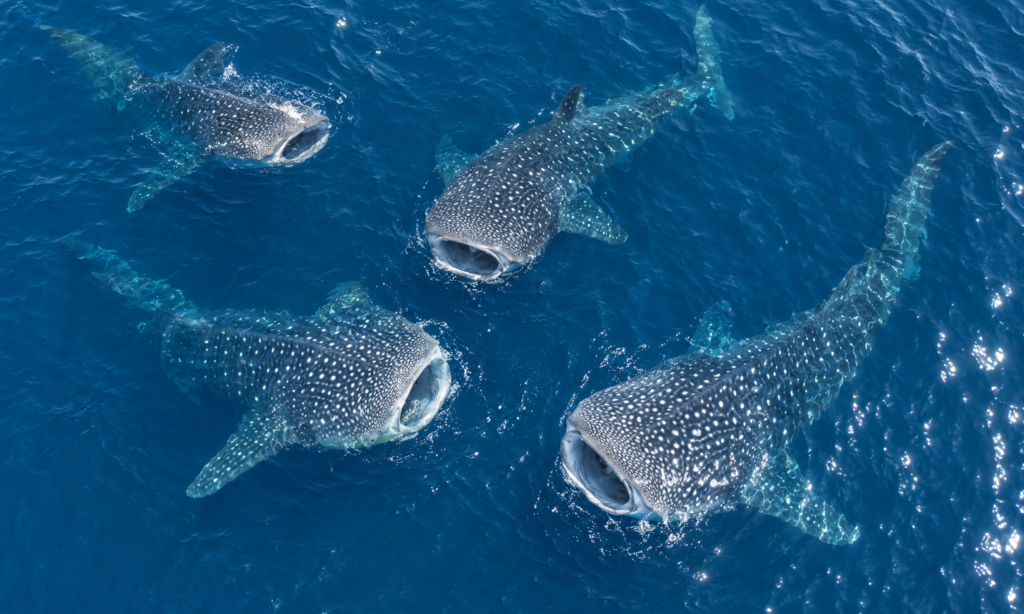
How many whale sharks will you see? And how many whale sharks can you see in a day? On the very best outings, more than 400 is possible. This is the best time for whale shark sightings, full stop. July is also the best time to visit Isla Mujeres for whale sharks, when calm water keeps them easy to spot.
Why do they choose these shores? The warm waters of the Mexican Caribbean stay rich in nutrients all summer. These magnificent animals make an extraordinary migration here just to eat. As filter feeders, they hoover up plankton, krill and small crustaceans. (NOAA) Other tiny marine species near the surface go down too.
One whale shark can eat around 117 kg of food daily. That’s why these marine giants stay at the surface for hours. Their natural habitat off the Yucatan Peninsula of Mexico makes watching easy. In peak season, the feeding pulls in sharks and snorkellers alike.
Shoulder Weeks — May, June, and Early September
Can you see whale sharks in May and June? Yes, but the odds drop at the edges. The run stretches from late May to mid-September most years. Still, chances dramatically drop at the beginning and end of the season. Operators quote roughly a 75% chance in these quieter weeks. And these majestic creatures are never guaranteed.
Official dates can shift slightly each year. The 2026 window runs May 15th to September 17th. (Por Esto) Any tour outside those dates is considered illegal in Mexico, so skip any boat that offers one. One diver’s trip on June 10th shows the gamble: three hours of searching for just 2 whale sharks. By July, gatherings can swell toward 100 individuals.
When Weather Decides Your Day
The calendar isn’t the only boss. Weather rules every whale shark adventure. Strong winds or bad weather can shut the harbour fast. On rough mornings, tour companies keep every boat docked and tours are cancelled. You’re heading about 20 miles out to sea. Nobody wants a storm that far from the island.
Some visitors lose their first two days to wind. On choppy days, the boat can rock for two hours. Even seasoned sailors get sick in those waves. My advice? Book early, pack dramamine and time your travels around settled weeks. Should you book your tour early? Yes, and give yourself backup days.
On a calm morning, the sea turns smooth as glass. Excellent weather brings warm temperatures and stunning sunsets. That clear, sunny day is when swimming with whale sharks feels magical. Good snorkelling conditions are why this is one of the region’s most sought-after activities. Timing decides how you enjoy this experience. Book Isla Mujeres whale shark tours for peak July mornings.
Isla Mujeres vs Cancún vs Holbox: Which Base
Is it best to swim with whale sharks in Isla Mujeres, Isla Holbox, or Cancun? Here’s the bit most guides bury: all three bases reach the exact same whale sharks. Every tour heads to one shared, deep-water area. So where would I stay? Isla Mujeres. It’s closest to the sharks and usually the cheapest launch point.
| Base | Access from Cancún | Distance to the sharks | Trade-off |
| Isla Mujeres | 20-minute ferry | Closest base, about 35 km | Island stay needed; usually the cheapest tours |
| Cancún (mainland) | No transfer | Farther than Isla Mujeres | Longer boat ride; easy hotel pickup |
| Isla Holbox | About a 3-hour drive, then a ferry | Same feeding area, longer trip | Some boats stop in greener, less clear water |
Where the Tours Actually Leave From
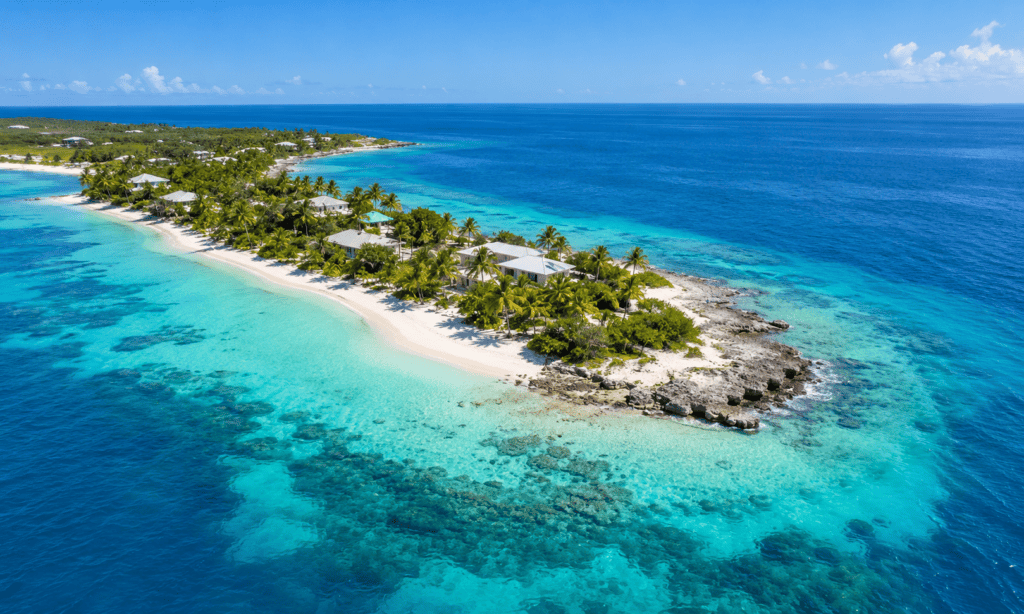
Where do whale shark tours leave from? East coast Mexico whale shark tours run from three main areas on the coast of Yucatan, Mexico. Before you book a boat, know what each one means for your day.
The main departure points are:
- Mainland Cancun — the busy city hub
- Isla Mujeres — a 20-minute ferry from Cancun
- Isla Holbox — a 3-hour drive from Cancun, then a ferry
Do All Three See the Same Whale Sharks?
Do all three locations see the same whale sharks? Mostly, yes. There’s no separate zone for Cancun, Holbox and Isla Mujeres. Instead, one deep-water patch sits east of Isla Contoy. It lies between Isla Mujeres and Holbox, about 35 km out.
Every boat heads to this same spot each morning. Wherever you book your whale shark tour, you meet the very same sharks. So, where to swim with whale sharks in the North of Yucatan? Honestly, it barely matters, because swimming with whale sharks is the same show from any base. Which is the closest base to the whale sharks? Isla Mujeres, by a clear margin.
One small difference: Isla Holbox whale shark tours sometimes spot a shark on the way out. They may stop in greenish water that isn’t as clear.
Why Whale Sharks Gather at the Afuera
Why do whale sharks gather at the Afuera? Local fishermen nicknamed this patch “Afuera,” meaning far out there. They first spotted it in the early 1990s. Tours started roughly 12 years later. Getting there takes 1 to 2 hours of bumpy navigation, heading north.
The whale sharks gather in large numbers to feed in summer. In these months, Little Tunny and Bonito spawn here. This small Atlantic Tuna species releases abundant fish eggs. Once water temperatures reach 25ºC, bonito eggs flood the water and attract whale sharks to feed. (PLOS ONE)
An older congregation of whale sharks once formed off Cabo Catoche in Holbox. That group fed mostly on a thinner concentration of zooplankton. It later became a protected area, the Whale Shark Biosphere Reserve. Today, even Holbox tours skip it for the richer Afuera.
Why Isla Mujeres Is the Best Base
After all my research, I’d base myself on Isla Mujeres without a second thought. My key findings kept pointing there. It simply makes the whole trip easier.
Isla Mujeres earns the nod because:
- It’s a genuinely beautiful island to base yourself on
- It’s very accessible and easy to reach
- It’s often the closest starting location to the whale sharks
Where can you find the best deals? Right here. That proximity keeps prices down, and one traveller found the lowest price at 150 USD. Don’t expect tours advertised in Mexican pesos, though.
One honest catch: the ride out can get choppy. Read the seasickness tips in the packing section before you go.
And one quirk worth knowing before you hand over money. Many visitors book with a dive centre on the island. Often, the trip is quietly subcontracted to another operator. It’s usual practice here, and your dive centre is basically acting as a travel agent. Ask who actually runs your boat.
Coming From Farther Afield
People come from all over Yucatan for this swim. Some wake at 5 am to make the boats. One group travelled from Cozumel and still arrived late. Their ferry from Cozumel to Playa del Carmen ran behind, so they missed the ferry from Cancun to Isla Mujeres.
That long haul adds up fast. With pre-transportation included, a Cozumel trip can hit 400 USD per person. Is that day trip worth it? I’d skip it. Staying on Isla Mujeres beats those exhausting transfers.
Getting to Isla Mujeres
How do you get to Isla Mujeres? Catch a passenger ferry from Puerto Juárez in Cancún. The crossing to Isla Mujeres takes 30 minutes to 1 hour, depending on the fast or slow ferry. First, though, you need to reach Cancún from wherever you are in Yucatan.
Why Base Yourself on the Island
Isla Mujeres is the closest inhabited area to the Afuera feeding ground. That makes it the ideal base to swim with whale sharks. It’s also a relaxed island, with white sand beaches, hotels and restaurants. Is Isla Mujeres the best base to swim with whale sharks? For most of you, yes.
The Ferry From Puerto Juárez
Where is the Puerto Juarez ferry terminal? On the mainland, just north of downtown Cancún. Isla Mujeres sits a short crossing off the coast. (Wikipedia) Join the ferry terminal queue and board the next boat. How long does the ferry to Isla Mujeres take? Usually under an hour.
Fast ferry or slow ferry to Isla Mujeres? Check the day’s schedule at the terminal, since times can change. For a whale shark day with an early start, take the quickest crossing.
Getting to Cancún First
Most travellers reach Cancún overland, then hop across the water. A common route starts in Playa del Carmen or Valladolid. After returning a rental car, you can take the bus into the city. Buses pull into the central bus terminal of Cancun, right in the centre.
Wondering how to get to Isla Mujeres from Cancun once you’re downtown? And how much is a taxi to the ferry terminal? One traveller took a taxi in about 10 minutes for 100 pesos. Crossing the centre of Cancun can feel like a concrete jungle. Here’s my hack: grab the cab. It beats a slow local bus every time.
Here’s the overland route in simple steps:
- From Playa del Carmen or Valladolid, reach Cancún by bus or rental car
- Arrive at the central bus terminal of Cancún, downtown
- Grab a 10-minute taxi to the Puerto Juárez ferry terminal (around 100 pesos)
- Board the ferry for the 30-minute to 1-hour crossing
How Much Time to Allow
Give yourself buffer time. Access is easy, but it isn’t instant. Many visitors spend about 2 days on the island around the tour. Friends recommended Isla Mujeres to one traveller for 12 years before they finally went. Don’t wait that long. The short trip across is well worth it.
Booking a Tour: Cost and What’s Included
How much does an Isla Mujeres whale shark tour cost? Shared group tours run around $150 USD (about $2500 MXN) per person. That usually covers your boat, certified guides, snorkel gear, life jackets and food on board. A small marine park and dock fee is paid separately on the day, so bring cash.
Quick Details at a Glance
Before you book your tour, here are the quick details every operator shares. Plan for about 6 hours from pickup to drop-off. Boats are small, but age limits vary.
- Duration: roughly 6 hours
- Capacity: up to 10 guests per boat
- Minimum age: varies by operator (4 to 15), so confirm when booking
- Operating season: May 15 to September 17 (official 2026 window)
How Much It Costs
So, what’s the real cost? Most shared trips sit near $150 USD, or $2500 MXN, per person. Local reporting put the standard 2026 swim price at about $149. (Por Esto) That price per person buys the whole core experience. A few extra fees sit on top, so budget a little more, and these tips to save money for solo travel can help.
Your seat is usually on a 36-foot speedboat, or similar 36-foot boats. They carry up to ten guests across the Caribbean Sea. After a short safety briefing, you head toward Isla Contoy. That water holds the largest concentration of whale sharks on Earth. (PLOS ONE)
What’s Included (and What Isn’t)
What’s included in a whale shark tour? Most operators bundle the essentials into the fare. These are typically included in the price:
- Hotel pickup from your lobby, or round transportation
- Light breakfast at the marina, usually coffee and bread
- Certified guides and a bilingual crew
- Snorkel gear, snorkelling equipment and life jackets
- 2 to 3 swims per person with the whale sharks
- Food and drinks on board: water and soft drinks, plus a sandwich, ceviche or snacks
- A snorkelling stop at Playa Norte or a nearby reef
What is not included in the tour? A few extras get charged on the side:
- Marine park and dock fee: about $10 per person, paid on the day
- A 6% booking fee on some online reservations
- GoPro rental: about $20 to $50, depending on the operator
What You’ll See and How Many Swims
What will you see on the tour? Beyond the sharks, you might meet giant manta rays, dolphins and turtles. All of them move freely in their natural habitat. This rich marine life is part of the protected reserve’s ecosystem, and your ticket supports its conservation.
How many swims do you get? Most tours give you 2 to 3 swims per person. You enter the water two pairs at a time, each with a certified guide. A typical day starts near 8 am and returns by 1:00 pm, with about 2 and a half hours at sea. Remember, whale shark sightings are not guaranteed with these wild, majestic creatures. On the way back, boats often stop at North Beach, loved for its crystal clear waters.
How to Choose a Tour Company
How do you choose a whale shark tour company? Many companies run Isla Mujeres trips, so compare a few before you commit. Look for certified guides, a bilingual crew and honest inclusions. Operators like Weymar, Islafuntours and the tours recommended by Privilege Aluxes are solid starting points for this unique experience. Booking solo? Run through these solo female travel safety tips before you pay a deposit.
One family-owned favourite is Sea Hawk, started around 30 years ago. Travellers rave about its owners, Ariel, Bonnie and Leira. It even has accommodation on location at the Sea Hawk Suites, with beach chairs for guests. That’s handy if you want to swim with whale sharks and sleep steps from the sand. It’s the stuff unforgettable memories are made of.
Pickup, Cameras, and Small Extras
Do you get hotel pickup? Usually, yes. Most tours include a pick up from your hotel lobby. Want footage of the giants? You can rent a GoPro for about $20 to $50, depending on the operator. Some cheaper rentals need your own micro SD card, so ask first. Any underwater camera works too.
What the Day Is Really Like
What is a whale shark day in Isla Mujeres really like? Expect an early pickup, a long boat ride to open water and a few short swims beside giant sharks. You’ll spend roughly 2 to 2.5 hours at sea, with a reef snorkel before heading back. By early afternoon, you’re on the island again.
First, Set Your Expectations
What should you expect for an Isla Mujeres whale sharks swim? Honestly? No two trips are alike. The whole outing leans on wild animals and weather, two deeply unpredictable factors. Set your expectations low and let the ocean surprise you. Every day out there is a different experience.
The Boat-Day Timeline
What time does the tour start? Early. One tour collects guests between 6:30 am – 7:00 am. A tour run by Weymar and Islafuntours, recommended by Privilege Aluxes, begins at 8 am. You board at a private marina after a safety briefing.
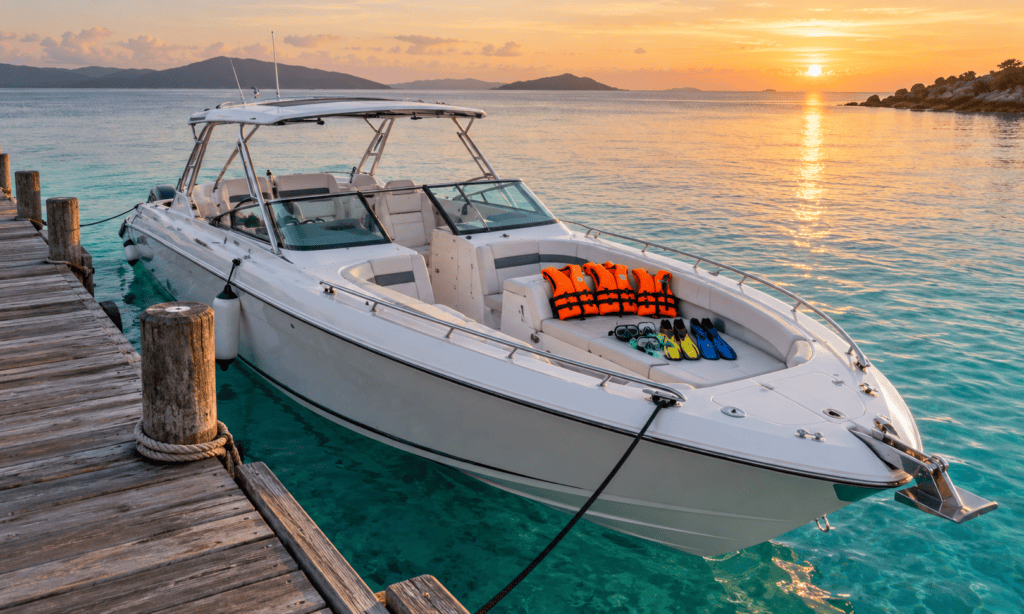
A typical day on the water looks like this:
- Early pickup at your hotel, then the private marina
- Board a 36-foot boat and sail past the pier
- Head to the Afuera, out near Isla Contoy
- About 2 and a half hours at sea for snorkelling with whale sharks
- A 40-minute reef snorkel at Isla Contoy or Playa Norte (North Beach)
- Return to Isla Mujeres by early afternoon — some boats by 1:00 pm, others back by 2:00 pm
How Many Whale Sharks You Might See
How many whale sharks will you see? It swings wildly by the day. The number of whale sharks depends on timing and plain luck. The season runs May–September, but in July or August you’ll likely see more whale sharks. Some lucky swimmers end up completely surrounded.
On one dream day, snorkellers counted close to 50 sharks. They were truly surrounded by whale sharks. Still, the size of your group shapes how many turns you get. What happens if there are fewer than 5 whale sharks? With 5 whale sharks or less, some operators allow only non-swimming sightings.
Time You Actually Get in the Water
How much time will you get to swim with whale sharks in Isla Mujeres? Less than you’d hope, and that’s by design. The tours are regulated, and the whale sharks are protected here. Only two people in the water at a time are allowed. You enter in pairs, each buddy team beside a certified guide.
Boats like Sea Hawk cap each trip at 10 customers. Swimmers go two pairs at a time, in a short waiting line. No more than 2 swimmers share one shark. On a busy day, a buddy team might get less than a minute. You slide in with little splashing, and the boat’s edge sits high, so being a confident snorkeller helps.
Do you have to wear a life jacket? Yes. Since 2019, every swimmer must wear life jackets. It stops the sharks being crowded by diving tourists. It also means you can’t dive down for a lower angle.
What It Actually Feels Like
What is it like to swim with whale sharks in Mexico? Humbling, by every account I’ve read. What is the whale shark swim experience like up close? These are massive animals, and a little intimidating at first. Yet they’re gentle giants, swimming peacefully while feeding on plankton. A specialised guide keeps you at a respectful distance.
How big are whale sharks? They can measure up to 12 metres long. (NOAA) Seeing these sea giants in their natural habitat sounds surreal. The minimum distance is hard to hold, though, and one shark’s caudal fin brushed a swimmer. A few even pause to pose vertically in the crystal clear waters.
A great guide makes the whole day. Travellers still rave about a guide named Tyto, endlessly patient with questions. Em and her partner called it an all-time favourite experience. Giant manta rays, dolphins and turtles gliding past on top of that? Truly unforgettable.
When the Sea Doesn’t Cooperate
Not every morning is glassy. To reach open waters, boats push far from shore. The calm turquoise waters near Isla Mujeres give way to deep blue waves. Hit a rough sea, and the bumpy ride will test your stomach. The seasickness tips in the packing section help.
One diver spent two hours scanning an empty horizon. On a hard early-season day, the captain found almost nothing. Boat captains radio each other to share sightings. That outing ended with only seconds in the water, and there’s more on that in my verdict below. Some days bring rain too. That’s simply the actual experience of swimming with whale sharks.
Safety comes first out here. When seas turn dangerous, the Port Master keeps the port closed. One trip even left the pier late, at 10 am. Conditions decide everything, every single morning before you swim with Isla Mujeres whale sharks.
The Rules Every Swimmer Must Follow
What is the regulation in place to swim with whale sharks in Mexico? The Mexican government sets strict rules for every tour. You wear a life jacket, swim in pairs with a guide and keep your distance. Touching, chasing, scuba diving and flash photography are all banned. These rules protect you and the sharks.
Why the Rules Exist
Why so many regulations and guidelines? Whale sharks are a protected species here. Mexican environmental authorities, led by SEMARNAT and its protected-areas agency CONANP, regulate these activities to guard their well-being. The goal is sustainable tourism practices that keep the giants safe. The good operators treat every rule as basic conservation and safety.
The waters off Quintana Roo also sit inside protected zones. Parts fall under the Parque Nacional Isla Mujeres-Cancun-Nizuc and the Isla Contoy National Park. The Afuera feeding ground links to the wider Biosphere Reserve of the Mexican Caribbean. A separate Whale Shark Biosphere Reserve was created off Cabo Catoche in Holbox. (CONANP)
The Main Rules at a Glance
What are the rules for swimming with whale sharks? Operators post the same core list on every boat. How far must you stay from a whale shark? Keep 2 metres from its body. These are the key regulations:
- Always wear a life jacket — life jackets are mandatory
- Stay with a certified guide, and follow the guide’s instructions
- Keep a 2m distance from the shark’s body
- Stay 3m away from the tail fin (the caudal fin)
- Only one boat per whale shark at a time
- Swim in pairs — only two people in the water at a time
- Don’t touch, ride or chase the sharks
- Don’t block their path; enter the water quietly, with no splashing
- No flash photography, no selfie sticks, no cameras with long attachments
Can you scuba dive with whale sharks? No. Scuba diving and freediving are forbidden on these tours. It keeps bubbles and divers from crowding the animals. It also means every snorkeller shares the surface on equal terms. Picture them swimming peacefully, and the limits make sense.
Can you touch a whale shark? Never. No touching, no riding, no chasing is the firmest rule of all. Keep a respectful distance and let the shark set the pace. Drift too close and your guide will wave you back, fast.
Gear and Sunscreen Rules
Can you use sunscreen before the swim? This one splits operators. The strictest ban sunscreen entirely and ask for UV-protected swimming apparel instead. Others allow biodegradable sunscreen only, never a regular brand. My pick? Skip the lotion and wear a rashguard. It settles the question.
A quick gear note worth knowing:
- Life jacket: mandatory for everyone, always
- Wetsuits: some operators no longer allow them as a floating device
- Sun protection: biodegradable sunscreen only, or cover up with UV-protected swimwear
When Entry Is Not Allowed
Sometimes the rules simply stop you getting in. If there are fewer than 5 whale sharks in the area, water entry is prohibited. With 5 whale sharks or less, some operators allow only non-swimming sightings. A minimum group size of 5 people is often needed to run the trip at all.
Swim time is capped too. Most swimmers enter twice, for about 10 minutes total. Each turn is short so everyone gets a fair go. The system runs in pairs, two swimmers rotating per shark.
Who Should Not Join
Who should not do the tour? Pregnant travellers, people with heart conditions and anyone under the influence are not permitted. The full health and age list sits in the packing section below. Weather limits apply too: no boats leave when the Coast Guard issues a 14-knot wind advisory.
Do you have to wear a life jacket even if you swim well? Yes, always. The sharks can reach up to 12 metres long, and the vest keeps everyone calm and visible. On rough-weather days, the Port Master can close the port completely. When that happens, no boat leaves. Safety comes first.
What to Pack and Who Shouldn’t Go
What should you pack for a whale shark tour? A swimsuit, towel, biodegradable sunscreen, a rashguard and motion sickness pills. Leave drones and regular sunscreen at the hotel. And be honest with yourself: this tour isn’t for everyone. Pregnant women and people with heart conditions should sit this one out.
Packing Checklist
What to bring on a whale shark tour comes down to sun, water and comfort. There are no changing rooms on the boats, so wear your swimsuit from the hotel. For the rest of your trip, use my full solo female travel packing list. Pack light, but don’t skip these essentials:
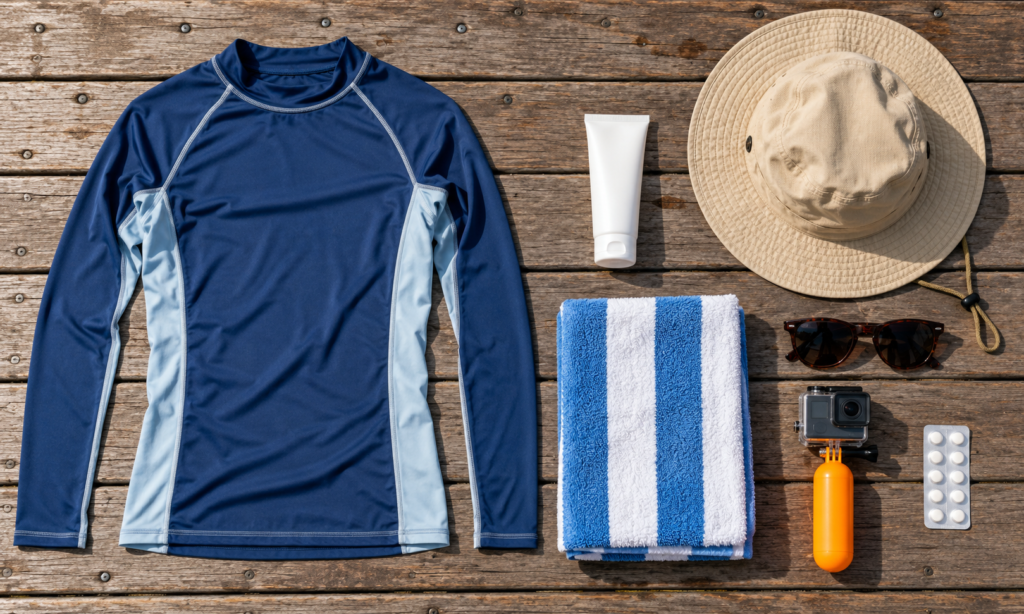
- Bathing suit, worn under your clothes before you leave
- Towel and dry clothes for the return trip
- Biodegradable sunscreen or biodegradable sunblock (never conventional sunscreen)
- A rashguard or long sleeve t-shirt for additional sun protection
- Cap or hat, plus sunglasses
- Sea sickness remedies if you’re prone to it
- Cash for tips
Why is the sunscreen rule so strict? Conventional sunscreen harms the marine ecosystem the sharks feed in. Operators insist on biodegradable sunblock, or sun protection wear instead. A rashguard covers more skin and skips the chemicals entirely. It’s what I’d pack.
What’s Forbidden on the Boat
What is forbidden on the tour? A few things are banned for safety and conservation. Can you bring a camera? Sometimes, but the rules are specific. Are drones allowed? Never.
- Drones: completely forbidden
- Video cameras: prohibited in certain areas
- Underwater camera: only allowed on some tours, so ask first
- Wetsuits: prohibited on some tours
- Life jackets: mandatory on every tour
Cameras Worth Packing
Want footage of the giants? An underwater camera is the best add-on you can bring. A camera with grip and float stops it sinking if you drop it. No gear? Rent a GoPro on the day.
GoPro rental runs about $20 to $50, depending on the operator. The pricier $50 GoPro rental usually includes an SD card you keep. Either way, check the camera is allowed on your tour first.
Health and Age Restrictions
Who should not swim with whale sharks? This is an open-sea activity, so fitness matters. Can pregnant women do the whale shark tour? No. Pregnancy is a clear restriction on every boat. Operators like Mexico Whale Shark are firm on it, because they head into open seas.
The tour is also not recommended for several conditions. Operators advise against joining if you have:
- Heart problems or hypertension
- Respiratory problems or epilepsy
- Diabetes or claustrophobia
Do you need to know how to swim? Yes. Basic swimming is a prerequisite, even with a life jacket. You’ll be in deep water beside the whale sharks, far from shore. Being comfortable in the sea makes the whole day safer, and far more fun.
What is the minimum age for the whale shark tour? It varies by operator more than anything. Some take children as young as 4 years old. Others set it at 8 to 10 years old, or require a minimum of 15 years old. Around 12 is a common cutoff. Travelling with minors? Confirm when booking to avoid surprises at the dock.
Beating Seasickness
How do you avoid seasickness on the tour? Prepare, because the open water gets rough. Operators say the trip isn’t recommended for seasickness-prone travellers once waves reach 1.1 to 1.3 metres. Take your sea sickness pills (dramamine is a common choice) with breakfast, not after. Wait until you feel queasy and it’s usually too late.
A couple of final prep tips go a long way:
- Set low expectations, so a quiet day still feels like a win
- Schedule your dive early in the trip, in case it’s postponed due to bad weather
Even seasoned travellers pack motion sickness medication for this one. The ride out can pitch and roll for hours. A little planning keeps your focus where it belongs: on the whale sharks, not your stomach.
This guide is general travel information, not medical advice. Talk to your doctor before taking motion-sickness medicine or joining the tour with a health condition, and confirm current rules directly with your operator.
Is It Ethical?
Is it ethical to swim with whale sharks? It can be, but I won’t pretend the answer is simple. Done well, responsible tourism funds conservation and helps an endangered animal. Done badly, overcrowding crams too many boats onto too few sharks. The ethics come down almost entirely to the operator you choose.
Are Whale Sharks Endangered?
Are whale sharks endangered? Yes. They were listed as Endangered in 2016 on the IUCN Red List. Their global population has fallen more than 50% in roughly 75 years. (IUCN) That makes every encounter a privilege, not a given.
There’s cautious hope wherever protection is enforced. These depleted numbers still face serious threats, from overfishing to accidental bycatch. Smart conservation measures are what keep the giants coming back.
The Fin Trade They’re Up Against
The biggest danger isn’t tourism at all. It’s the fin trade and illegal fin fishing. Shark fins fetch shocking prices on the black market. One operator cites figures up to $400 USD per kg. These atrocities are exactly what good ecotourism works against.
Here’s the hopeful logic behind well-run tours. When fishermen communities see sharks as worth alive, they protect them. A living whale shark earns more than dead shark fins ever could. That’s how a swim can genuinely fund protecting the species.
The Real Problem: Overcrowding
So, are whale shark tours bad for the sharks? Not by default. Overcrowding is the real risk. The Afuera gathering draws far too many boats every summer. Do whale shark tours harm the animals? They can, when the rules buckle under pressure.
How many boats are allowed with one whale shark? The limits look fine on paper. Then you read about the water:
- Around 300 official boat licences exist for the zone
- Plus uncounted pirate boats operating illegally
- Official carrying-capacity limits allow 160 boats and 1,350 visitors a day (Por Esto)
- The feeding patch is only about 18 km²
- One diver counted 33 other boats, each with 10 passengers
- That meant more than 300 swimmers waiting for two sharks
This is where the rules meet the real ocean. Boats bunch into swirls and long waiting lines, and the regulation-versus-reality gap widens fast. Respecting the minimum distance from a shark’s body or its caudal fin becomes almost impossible. The animals get bombarded by tourists instead of admired from afar. Even in 2026, crew members still complain about boats crowding a single shark. (Por Esto)
So, How Do You Swim Ethically?
Is whale shark tourism sustainable? It can be, in the right hands. How do whale shark tours help conservation? The fees fund patrols, research and eco-conscious communities. Good operators turn curious visitors into lifelong protectors of the sea.
How to choose a responsible whale shark tour? Ignore the price for a second and judge the behaviour. A truly responsible operator puts respectful encounters ahead of extra seats. These are the signs I’d check:
- Small groups and strict two-swimmer limits, even on busy days
- Guides who enforce distance instead of chasing sharks
- Clear support for marine conservation and conservation initiatives
- Honest responsible interactions, not a rush to maximise boats
Oddly, this is still a taboo subject in parts of the ocean community. Even the dive community rarely debates the ethics of shark encounter experiences openly. The same unease applies to swimming with white sharks, tiger sharks, bull sharks or hammerhead sharks. Asking hard questions is itself an ethical act.
Ethics Beyond the Water
The island’s ethics don’t stop at the shoreline. Isla Mujeres markets itself as an eco-friendly destination, yet the reality can jar. Travellers describe sand trashed with plastic cups near the minimarts. Some even spend sunset beach cleaning, between abandoned bottles and plastic bags of ice.
The contrast grows the more you explore. Drinking and partying crowds leave litter along the Malecon seafront promenade. The east shore and west shore both show the strain. Near the whale shark monument, one visitor noticed a permanent smell of petrol strong enough to trigger a headache.
Even the island’s famous golf carts tell a story. Most are not electrical, despite the green image. Playa Norte stays gorgeous, but the pressure shows. Caring for the place, not just the sharks, is part of travelling ethically here.
Is It Worth It? Honest Verdict
Is swimming with whale sharks worth it? For most travellers, yes. But the honest verdict depends on luck and expectations. On a great day, you drift beside dozens of whale sharks. On a rough one, you fight the sea for a glimpse. The truth sits somewhere in between.
The Case For: When It’s Magic
For some visitors, this swim ranks among life’s highlights. The travel duo Hudson and Emily said it far exceeded expectations. They called it one of the most incredible experiences they’ve had, and a true must-do experience. For them, this bucket list item beat any brochure.
How many whale sharks will you actually see on a lucky day? Sometimes an astonishing number. One couple counted close to 50 whale sharks around their boat. That’s believable, given the record aerial counts in the season section above.
On days like that, swimmers describe feeling immensely grateful. Being in the presence of marine animals this large changes you. It ticks off a bucket list dream most people never even attempt. No aquarium glass, no crowds overhead. Just open blue water.
The Case Against: When It Falls Flat
Now the part most guides skip. Not every trip earns the hype. One experienced diver left with genuinely mixed feelings. Her mixed-feeling experience came down to timing, crowds and plain bad luck. The magic can vanish before you even reach the water.
Is it worth it despite the crowds? For that diver, barely. After a long, rough ride, reality hit back hard. Her outing meant 4 hours at sea for just 30 seconds in the water. That’s the real answer to what are the downsides of the whale shark tour.
The verdict can even sour on the destination. That same reviewer decided she won’t come back soon. There are other places still to explore across Yucatan. She’d rather see Merida or Banco Chinchorro, and give Holbox a chance, which is more preserved but has more expensive accommodation. Rather swap crowds for calm water? The lagoon town of Bacalar is another Quintana Roo favourite.
A Real Reader’s Take
A balanced verdict needs real voices, not just bloggers. One commenter, Ann Ottinger, booked 3 days with her dive club. The first day was choppy, and they saw none at all. Then the weather turned, and patience paid off beautifully.
On the second and third days, the sharks arrived in force. Her group logged around 10 jumps per couple per day. Her bottom line? Worth it, no hesitation. She even found a wetsuit comfier than the bulky life jacket.
The Honest Range
So here’s my honest review, without the sales gloss. The outcome is a different experience every single day. Keep expectations low and let the sea surprise you, and you’ll rarely feel cheated. You go willing to take chances, because that’s how nature works.
Here’s the realistic spread of what you might get:
- Best case: close to 50 sharks, or 10 jumps per couple per day
- Typical case: a handful of solid, memorable encounters
- Worst case: a rough first day, you saw none, or minutes in the water
So, Would You Do It Again?
Would I book it after all this research? Yes. Would most people do it again? Honestly, yes. Is the whale shark tour worth the money, and is it worth it in Isla Mujeres? With the right operator and fair weather, absolutely. Still, even after 12 years of friends’ praise, one diver left unconvinced. That’s proof expectations shape the day.
My take, having weighed every account: it’s worth giving it a try. Pair the swim with a slow morning on Playa Norte, bring a buddy and keep your hopes steady. Going alone? Read these tips for solo female travellers before you book. The whale sharks owe you nothing, and that’s exactly what makes meeting them so unforgettable.
Before You Book: Small Details That Change Your Whole Day
Here’s the maths most tour listings never show you. A full boat holds ten guests, which makes five swim pairs. Only one pair enters beside a shark at a time. Two swims each means ten separate drops before anyone repeats. On a thin day, that queue crawls while the sharks drift off. So before you pay, ask one simple question: how many guests ride on my boat?
A “biodegradable” label doesn’t prove your sunscreen is safe. It’s an easy mistake, and I’d have trusted that word on the bottle too. Read the active ingredients instead. NOAA names oxybenzone and octinoxate as the best-known chemicals harming corals and marine life. Hawaii became the first US state to ban sunscreens containing both. Many swimmers skip lotion entirely and wear a long-sleeve rashguard.
Seasickness is far easier to prevent than to cure at sea. Family-medicine guidance from the AAFP says prevention beats treating symptoms once they start. It also warns against boarding on an empty stomach. Many motion-sickness tablets cause drowsiness, so the CDC advises asking a healthcare professional first. Once you’re on deck, keep your eyes on the steady horizon.
The 2026 season is quieter and more competitive than before. Local press reported visitor numbers roughly halving and a price war between operators. Crews still complain about boats crowding a single shark. A cheaper ticket can mean corners get cut at sea. Judge an operator by group size and guide behaviour first, then price.
Quick Answers for 2026
When does the 2026 whale shark season start in Isla Mujeres?
The 2026 swim season officially opens May 15 and closes September 17. July and August give you the strongest odds. (Por Esto)
How much does a whale shark tour cost in 2026?
Shared tours are reported at around $149 to $150 USD per person. Bring cash for the small marine park and dock fee on top. Private charters cost far more.
Do tours from Cancún and Isla Mujeres see the same whale sharks?
Yes. Every operator heads to the same offshore feeding aggregation east of the Yucatán Peninsula. (PLOS ONE) Isla Mujeres just has the shortest ride out.
What sunscreen can I use on a whale shark tour?
Skip anything with oxybenzone or octinoxate. Some operators ban sunscreen entirely, so a rashguard is your safest bet. (NOAA)
FAQs (People Also Ask)
Yes, with a certified guide it’s considered very safe. These are gentle giants, harmless filter feeders that eat only plankton. Tours are regulated, and your guide stays beside you the whole time.
No. Wild animals never come with guarantees. Seeing none is rare, though: operators report roughly a 95% success rate in July and August, and about 75% in June and September.
Policies differ by operator. Some offer no refund if the sharks simply don’t show, while others reschedule. Always check the no-sighting policy before you pay.
Yes, non-swimmers can ride along and take photos. Just know the price is usually the same, since boat space is limited either way.
Plan for about 6 hours from pickup to drop-off, with 2 to 3 swims. You enter two swimmers at a time, each pair with the guide.
The open water can get choppy on the way out. If you’re prone to seasickness, take your remedies with breakfast, not after. On dangerous days, the port closes and no boats leave.
The rules keep you a respectful distance away: 2 metres from the body and 3 metres from the tail. You swim as two people plus a guide, never crowding the animal.
About the Author
Katherine Brown is the creator of GirlWay, where she shares honest, practical travel guides for women exploring the world solo. This guide was researched from operator information, scientific studies, local news reports and traveler accounts. It is not a first-hand account of a whale shark swim.
Disclaimer: This guide is general travel information, not medical advice. Talk to your doctor before taking motion-sickness medicine or joining the tour with a health condition. Tour prices, dates and rules change, so confirm them directly with your operator.
Sources
- NOAA Ocean Service: What is the biggest fish in the ocean?
- IUCN: Whale sharks listed as Endangered (2016)
- IUCN Red List: Whale shark
- PLOS ONE: An unprecedented aggregation of whale sharks in Mexican Caribbean waters
- Smithsonian Magazine: How do you feed a whale shark?
- CONANP: Whale Shark Biosphere Reserve
- NOAA CORIS: UV filters, sunscreen and corals
- Pew Stateline: Hawaii’s sunscreen ban
- CDC: Motion sickness
- AAFP: Prevention and treatment of motion sickness
- Por Esto: 2026 season dates and price
- Por Esto: Visitor decline forecast for 2026
- Por Esto: Management plan carrying capacity
- Por Esto: Boat crowding complaints, 2026
- Wikipedia: Isla Mujeres
