

The first time I packed solo, I brought four pairs of shoes. I brought zero backup copies of my passport. By day three, three of those shoes were dead weight, and I was emailing myself a passport photo from a sketchy café. That trip taught me more than any checklist could.
This solo female travel packing list comes from that kind of trial and error. It’s not a flat list of every object that fits in a bag; it’s organized by how you’ll actually use things. Once you know why an item earns its spot, you stop overpacking on instinct. Twenty-seven items, grouped so you can scan, skip, and adapt, with destination-specific tips, a printable checklist, and a “before you leave” routine included. Let’s get you packed.
Start With the Bag Everything Else Follows
Most guides open with clothes. That’s the wrong end of the problem. Your bag sets the ceiling on everything else you pack; it decides how much you bring, how easily you move through unfamiliar streets, and even how much of a target you look like to someone watching.
Aim for carry-on only whenever the trip allows it. Solo, a single bag you keep close removes whole categories of stress from your trip.
- No standing alone at baggage claim after a 6 a.m. landing
- No lost luggage where you can’t explain what’s missing
- No dragging 50 pounds up a walk-up with no elevator
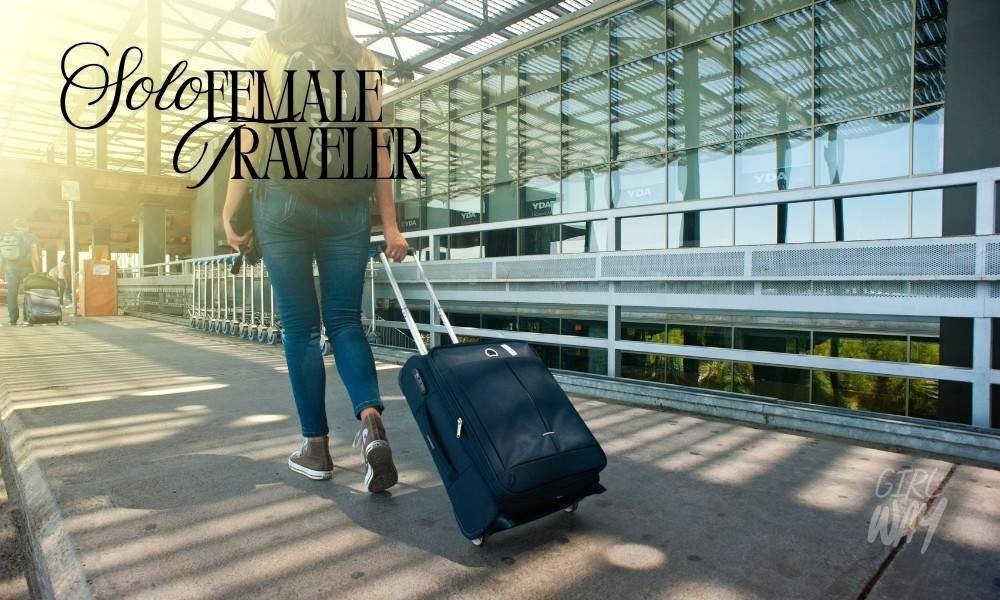
1. A 35–45 L Carry-On Bag
For one to two weeks, 40L is the sweet spot. It’s roomy enough for a real wardrobe, yet small enough to stay carry-on legal on most carriers. A common mistake is grabbing the biggest bag that qualifies; you’ll just fill the extra liters with things you never touch. Bag size quietly sets your discipline for the whole trip.
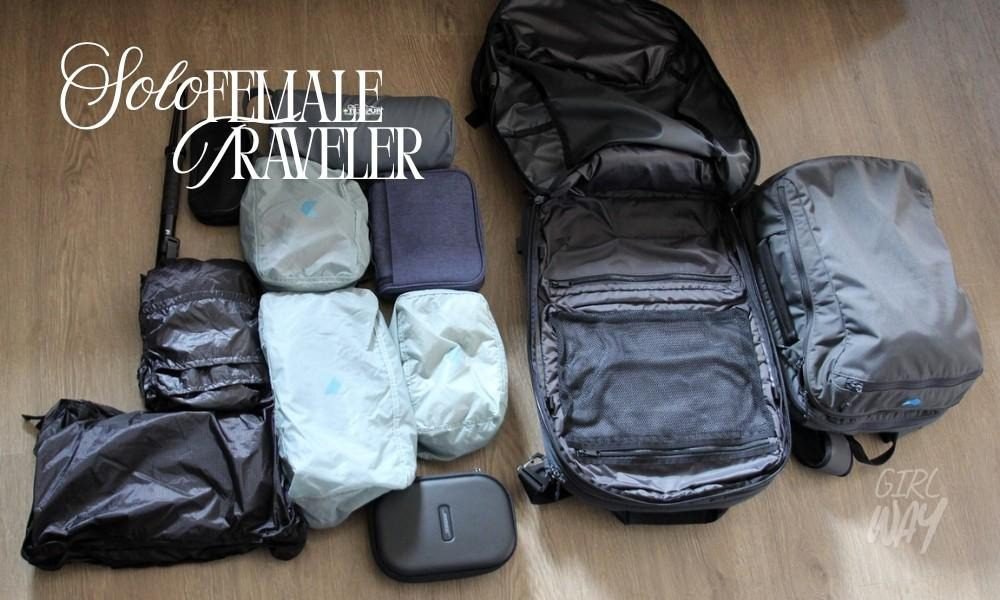
Pick a backpack for stairs, cobblestones, or unpaved roads. Pick a wheeled bag for smooth-pavement cities or back problems. For product examples, the Osprey Fairview 40 and Cotopaxi Allpa 35L are popular for a reason: both fit carry-on rules and open flat like a suitcase. Neither is “better” in a vacuum; it depends on the ground under your feet and your own spine.
2. A Crossbody Anti-Theft Day Bag
This is your everyday carry: a phone, a wallet, some cash, and sometimes your passport. Look for slash-resistant straps and lockable zippers when choosing one. Worn across the body with the pouch in front, it’s hard to grab, far harder than a tote or shoulder bag would be. A thief wants easy, and this isn’t.
Brands like Pacsafe and Travelon build crossbody bags with cut-proof straps built in, which are worth checking if anti-theft features matter to you. What most people miss: how the bag looks matters too. A flashy branded bag broadcasts “tourist with money,” while a plain, dark one disappears into the crowd. Blending in is its own kind of safety.
3. A Packable Spare Bag
It folds to palm size and weighs almost nothing. It rescues you the day you overbuy at a market and also works as a laundry sack or beach bag. On the flight home, it becomes your personal item, handy when souvenirs won’t fit anywhere else in your main bag.
This is the cheapest insurance in your bag. You barely notice it until the moment you need it, and then it saves you from an overpriced airport tote. Look for one that clips to your main bag; a small carabiner loop keeps it from floating around loose. Day-pack styles also work for short hikes or beach trips.
4. Packing Cubes
Underrated until you use them. Packing cubes turn a chaotic bag into a filing system: tops in one, bottoms in another, and underwear in a third. The real benefit isn’t compression; it’s never having to unpack your whole bag to find one shirt. For hostel and one-night stays, that alone justifies the space.
A common mistake is buying too many. Three or four cubes are plenty for a carry-on bag, and any more is just added fabric weight. Color-coding them helps you grab the right one fast. Some travelers use one cube as a dirty-laundry bag, keeping clean and worn clothes neatly apart.
What to Wear: The Capsule Wardrobe Strategy
Here’s where overpacking actually happens. Ten minutes of planning saves you pounds of unnecessary weight.
A travel capsule wardrobe means every piece works with every other piece. Lock into a tight palette using neutrals plus one or two accent colors, and suddenly eight items produce a dozen outfits. The math quietly works for you once the palette is locked in.
A realistic target for a week solo:
- 2-3 bottoms
- 4-5 tops
- 1 dress
- 1 layering piece
- Underwear and socks to match
You’ll re-wear things. Everyone does. Nobody you meet abroad is logging your repeats.
5. Versatile Bottoms (2-3)
One pair of dark jeans or trousers that pass for dinner, one comfortable pair for long travel days, and maybe shorts or a skirt depending on climate. Dark colors hide stains and wrinkles well, which matters a lot when laundry isn’t daily; a spilled coffee won’t end your outfit’s day.
Choose bottoms that work across settings; the same trousers should suit a museum and a casual dinner. That flexibility is the whole point of a capsule. Avoid stiff fabrics that crease badly in a packing cube. Stretch denim and travel-weave trousers bounce back better. Comfort wins over style on travel days, every time.
6. Mix-and-Match Tops (4-5)
Lightweight, quick-drying fabrics beat cotton on the road. Cotton soaks up sweat and dries slowly after a wash, a problem when you’re hand-washing in a sink. Merino wool tops are a quiet favorite for solo travel since they resist odor and can be worn several days between washes.
Pack mostly basics, then add one or two nicer tops for a night out. Solid colors mix more easily than busy prints do. A common mistake is packing tops that only match one bottom; every top should pair with at least two bottoms. That’s how eight pieces become a dozen outfits.
7. One Dress or Jumpsuit
A single versatile dress pulls real weight. It dresses up or down with ease, from sandals in the day to nicer shoes at night, and it handles a nice dinner or a smarter venue easily. It also saves you on days you can’t face coordinating separates; throw it on and you’re done.
Choose a wrinkle-resistant fabric in a neutral color when picking your dress. A jersey or travel-knit dress packs down small and recovers its shape fast; avoid anything that needs ironing on the road. A wrap dress or simple shift works almost anywhere, since bold prints are memorable and you can’t wear them twice in the same photos.
8. Layering Pieces
A light cardigan, a packable down jacket, or a merino pullover-choose based on where you’re headed. Layers beat bulk. Three thin layers adapt to more weather than one heavy coat, and they pack down smaller in your bag.
A packable down jacket is the MVP for cool climates. It crushes into its own pocket, weighs almost nothing, and doubles as a pillow on long journeys. This works well when temperatures swing day to night but becomes a problem when you pack one heavy item instead, since that single coat only works at one temperature.
9. A Scarf or Sarong
The hardest-working item you’ll bring is a blanket on a cold bus, a cover-up for religious sites, a beach towel, a pillow, a sunshade, and an outfit refresh. One lightweight piece doing six jobs; nothing else in your bag works this hard. That versatility is exactly why it earns priority space.
A large, thin scarf in a neutral tone is most flexible, layering over outfits and dressing them up instantly, while a sarong does similar duty in hot climates. In conservative countries, this item is non-negotiable. Many temples and churches require covered shoulders, and keeping a scarf in your day bag means you’re never turned away.
10. Comfortable Walking Shoes (Max 3 Pairs)
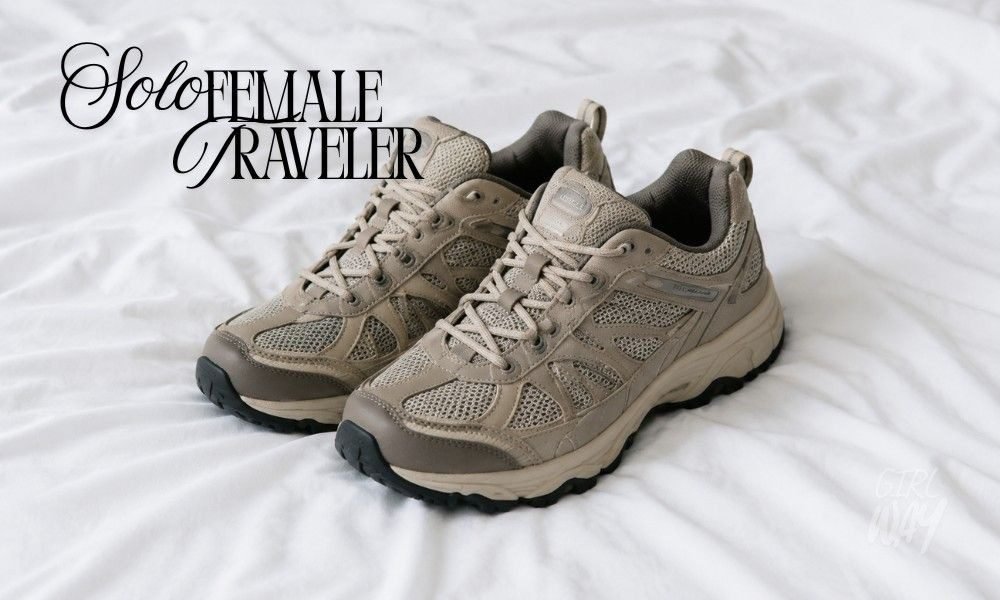
You’ll walk more than you think. Bring one pair of broken-in walking shoes, and wear them on the plane since they’re the heaviest. Brands like Allbirds, Vionic, or broken-in white leather sneakers suit most cities well; add sandals or flats, and maybe one dressier pair.
Never pack new shoes you haven’t broken in; blisters can quietly ruin a city you waited years to see. Three pairs is a hard ceiling, not a target. Shoes are heavy and bulky, and a common mistake is packing “options” you’ll never actually wear on the trip.
11. Sleepwear You’d Answer the Door In
A small thing most lists skip entirely. In shared rooms or a 3 a.m. fire alarm, you want hallway-appropriate clothes on hand. Modest, comfortable sleepwear doubles as loungewear, saving you a separate set. One item, two jobs done.
A simple set of soft shorts and a tee works well: decent enough for a hostel hallway, and also comfortable for lounging in a hotel room. This matters more in hostels than hotels, where you’ll share bathrooms and common areas. Being able to walk out without changing saves real hassle at midnight.
Female Travel Safety Gear That Earns Its Place
Let me be straight here. A lot of female travel safety gear is fear with a price tag attached to it. You don’t need a tactical arsenal, but a few items give real peace of mind and pull practical weight on the road.
12. A Portable Door Lock or Door Wedge
Small, light, and it does one job well. It adds security to budget rooms, hostels, or rentals with weak locks. The wedge style doubles as a doorstop and works great in older buildings with iffy hardware; it’s useless on doors that open outward, so check the swing first.
The Addalock portable door lock is a common pick for travelers, installing in seconds on most inward-opening doors. This works well when you’re unsure about a lock’s quality but becomes pointless on outward-opening or sliding doors. The reality is it’s about peace of mind, not fortress security.
13. A Personal Alarm
It clips to your bag and screams when pulled. Its value isn’t fighting anyone off its attention, which an opportunist actively avoids. Cheap, tiny, and worth it for the reassurance alone, it weighs almost nothing in your day bag.
Most models hit around 120–130 decibels, loud enough to startle and draw eyes fast. The point is to make a quiet situation suddenly very public. Keep it clipped where you can reach it fast; buried in a bag, it’s useless, and a common mistake is packing it deep and forgetting it exists.
14. A Money Belt or Hidden Pouch
Not for daily use. Fishing around your waistband at a café looks suspicious, and it also defeats the whole point of hiding it. Use it to stash backup cash, a spare card, and a passport copy, and wear it only in transit between cities, when theft risk is highest.
Crowded trains, buses, and stations are where pickpockets work best, so a hidden pouch keeps your backups safe there. The key word is backup. Your daily spending money stays in your day bag, and your emergency stash stays hidden and untouched.
15. RFID-Blocking Card Sleeves
They cost almost nothing and take up no space at all, removing one small worry from your mind. Slip your cards and passport inside them; toss them in even if the risk is debatable, since the peace of mind is basically free either way.
The threat of wireless card skimming is often overstated, but the sleeves weigh nothing and cost a few dollars. It’s an easy yes. You can also buy a wallet with RFID-blocking built in, which is one less loose item to track, and either approach works fine.
16. A Small Padlock or Cable Lock
For hostel lockers, overnight trains, or tethering your pack to something fixed. A rookie mistake is buying a rigid TSA lock; locker hasps vary wildly in size, and a flexible cable lock is often the more versatile pick since it bends to fit odd shapes.
A combination lock beats a key lock for travel; you can’t lose a combination the way you lose a tiny key. Use it to lock your bag’s zippers in dorms, or loop it through a bed frame for added security. It’s overkill for a private hotel room with a safe.
17. A Spare Wedge for the Bathroom
Sounds odd until you’ve showered with a broken stall lock. A second tiny wedge fixes it instantly, no fuss involved, and you’re never stuck holding a door with your foot. Optional, but you only learn this the hard way.
Shared hostel bathrooms often have flimsy or missing locks. A small rubber wedge jams the door shut for almost no weight. This is a niche item; I’ll admit to skipping it for hotel-only trips, but for hostel-heavy travel, it’s a small comfort that earns its footprint.
Tech & Connectivity Essentials
This is the category where one small item saves a whole day of frustration. Get these few things right, and the rest falls into place.
18. A Power Bank (10,000mAh Range)
Your phone is your map, translator, camera, ticket, and lifeline. A dead phone alone in a strange place is a real problem. A 10,000mAh bank gives roughly two to three full charges, and Anker power banks are a reliable, widely available option worth considering.
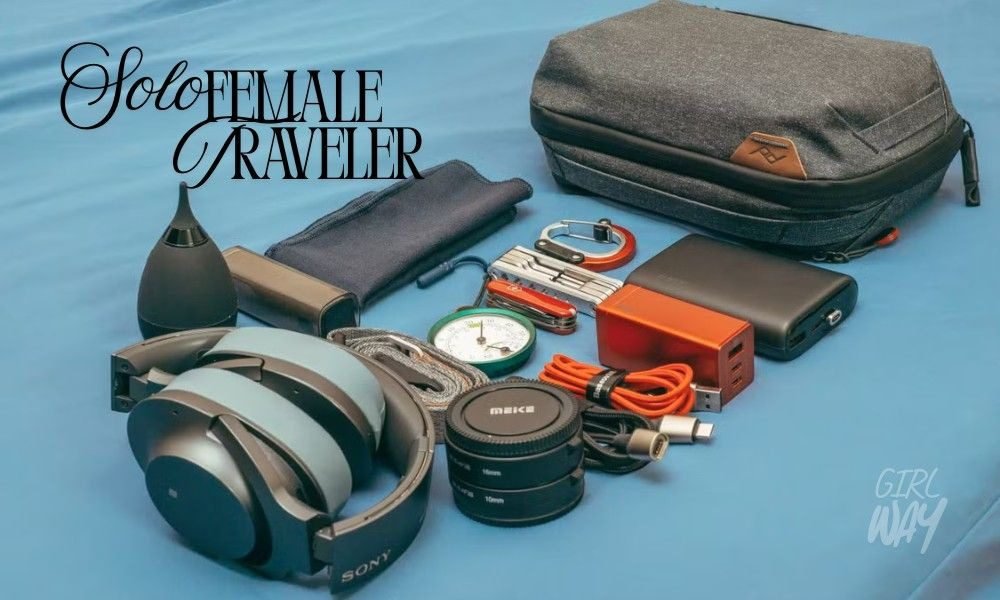
That capacity is the sweet spot for solo travel; bigger banks are heavier and slower to recharge, while smaller ones leave you short. Flight rule: power banks go in your carry-on, never in checked luggage. Lithium batteries are a fire risk in the hold, so pack it where you can reach it.
If you’re heading to Asia specifically, our best eSIM for Asia 2026 guide breaks down exactly which provider to pick.
19. A Universal Travel Adapter
One adapter that handles multiple plug types beats buying a new one each trip. Get one with built-in USB ports for extra convenience, so several devices charge from a single socket, since hostel and hotel rooms are famously short on outlets.
Look for one with both USB-A and USB-C ports, plus a model with a fuse for added protection. A common mistake is assuming an adapter converts voltage; it doesn’t. It only changes the plug shape. Check if your device handles local voltage first before relying on it.
20. An eSIM
The upgrade most first-timers skip and later wish they’d known about sooner. An eSIM gives you data the moment you land.
- No hunting for a SIM kiosk
- No language barrier at a phone shop
- No swapping tiny cards and losing your home SIM
Apps like Airalo or Holafly let you buy data plans before you fly, and you activate it from your phone in minutes. The catch: your phone must be eSIM-compatible and unlocked. Confirm both before you rely on it; this works well for staying reachable, and it fails only if your phone is too old to support it.
21. A Cable Pouch
One small pouch for cables, adapters, and a power bank saves the daily archaeology dig through your bag. Tangled cables at the bottom of a backpack are a small misery you can design out entirely with one pouch.
It sounds trivial until you’re late and can’t find your charger, and a dedicated pouch fixes that for good. A small zippered case or even a toiletry bag works. Add a spare charging cable inside, since cables fail at the worst times.
Toiletries & Health Essentials
22. A TSA-Friendly Toiletry Setup
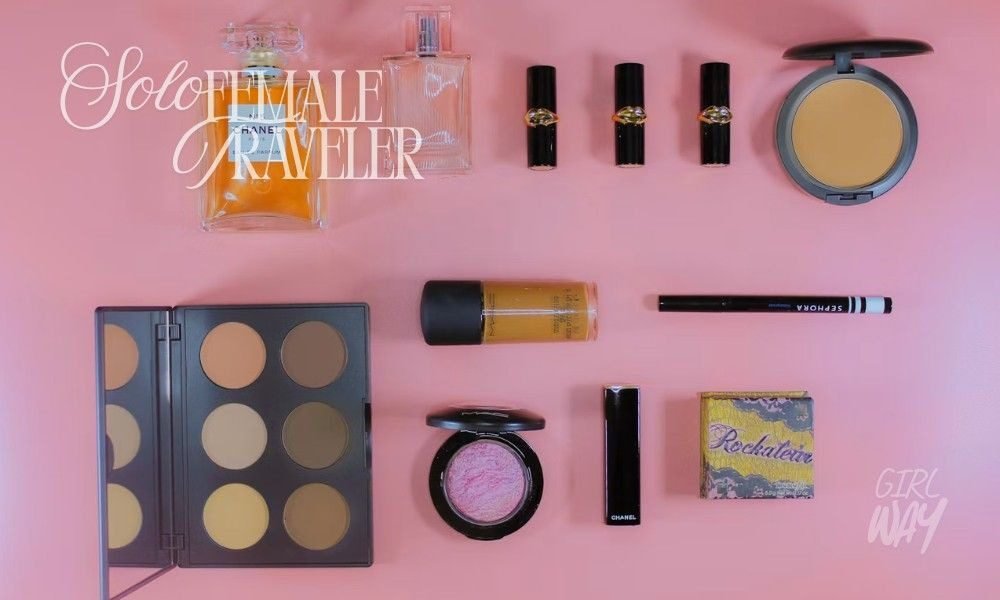
Keep liquids in containers of 100 ml (3.4 oz) or less, put them all in one clear quart-sized bag, and have it ready to pull at security. The hidden win is solid toiletries: shampoo bars, solid conditioner, and toothpaste tabs aren’t liquids, so they dodge the limit and never leak.
Laundry detergent sheets deserve a callout too; they weigh nothing and aren’t a liquid, letting you wash clothes in any sink. Decant your favorite products into small reusable bottles. Refillable silicone bottles are cheap and last for years, making them easier on your bag and budget.
23. A Compact First-Aid Kit
Not a medical bag. Just the essentials that actually matter:
- Pain relievers
- Blister plasters
- Prescription meds in original labeled packaging
- Motion-sickness tablets
- Rehydration salts and a few stomach basics
When you’re alone and rough at 2 a.m., your own kit beats hunting for a pharmacy. Real tip most guides skip: keep a few days of medication in your day bag, stored separately from the main supply, so if your luggage vanishes, you’re not stranded. Add any personal must-haves too: allergy meds, contact solution, and specific prescriptions. The goal isn’t to pack a hospital; it’s to handle small problems.
24. Period Products You Trust
Don’t assume your brand exists at your destination. Availability varies a lot by country, with some places stocking limited options. Bring enough to stay comfortable, or pack a menstrual cup, which sidesteps the supply problem entirely.
This is one area where “I’ll buy it there” can backfire badly. Tampons, especially, are hard to find in some regions, while pads dominate many markets. A menstrual cup also works when you can’t access clean facilities often. Pack a small bag of products as backup regardless.
25. A Reusable Water Bottle
A collapsible bottle packs flat and saves buying plastic all day. In the US, tap water is widely drinkable without issue, and refill stations are common in airports and public spaces. Fill it past security and skip the overpriced bottled water.
Where tap water isn’t safe, pack a filter bottle like a LifeStraw Go instead. It removes most bacteria and parasites, essential in much of Southeast Asia. Staying hydrated matters more when you’re moving all day, so choose a collapsible or lightweight design so it’s never a burden.
Documents: The Category People Underplan
Your passport, insurance, and ID are hard to replace abroad. Treat them with more care than anything else you pack.
26. Physical and Digital Document Copies
Keep printed photocopies of your passport’s main page, stored separately from the original document. Then save digital copies too, email them to yourself, and drop them in the cloud, reachable from any device.
A common mistake is keeping everything in one app on one phone. Redundancy is the entire point; one stolen phone shouldn’t erase your access. Include copies of your visa, insurance, and bookings too, so a replacement passport process moves faster with copies in hand.
27. Travel Insurance and Emergency Info
Keep your travel insurance documents, policy number, and emergency contacts offline. A printed card in your wallet works well since you want to read them with no signal and no battery; the one moment you need them, your phone is often dead.
Save the insurer’s 24/7 emergency line specifically, the number you call after an accident or theft. Add a small card with key details too. Your emergency contact, blood type, and allergies belong on it, a tiny safeguard with outsized value.
Airport & Flight Essentials
These live in your personal item, not your main bag, making long travel days far easier.
- Neck pillow: for red-eyes and long layovers
- Compression socks: cut swelling on flights over four hours
- Refillable water bottle: fill it past security
- Snacks: airport food is pricey and not always open
- A pen: for landing and customs forms
- Eye mask and earplugs: sleep on any flight
- A light layer: planes run cold
One thing I’ve noticed: compression socks get dismissed as fussy by a lot of people, but on a 10-hour flight, your ankles will genuinely thank you. Keep your passport, phone, power bank, and meds here too; if your overhead bag gets gate-checked, the essentials stay with you.
Climate & Weather-Based Packing Advice
The same packing list shifts a lot by climate. Here’s how to adjust without overthinking the process.
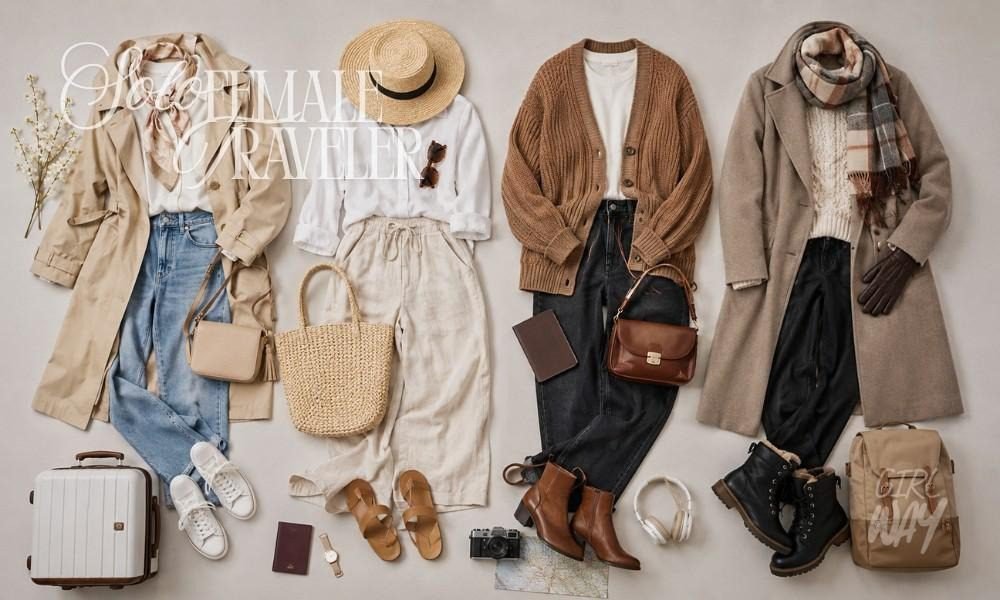
For hot and humid weather, prioritize breathable linen and cotton blends. Loose fits beat tight ones, and pack a sun hat with stronger SPF. For cold weather, layering is everything. A thermal base, mid-layer, and windproof shell handle most conditions. For unpredictable shoulder seasons, pack layers you can add or shed easily; a packable rain jacket earns its space fast.
| Climate | Key Additions | Skip |
|---|---|---|
| Hot & Humid | Linen tops, sun hat, sandals, strong SPF | Heavy fabrics, dark colors |
| Cold | Thermal base, fleece, gloves, beanie | Single bulky coat |
| Rainy / Shoulder Season | Packable rain jacket, quick-dry layers | Suede shoes |
| Beach / Tropical | Swimwear, reef-safe SPF, quick-dry towel | Excess makeup |
Destination-Specific Packing Tips
Still deciding where to go? Browse our list of best solo female travel destinations to find a spot that matches your vibe.
Solo Female Travel Packing List for Europe
Cobblestones are everywhere, so a backpack often beats wheels here. Cities like Rome and Prague are rough on roller bags. Pack modest layers for cathedrals and churches, since many require covered shoulders and knees, and a scarf solves this instantly. Europe runs on the type C and type F plugs mostly, so bring the right adapter or a universal one.
Solo Female Travel Packing List for Southeast Asia
Heat and humidity dominate here, so pack light and breathable clothes. Quick-dry fabrics are your friend throughout. Temples require modest dress at all times, so cover your shoulders and knees and carry that scarf everywhere. A filtered water bottle matters more here than elsewhere, since tap water often isn’t safe to drink.
Beach & Tropical Packing
Swimwear, a quick-dry towel, and reef-safe sunscreen lead the list for this kind of trip, and a sarong doubles as a cover-up and beach mat. Skip heavy makeup, since heat and humidity defeat it fast, and waterproof sandals beat closed shoes here.
Winter & Cold-Climate Packing
Layering wins over bulk every single time; a thermal base layer changes everything about how you handle the cold. Pack gloves, a beanie, and warm socks too, and a windproof shell handles most winter conditions on its own.
Hostel Packing Essentials
Staying in hostels? A few extra items make shared spaces far more comfortable to navigate.
- Padlock: for your locker, since many hostels don’t provide one
- Quick-dry travel towel: most hostels charge for towels
- Flip-flops: for shared showers
- Eye mask and earplugs: roommates keep odd hours
- A small headlamp or phone light: for late nights without waking others
- A door wedge: for private rooms with weak locks
What most people don’t realize: the towel is the big one here. Getting charged daily for a rental towel adds up fast over a trip.
Safety Tips Beyond Gear
Gear is only half of staying safe. For habits and mindset that protect you on the road, see our complete solo female travel safety guide.
Share your itinerary with someone back home before you go. Send them your accommodation and rough plans, and check in on a loose schedule. Download offline maps before you arrive anywhere new. Google Maps lets you save whole cities offline, so you’ll navigate even with no signal.
Save local emergency numbers in your phone and on paper too; in the US, it’s 911, and in Europe, it’s 112, and they differ by country. Trust your gut above all else; if a situation feels off, leave immediately. You owe no one an explanation.
For a country-by-country breakdown, our safest countries for solo female travelers guide is worth a quick look before you book.
Common Packing Mistakes to Avoid
Most packing regret comes from a handful of repeat mistakes. I’ve made all of these myself.
- Overpacking “just in case” outfits: you’ll wear a fraction of what you bring
- Packing new shoes: blisters on day one are miserable
- Forgetting document copies: the one thing that’s genuinely hard to replace
- Bringing full-size toiletries: heavy, bulky, and replaceable anywhere
- Ignoring the weather forecast: check it before you pack, not after
- Packing valuables you’ll worry about: leave the good jewelry home
- Not weighing your bag: airline fees for overweight bags sting
The reality is simple once you internalize it: almost everything you forget can be bought where you’re going.
“Before You Leave Home” Checklist
Packing is only part of getting ready. Run through this list a few days before you fly.
- Tell your bank you’re traveling, to avoid card freezes
- Check your passport’s expiry; many countries need 6 months of validity
- Confirm visa requirements for your destination
- Buy travel insurance and save the documents offline
- Download offline maps and translation apps
- Set up your eSIM or check roaming options
- Email yourself copies of all key documents
- Share your itinerary with a trusted contact
- Charge all devices and your power bank
- Weigh your bag against airline limits
This routine takes twenty minutes total, and it prevents the most common pre-trip disasters.
Emergency Contacts & Travel Info Template
Fill this out and keep a copy in your wallet and your phone both. Update it fresh for each trip.
| Field | Your Info |
|---|---|
| Emergency contact (home) | Name + phone |
| Local emergency number | e.g., 911 / 112 |
| Accommodation address | Hotel / hostel name + address |
| Travel insurance provider | Name + policy number |
| Insurance emergency line | 24/7 phone number |
| Embassy contact | Your country’s local embassy |
| Blood type & allergies | For medical emergencies |
| Backup card number | Stored securely, not with main card |
A printed copy survives a dead phone when nothing else will, exactly when you’ll need it most.
Interactive Packing Checklist: Check Off as You Pack
Here’s the whole solo female travel packing list in checklist form. Screenshot it or print it out.
| Bags & Organization | |||
| 1 | |||
| 2 | |||
| 3 | |||
| 4 | |||
| Clothing (Capsule Wardrobe) | |||
| 5 | |||
| 6 | |||
| 7 | |||
| 8 | |||
| 9 | |||
| 10 | |||
| 11 | |||
| Safety Gear | |||
| 12 | |||
| 13 | |||
| 14 | |||
| 15 | |||
| 16 | |||
| 17 | |||
| Tech & Connectivity | |||
| 18 | |||
| 19 | |||
| 20 | |||
| 21 | |||
| Toiletries & Health | |||
| 22 | |||
| 23 | |||
| 24 | |||
| 25 | |||
| Documents | |||
| 26 | |||
| 27 | |||
| My Own Items | |||
Frequently Asked Questions
Plan around four to five tops, two to three bottoms, and one dress and then re-wear and mix them freely throughout the week. That’s roughly 8–10 core pieces making a dozen-plus combinations.
A door wedge, a personal alarm, a money belt, and RFID sleeves cover the useful bases. Skip the heavily marketed “tactical” gear entirely.
Yes, and it’s easier than it sounds. Commit to a capsule wardrobe and plan to do laundry once or twice; quick-dry fabrics and detergent sheets make it work.
The hard-to-replace things matter most: a passport plus copies, prescription meds, a power bank, and offline emergency info.
For anyone moving between multiple stays, yes, absolutely. Their real value is never emptying your whole bag to find one item.
For most first-timers, yes, without question. You get data the second you land, with no kiosk hunt; just confirm your phone is eSIM-compatible and unlocked.
Start with a smaller bag to force discipline from the outset, build a capsule wardrobe in one color palette, and plan to do laundry.
Pack pieces that cover shoulders and knees at minimum. A scarf is the most versatile item for this purpose.
Strategic Takeaways
If you remember nothing else, remember this: your bag size dictates your discipline. A smaller bag forces smart choices; a huge one fills with regret and back pain.
Spend your attention on what’s hard to replace or genuinely keeps you safe: documents, medication, a power bank, and a trustworthy day bag. And ignore the fear-marketing aimed at solo women; most gadgets sold to solo travelers solve problems you’ll rarely face.
Conclusion
The list you start with is never the one you end with. Your first solo trip is really a calibration run for future ones, and you’ll come home knowing what you over-brought and what you’d kill to have brought instead. That personal data beats any checklist online.
Pack this as a starting point, protect your documents first, and trust that you’re more capable than the marketing wants you to believe.
About the Author
I’ve spent years traveling solo across Europe, Southeast Asia, and the Americas, mostly on carry-on only. This guide comes from real trips, real mistakes, and a lot of repacking along the way.
“Pack light. Travel far. Trust yourself; you’ve got everything you need.”
