One cabin bag and one personal item are enough for a week travelling solo, with nothing checked in and nothing to wait for at the carousel. The list below is built for that: clothing, toiletries, documents, tech, safety and health, and nothing else. The solo female travel safety tips on this site cover the precautions; what follows is the bag.
This list is strictly carry-on-only. The full generic packing list lives at solo female travel packing list, and the solo female travel checklist covers the first trip itself, so neither is repeated here. What follows is only what fits a cabin bag.
Key takeaways
- One cabin bag and one personal item, packed for a week, washed once mid-trip.
- Five tops, two bottoms, one dress, and layers: every piece matches every other piece.
- Toiletries fit one clear bag under the 100 ml rule; buy full-size at the destination.
- Passport, phone, charger, medicine and one change of clothes ride in the personal item.
Print the ten essentials: a one-page printable checklist (PDF).
The short answer
One cabin bag and one personal item, with nothing checked in. This solo female travel packing list, carry-on only, covers clothing, toiletries, documents, tech, safety and health, and every item earns its place by being worn, used or needed daily. Check your airline’s cabin limit before you pack, because limits vary.
Clothing: five tops, two bottoms, one dress
Five tops, two bottoms, one dress, and layers for the cold. That is the whole wardrobe for a week, washed once mid-trip. They form outfits, not single-use items. Pack light fabrics that dry overnight, and wear the heaviest layers on the plane.
- 5 tops: two short-sleeve, two long-sleeve, one nicer top for evenings. All in colours that match both bottoms.
- 2 bottoms: one pair of trousers and one skirt, or a second pair of trousers. Both comfortable for a full day of walking.
- 1 dress: light, knee-length or longer, doubles as evening wear and as a beach cover-up.
- 1 light jacket or cardigan: worn on the plane, not packed. It is the warm layer for evenings and air conditioning.
- 1 large light scarf: blanket on the plane, cover for shoulders at a religious site, and sun shield in the desert.
- 7 underwear, 3 bras (one sports), 5 pairs of socks: the small items are the ones that run out first, so pack the full week of them.
- 1 pair of walking shoes (worn) and 1 pair of light sandals or flats: the second heavy pair stays home.
- 1 light sleep set and 1 swimsuit if the trip has a beach or a pool; leave the swimsuit out if it does not.
Wash once mid-trip and the list covers a week, or two. Sink-wash the tops in the evening and they dry overnight in light fabrics; use a hostel laundry or a laundrette once for the rest. Pack a small bag for dirty laundry so it stays apart from the clean clothes, and take a travel clothesline if the room has nowhere to hang things.
Toiletries and the 100 ml rule
Toiletries fit in one clear bag, and the 100 ml rule decides what goes in it. Each liquid or gel must be in a container of 100 ml or less, inside a single transparent resealable bag of about one litre. Buy the rest at the destination, because full-size bottles are the first thing to leave behind.
- In the clear bag: toothpaste (travel size), deodorant, sunscreen (travel size), moisturiser, shampoo and conditioner (travel size, or solid bars, which skip the liquids bag entirely), lip balm, and basic make-up if worn.
- Outside the bag: toothbrush, hairbrush, hair ties, nail file, tweezers, and any solid toiletries.
- Buy at the destination: full-size shampoo, full-size sunscreen, and anything the trip needs more of than a travel tube holds.
- Period products, enough for the first days, since brands and types differ by destination; a menstrual cup is the pack-light option.
Solid toiletries pack small and never leak: shampoo bars, solid deodorant and bar soap. A small bottle of hand wash doubles as laundry soap for the mid-trip sink wash, so one bottle does two jobs.
A few large UK airports now allow larger containers, so check your departure airport before you fly.
Documents, money and tech
Passport, bookings, insurance and a payment card, plus the phone that holds all of them as back-ups. Keep the originals in the personal item, never in the cabin bag, so they stay with you if the bag is gate-checked. Photograph every document and keep the copies in the phone and in an email.
- Passport and a photocopy kept apart from it (check the expiry meets the destination’s entry rules); the travel insurance guide covers the policy to carry with it.
- Bookings on the phone, with the confirmation numbers saved offline as well as in email.
- Two payment cards from different providers: one in the money belt, one in the bag, so losing one does not strand you. The solo female travel scams guide covers the card tricks to watch for.
- Some cash in the local currency for the first day, plus a small reserve in a second place.
- Phone, charger and power bank, earphones, and the eSIM or local SIM sorted before departure. The best apps for solo female travellers guide has the offline setup: downloaded maps, downloaded language packs, and the rates downloaded in advance.
- Universal travel adaptor (multi-USB if possible) and a spare charging cable.
Safety and health
A money belt, a small padlock, a whistle and a basic first-aid kit cover most of what can go wrong. The money belt holds the passport and the spare card; the padlock secures a hostel locker; the first-aid kit holds plasters, painkillers and any prescription medicine, with the prescription itself.
- Money belt worn under clothing on travel days, holding the passport and the spare card.
- Small padlock for a hostel locker; the safety apps guide covers the tools that pair with it.
- Whistle on the bag strap: light, cheap, and louder than a shout.
- First-aid kit: plasters, painkillers, any prescription medicine with the prescription itself, plus a few days extra in case of delays.
- Hand sanitiser (travel size, in the clear liquids bag), tissues, and a reusable water bottle carried empty through security and filled after it.
Earplugs and an eye mask earn their place for hostel dorms and overnight buses and trains, where lights and noise start early. Sleeping properly is a safety measure: tired judgement is worse judgement.
Cabin bag vs personal item
The cabin bag holds the bulk, and the personal item holds the essentials. If the cabin bag is gate-checked, everything needed for the flight and the first night must already be in the personal item. The table below shows the split.
| Bag | What goes in it |
|---|---|
| Cabin bag | Clothing, toiletries bag, shoes, packing cubes, scarf, sleep set |
| Personal item | Passport, phone, charger, power bank, medicine, one change of clothes, valuables, money belt |
How to pack it
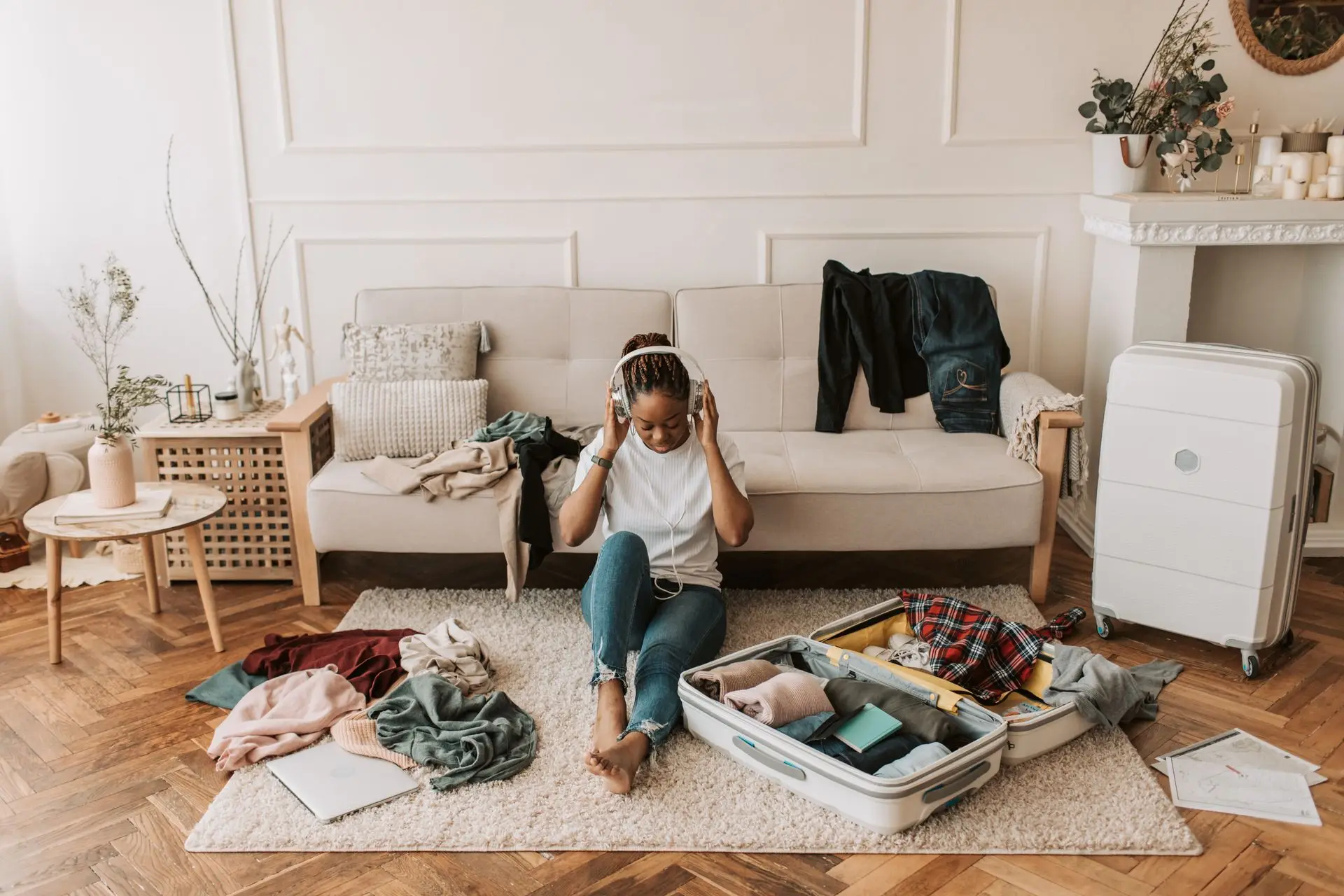
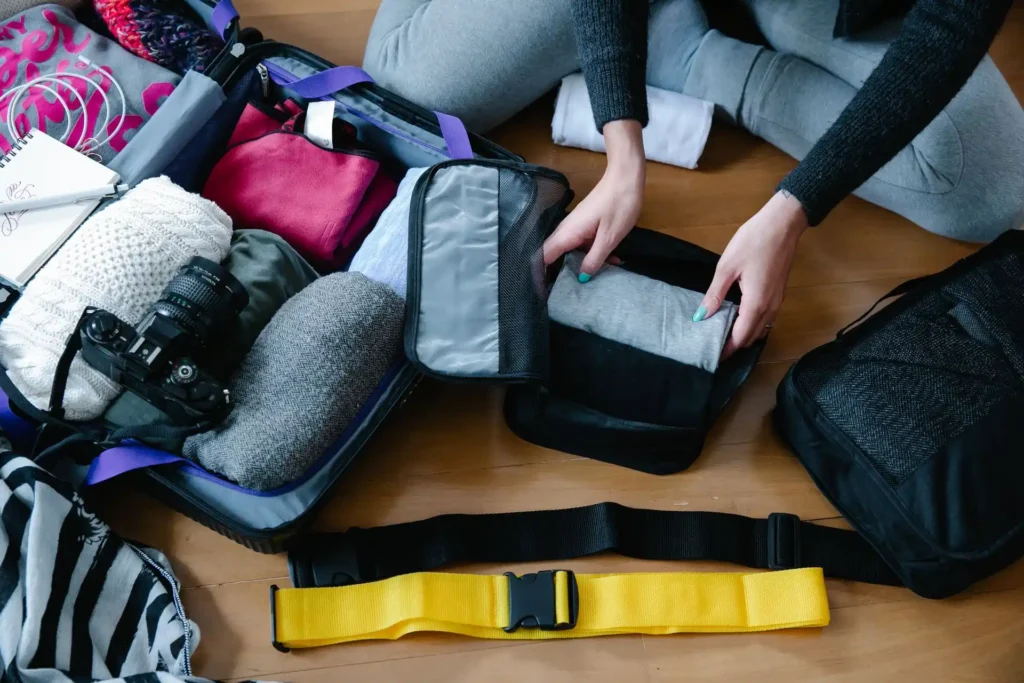
Roll the clothes, fill the gaps, and wear the heavy layers. Rolling saves space and keeps wrinkles down; small gaps take socks, chargers and the first-aid kit; the heavy jacket, boots and jeans go on the body, not in the bag. Packing cubes keep the groups apart, so nothing is unpacked to find one thing.
Pack in the order you will need things: the first night’s clothes on top, the toiletries bag where it can come out at security, and the documents in the personal item from the start. Weigh the bag at home if the airline publishes a weight limit, and take something out before the airport, not at the check-in desk.
Choose a soft bag that squashes into the sizer, with a front pocket for the documents and the phone. A hard shell looks tidy but fights the sizer; a soft bag gives a little when the overhead bin is full. Keep the bag’s own weight in mind: a heavy empty bag eats the allowance before anything is packed.
Packing for the seasons
Summer and winter change the list, but neither breaks it. Summer needs less: light fabrics, sun protection and the scarf. Winter needs the coat on your body, thermal layers underneath, and one heavy jumper. The bag stays the same size in both seasons; what changes is what you wear onto the plane.
In summer, the extra weight is sun protection: sunscreen, a hat or the scarf, and the water bottle. In winter, the trick is wearing the bulkiest items: coat, boots and the heavy jumper go on the body, and the bag holds the thermals and the lighter layers. A winter carry-on works when the coat is doing the work, not the bag.
What stays home
The second pair of shoes, the full-size toiletries, the extra jacket and the just-in-case outfit stay home. Each adds weight for a situation that rarely happens, and every one of them can be bought at the destination if it is truly needed. A carry-on list works because it says no as often as it says yes.
The just-in-case outfit is the classic trap: a dress for a dinner that never happens, or a second jacket for weather that never comes. If an item serves one imagined evening, it stays home. The money saved on checked-bag fees buys the item at the destination on the one day it is actually needed.
The Morocco wear guide on this site pairs with this list for a Morocco trip: it covers what the climate and the culture ask for, and this list covers how little of it you need to carry.
How this guide was made
Research-based. No trip is claimed. Item quantities are editorial advice for a one-week trip, not facts, and airline cabin limits vary, so none is stated.
FAQs
Yes. Five tops, two bottoms, one dress and layers cover a week. The list is built for exactly that.
100 ml per container, in one transparent resealable bag of about one litre. Buy full-size toiletries at the destination.
No, but they help: they keep clothing groups apart so you find things without unpacking everything. Rolling works without them.
Everything needed for the flight and the first night is already in the personal item: passport, phone, charger, medicine, and one change of clothes.
One pair on your feet and one light pair in the bag. Leave a second heavy pair at home.
Pack it in the personal item with the prescription itself, plus a few days extra in case of delays.
Yes. A normal list covers everything you might want; a carry-on list covers only what fits a cabin bag. The full generic packing list on this site covers the rest.