Solo Female Travel in Hanoi: The Short Answer
Hanoi is one of the safest capitals in Southeast Asia for a woman travelling alone. Violent crime against tourists is extremely rare, Vietnam sits at Level 1, exercise normal precautions, on the US State Department advisory issued on 24 June 2026, and the UK Foreign Office advises against travel to no part of Vietnam. The real risks are smaller and more practical: motorbike bag snatching, the traffic when crossing a street, and taxi meter scams. Stay in the Old Quarter, use Grab, keep the bag in front, and Hanoi is an easy first city. The country level detail is our Vietnam safety guide, and the calmest stop after Hanoi is covered in the Hoi An guide in this series.
Why Hanoi Feels Safe for Solo Women
Hanoi feels safe because it is busy, watched and walked. The Old Quarter is full of people from early morning to late evening, with shopkeepers on every street, families eating on small plastic stools, and police presence on the main corners. A woman alone is one of many people on the same street, and that crowd is the safety. The Numbeo Safety Index puts Hanoi at about 66.2, rated High, in asiatouradvisor 2026 data, which is a secondary source, so read it as a measure of how safe the city feels rather than a crime count. The official picture points the same way: Vietnam ranks 41st of 163 countries on the 2026 Global Peace Index, and the United States, the United Kingdom, Australia and Canada all rate Vietnam at their lowest advisory level.
The city rewards the traveller who moves slowly and watches first. Hanoi looks chaotic from a cafe window, with motorbikes flowing in every direction, and then it makes sense once the rhythm is seen. Traffic moves steadily, people cross slowly, and the city works on a pattern rather than on rules. A first timer who spends the first morning watching the street from a cafe, then walks the same streets in the afternoon, learns the city faster than any map could teach it. Hanoi is not a city to rush. It is a city to settle into, and settling in is what makes a first solo trip feel easy.
Where to Stay in Hanoi: Old Quarter, French Quarter and Ba Dinh
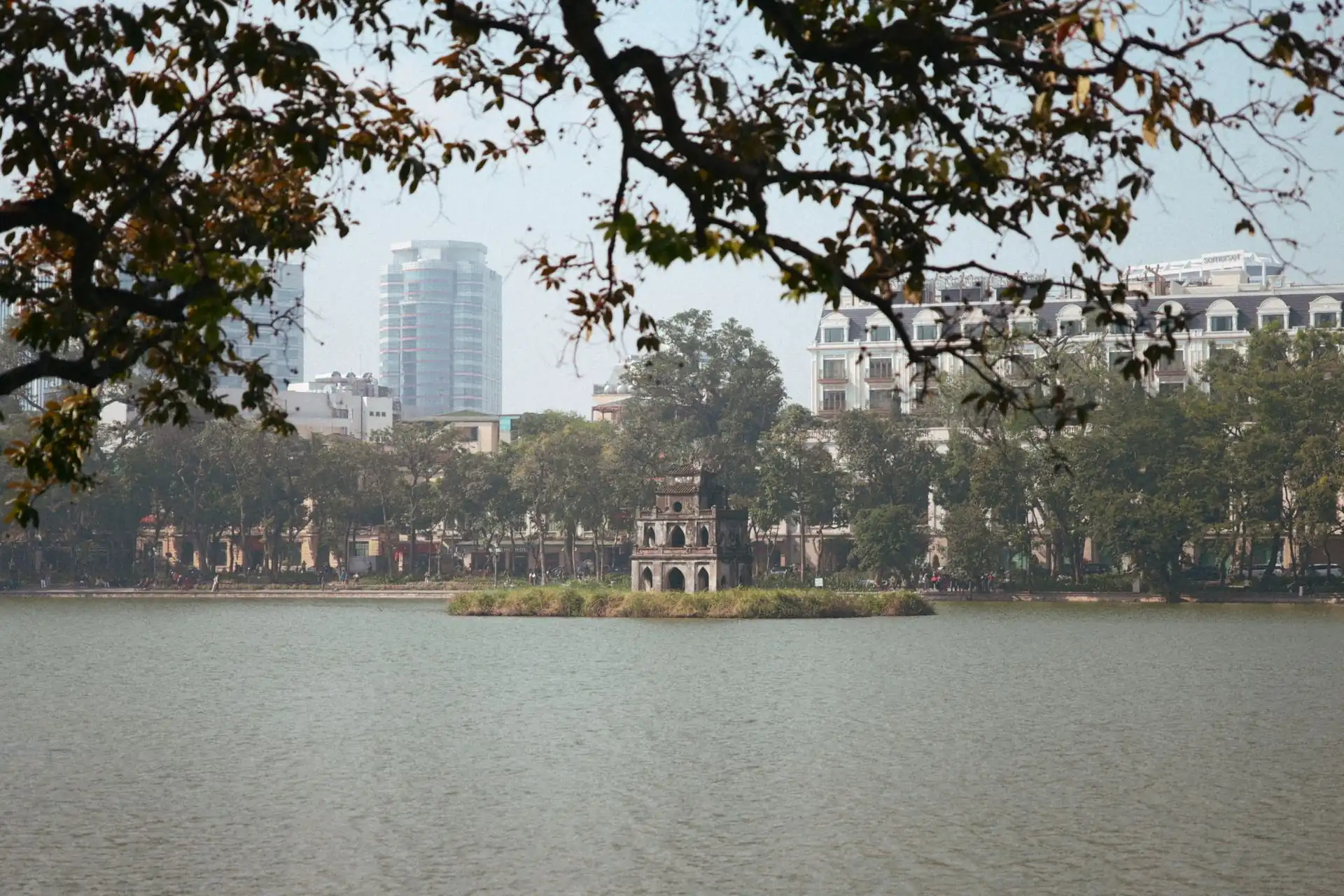
Stay in the Old Quarter and the trip gets easier from the first night. The Old Quarter, around Hoan Kiem Lake, is the standard first base, with hostels, guesthouses and hotels on nearly every street, and the streets stay well lit and busy into the evening. The lake is the centre of the neighbourhood, and the streets around it are full of cafes, street food stalls, temples and markets. A woman walking back after dinner is one of many people on the same street, and the heavy foot traffic and the police presence on the main corners keep the evenings easy. Well reviewed hostels with female only dorms are the usual solo female pick here, and they are also the fastest way to meet other travellers.
The French Quarter and Ba Dinh are the calmer bases. The French Quarter sits south east of the Old Quarter, with wide tree lined streets, colonial buildings, cafes and the opera house, and it suits a traveller who wants quiet evenings and a slower morning. Ba Dinh sits west of the Old Quarter, around the government buildings and the Temple of Literature, and it is residential and calm after dark. Either base works, and the choice is about pace: the Old Quarter for a first stay when the plan is markets and street food, the French Quarter or Ba Dinh for a longer stay when the plan includes rest days. Book a place with 24 hour reception, a keycard or a code lock, and a locker in the room, and read reviews from solo female travellers before booking. Staying near the lake puts the temples, the markets and the cafes within walking distance, and the lake is the reason to stay a few days longer.
Getting Around Hanoi: Crossing Streets and Using Grab
Crossing a street is the skill Hanoi teaches first, and it is easier than it looks. Walk slowly and steadily, in a straight line, and never run or stop in the middle of the road. The motorbikes flow around a pedestrian who moves predictably, and they cannot read a pedestrian who darts or freezes. Look both ways, pick a gap, and walk at the same pace all the way across. A local crossing beside you is the best guide, so follow one on the first crossing and the rhythm makes sense. After a day, crossing feels normal, and the traffic that looked frightening from the cafe becomes background.
For rides, use Grab, which shows the price before the trip and tracks the ride, or use a metered taxi from Mai Linh or Vinasun, the two large companies whose cars are marked and metered. Never accept a flat rate from a street taxi, and never take an unlicensed xe om motorbike taxi, which the US State Department specifically warns against. A Grab costs little, the driver is known, and the trip is tracked on the phone. Walking is the best transport inside the Old Quarter, because the streets are short and the sights are close together, and a Grab covers anything further than a walk. Plan the ride home before going out, and the night runs smoother for it.
Scams to Know in Hanoi
The scams in Hanoi are small, familiar and easy to avoid once they are named. The shoe cleaning scam starts with a friendly stranger pointing at a shoe and offering a clean, and once the clean has started a charge is demanded. Decline before it starts, and keep walking. The gambling invitation scam starts with a friendly local inviting a visitor home for cards or a drink, and the game is rigged. Decline every invitation home from a stranger, however friendly it sounds. Market overcharging is the most common loss in the city, around the Old Quarter and Dong Xuan Market, so ask the price before buying, bargain politely, and walk away when the price does not move. Walking away is the strongest bargain in Hanoi, and it works nearly every time.
Motorbike bag snatching is the crime that actually happens, and it happens to a bag carried on the road side or a phone held out on the street. Walk on the inner side of the pavement, away from the road, wear a crossbody bag in front, and keep the phone zipped away when not using it. A bag left on a cafe table while its owner orders at the counter is the most common loss in the city, and it is the easiest to prevent. Hanoi is not a city where a woman alone is a target. It is a city where a bag left open is an opportunity, and the same habits that work in any big city work here.
What to Do in Hanoi
Start at Hoan Kiem Lake in the early morning, when the city exercises around the water and the streets are at their calmest. The lake is the heart of the Old Quarter, and the Ngoc Son Temple on its island is the first temple to visit. From the lake, walk the 36 Old Streets, each named for the trade that once filled it, and the streets are the museum. The Temple of Literature is the afternoon, because the courtyards are quiet and the gardens are the place to sit. The street food is the evening, because the stalls are the best restaurants in the city, and a bowl of pho from a stall with a queue of locals is the dinner to remember.
For a day trip, Ha Long Bay is the standard choice, and it is worth a full day or an overnight boat. Book through the hotel or a licensed operator, and check that the boat is licensed and the price includes the entrance fees, because the cheapest offers on the street often leave fees out. The train street, where the train passes between houses twice a day, is worth a visit, but go with a cafe that has a viewing spot and follow the staff instructions, because the train leaves no room for error. Hanoi rewards the traveller who plans one anchor activity a day and leaves the rest of the day open, because the city fills the open hours by itself.
Eating Alone and Staying Well in Hanoi
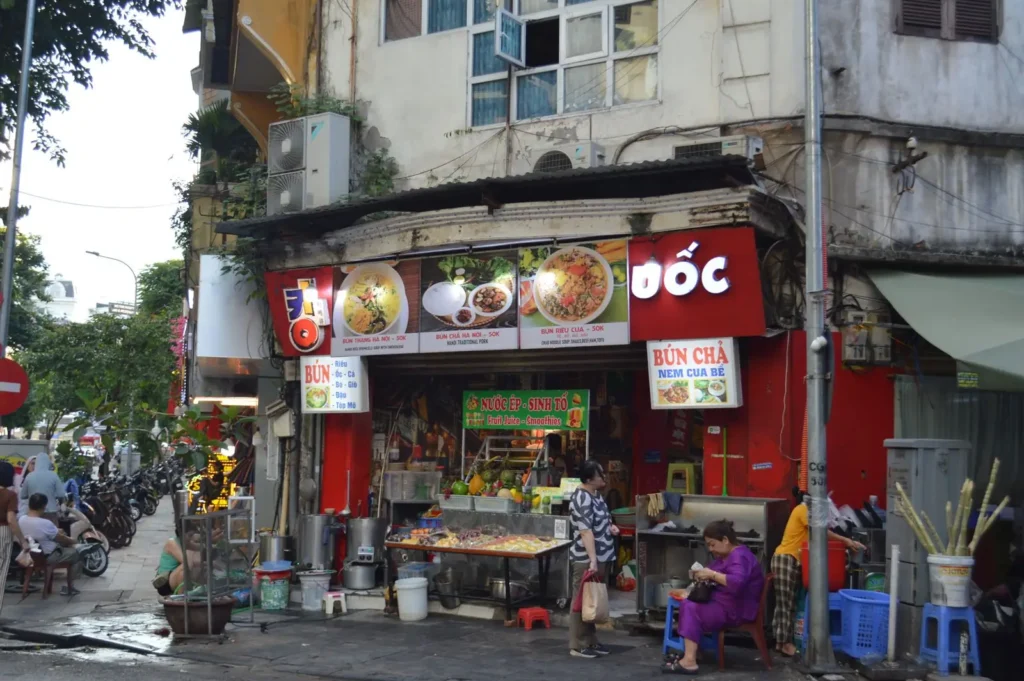
Eating alone in Hanoi is easy, because the city eats on the street and a woman alone at a small table is normal. The plastic stool restaurants serve one dish well, the queue tells which stall is best, and a solo diner is served as fast as anyone else. Order what the locals order, point at the dish on the next table when the menu is unclear, and eat where the queue is longest. The food is cheap, fresh and safe when it is cooked in front of you, and the stalls with the most customers turn their food over fastest.
Do not drink the tap water. Drink bottled or filtered water only, and check that the bottle seal is unbroken. Keep eyes on drinks on nights out, because the UK Foreign Office drink spiking warning applies country wide, and the same caution about methanol in cheap alcohol applies across Vietnam. Dress modestly, with shoulders and knees covered, at temples and in rural areas, and carry a light scarf for temple visits. A small first aid kit, a packet of rehydration salts, and a bottle of water in the day bag cover most of what a hot day in Hanoi can ask for.
Hanoi at Night: Busy Evenings, Quiet Midnights
Hanoi at night is busy well into the evening, and the Old Quarter is the place to be after dark. The streets around Hoan Kiem Lake stay full of people, the night market fills the weekend streets, and the cafes and beer corners stay lively until late. A woman alone in the Old Quarter in the evening is one of many people on the same street, and the light and the people stay thick. Eat at the night market, walk the lake, and take the evening slowly, because the night is when the Old Quarter shows its best side.
After about 10 or 11 PM, the evening changes. Stick to the well lit main roads, use Grab rather than a long walk alone, and know that around midnight most Old Quarter venues close and the streets thin out. A late night walk on a quiet lane is the one thing to avoid, and a Grab back to the hotel costs little. None of this is a warning against Hanoi at night. The evenings are the best part of the city, and a woman who picks a lit main road and a Grab for the last stretch has an easy night. The caution is narrow, and it is only about the hours after midnight.
Practical Hanoi: Visa, Money and Emergencies
The e-visa is the practical detail to sort before booking. Apply only on the official portal evisa.gov.vn, run by the Immigration Department of the Ministry of Public Security. The official fee is 25 US dollars for a single entry and 50 dollars for a multiple entry, valid for stays of up to 90 days, with processing in about 3 working days, and the fee is non-refundable if the visa is refused. Apply through the official portal only, because copycat sites charge more for the same form. Do not trust a blog post for the stay length, because the visa free stay depends on nationality and is not settled here. The numbers in this paragraph were confirmed on 13 November 2026 under Circular 28/2026/TT-BTC, in force since 1 April 2026.
For emergencies, the numbers are police 113, ambulance 115 and fire 114, all free to call within Vietnam. Save them in the phone before the trip, along with the hotel address in Vietnamese, because a Grab driver reads Vietnamese faster than English. Storm season runs from May to November, and November is the tail end of it, so check the forecast before travelling and keep the mountain and bay day trips for a clear day. The country level advisory detail is our Vietnam safety guide, and it gives the same Level 1 wording.
FAQs: Solo Female Travel in Hanoi
Yes. Hanoi is one of the safest capitals in Southeast Asia for solo women, and violent crime against tourists is extremely rare. Vietnam is Level 1, exercise normal precautions, on the US State Department advisory issued on 24 June 2026, and the UK Foreign Office advises against travel to no part of Vietnam. Stay in the Old Quarter, use Grab, and keep the bag in front.
Stay in the Old Quarter for a first stay, around Hoan Kiem Lake, with hostels, guesthouses and hotels on nearly every street. The French Quarter and Ba Dinh are calmer bases for a longer stay. Book a place with 24 hour reception, a keycard or code lock, and a locker, and pick a well reviewed hostel with a female only dorm.
Walk slowly and steadily, in a straight line, and never run or stop in the middle of the road. The motorbikes flow around a pedestrian who moves predictably. Look both ways, pick a gap, and walk at the same pace all the way across. Follow a local on the first crossing and the rhythm makes sense.
The shoe cleaning scam, where a clean is started and a charge is then demanded, the gambling invitation from a friendly stranger, market overcharging around the Old Quarter and Dong Xuan Market, and motorbike bag snatching. Walk on the inner side of the pavement, wear a crossbody bag in front, and decline every invitation home from a stranger.
Yes, in the Old Quarter in the evening, where the streets stay full of people and well lit. After about 10 or 11 PM, stick to the well lit main roads and use Grab rather than a long walk alone. Around midnight most venues close and the streets thin out.
Apply for an e-visa on the official portal evisa.gov.vn before travelling. The official fee is 25 US dollars for a single entry and 50 dollars for a multiple entry, valid for stays of up to 90 days, with processing in about 3 working days. The visa free stay length depends on nationality and is not given here.
Yes. Hoi An is the calmest stop in Vietnam, with a small walkable old town and pedestrian only streets in the evening, while Hanoi is the bigger, busier first base. Many first trips use both, a few nights in Hanoi first and then Hoi An to slow down. The Hoi An guide in this series covers the calmest stop in full.