Is Hoi An Safe for Solo Female Travellers? The Short Answer
Yes, Hoi An is safe for solo female travellers, and it is the calmest stop in Vietnam. The Ancient Town is a UNESCO World Heritage Site, its centre is pedestrian only during the evening lantern hours, and the town is small enough to walk anywhere. Travelladies ranks Hoi An number 67 in its top 100 safest places for solo female travellers, with a score of 4.6 out of 5. Vietnam sits at Level 1, exercise normal precautions, on the US State Department advisory issued on 24 June 2026, and the UK Foreign Office advises against travel to no part of Vietnam. The country level detail is our Vietnam safety guide, and the busier first base is covered in the Hanoi guide in this series.
Why Hoi An Feels the Safest in Vietnam
Hoi An feels the safest in Vietnam because it removes the one risk that dominates every other Vietnamese city: the motorbike. In the Ancient Town centre, the streets close to motorbikes during the evening lantern hours, and the town belongs to pedestrians, cyclists and lantern sellers. A woman walking alone in the evening is one of many people on the same street, and the traffic that a first timer has to learn in Hanoi simply is not there. The town is small, the streets are flat, and the walk from one end of the old town to the other takes less than half an hour. That smallness is the safety, because a town that can be walked can be learned in a day.
Central Vietnam, with Hoi An, Da Nang and Hue, gets the highest solo female safety ratings in the country, and Hoi An is the town solo female travellers most consistently rate the easiest and friendliest first stop in Vietnam. Family run homestays in the Ancient Town are reported as positive solo female experiences, with hosts who know their guests by name and look after them. A homestay host who asks where the guest is going and when she will be back is not being nosy. That is how a small town looks after a woman travelling alone, and it is the reason so many first timers say Hoi An settled them faster than any other stop in Vietnam.
Where to Stay in Hoi An: Ancient Town Homestays
Stay in or near the Ancient Town and the trip gets easier from the first night. Family run homestays in the Ancient Town are the classic solo female stay here, with a host family on site, a room upstairs, and breakfast on a small table in the morning. A homestay puts the lantern streets, the river and the markets within walking distance, and the host is the best source of advice in the town. Book a place with a lock on the door, a locker or a safe in the room, and read reviews from solo female travellers before booking, because a review that mentions a helpful host and a quiet street tells more than a star rating.
The riverside guesthouses, a short walk from the old town, are the quieter base, with rooms facing the Thu Bon River and a slower evening. They suit a longer stay, when the plan includes a slow morning and a cooking class, and the walk back after dinner is along the river. Either way, ask for an upstairs room in the wet season, because Hoi An floods in heavy rain seasons and a ground floor room is the first to feel it. Staying near the old town puts the lanterns, the tailors and the river within walking distance, and the walk home along the river is the reason to stay a few days longer.
Lantern Evenings and What to Do in Hoi An
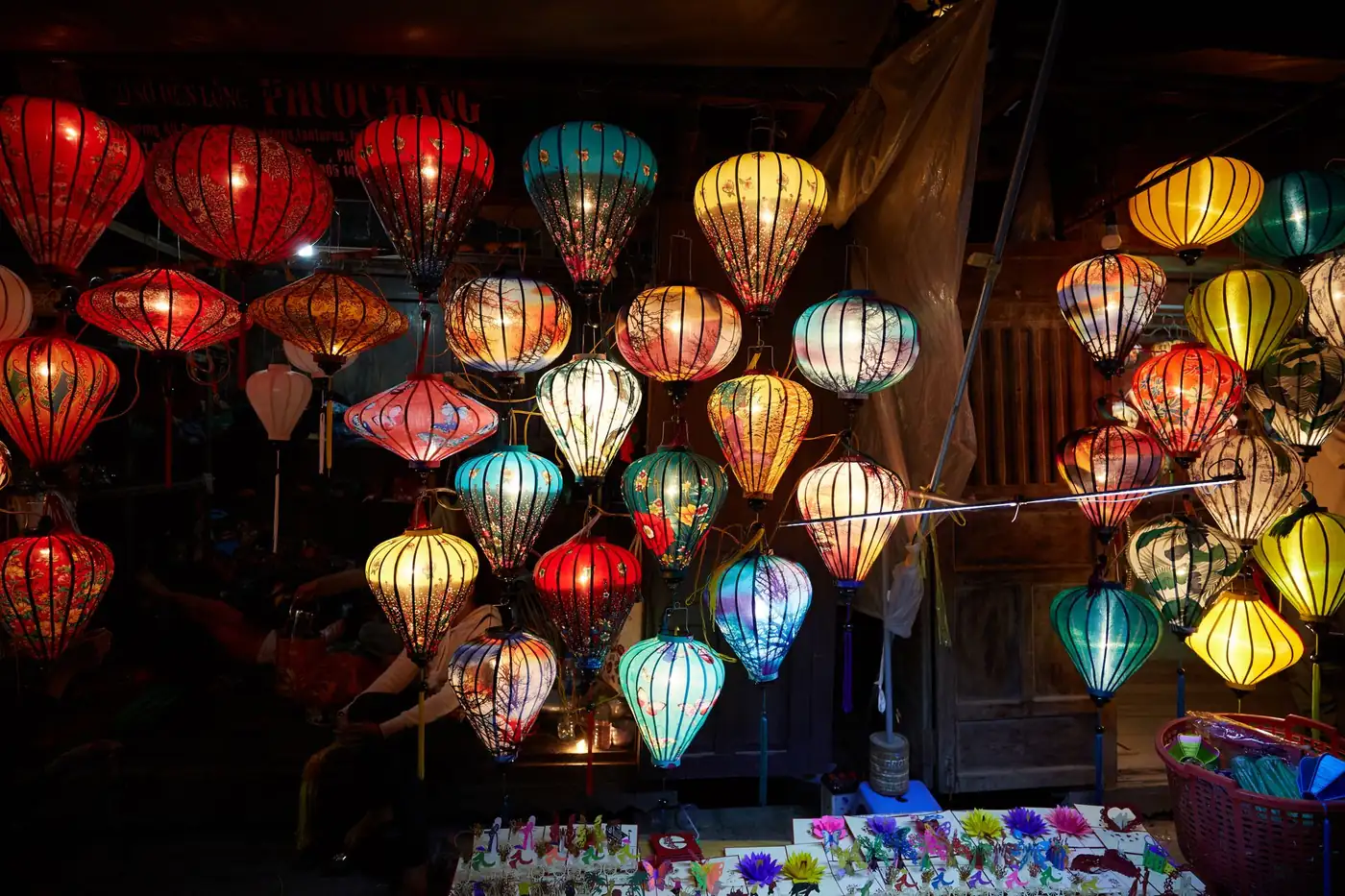
The lantern evenings are the reason to be in Hoi An, and they are the best evenings in Vietnam. As the light fades, the Ancient Town closes to motorbikes, the lanterns come on, and the streets fill with people walking slowly between the shops and the river. A woman alone in the lantern streets is one of many people on the same street, and the light and the people stay thick until late. Walk the old town, take a small boat on the river, and eat at the night market, because the market is the dinner and the lanterns are the show. The lanterns are the reason to stay a few days longer.

By day, the tailors are the classic Hoi An experience, with shops that make a dress or a suit in a day or two, and the cooking classes are the fastest way to meet other travellers and learn the food at the same time. The Japanese Bridge is the morning, because the bridge is quietest before the tour groups arrive, and the river boats are the afternoon, because the river is the reason to slow down. A bicycle ride to the nearby villages is the day trip, but lock the bicycle at every stop, because bike theft is the petty crime that actually happens here. Hoi An rewards the traveller who plans one anchor activity a day and leaves the rest open, because the town fills the open hours by itself.
Getting Around Hoi An: Walking, Bicycles and Grab
Getting around Hoi An is easy, because the town is built for walking. The Ancient Town is compact, the streets are flat, and the sights are close together, so walking is the transport for most of the trip. A bicycle covers the villages outside the old town, and most homestays lend one for free, but lock it at every stop, because bike theft is the petty crime that happens here. A locked bicycle is a safe bicycle, and an unlocked one is an invitation.
For rides in and out of town, to Da Nang or the airport, use Grab, which shows the price before the trip and tracks the ride, and check the plate before getting in. The traffic is a far smaller issue than in Hanoi, because of the pedestrian zone in the old town, but the same plate check applies for any ride out of town. A Grab to the airport costs little, the driver is known, and the trip is tracked on the phone. Plan the ride before going out, and the day runs smoother for it.
Scams and Overcharging: The Same Family, Lower Intensity
The scams in Hoi An are the same family as in Hanoi, at a lower intensity. Market overcharging is the most common loss, so ask the price before buying, bargain politely, and walk away when the price does not move. Tailor shops vary widely in price and quality, so get a quote in writing before the first fitting, and pay a deposit rather than the full price upfront. A shop that will not put the price in writing is a shop to skip. The shoe cleaning and gambling invitation scams that Hanoi is known for are rare here, but the same rule applies everywhere: decline every invitation home from a stranger, however friendly it sounds.
Drink safety matters here too, with the same caution as the rest of Vietnam. Keep eyes on drinks on nights out, because the UK Foreign Office drink spiking warning applies country wide, and the same caution about methanol in cheap alcohol applies across Vietnam. Watch the drink being made, keep it in hand, and never accept a drink from a stranger. These are small habits, and they cover nearly all of the risk a first timer will ever meet in Hoi An.
Flooding in Hoi An: What to Know Before Booking
Flooding is the one Hoi An risk that surprises first timers, and it is easy to plan around. The town sits low beside the Thu Bon River, and in heavy rain seasons the streets of the old town can flood, sometimes for a day or two at a time. The flooding is seasonal, and it is worst in the wettest months, so ask the homestay about the water level before booking, and ask for an upstairs room in the wet season. An upstairs room stays dry when the street below is ankle deep, and a ground floor room is the first to feel it.
Storm season runs from May to November, and November is the tail end of it, so check the forecast before travelling and keep the boat trips for a clear day. A flooded street is not a reason to cancel a trip, and the town handles flooding with practice, with raised walkways and boats on the streets. A traveller who books an upstairs room, packs a pair of sandals, and checks the forecast each morning has an easy trip. The flooding is the honest warning, and it is the only one Hoi An really needs.
Practical Hoi An: Visa, Money and Emergencies
The e-visa is the same as for the rest of Vietnam. Apply only on the official portal evisa.gov.vn, run by the Immigration Department of the Ministry of Public Security. The official fee is 25 US dollars for a single entry and 50 dollars for a multiple entry, valid for stays of up to 90 days, with processing in about 3 working days, and the fee is non-refundable if the visa is refused. Apply through the official portal only, because copycat sites charge more for the same form. Do not trust a blog post for the stay length, because the visa free stay depends on nationality and is not settled here.
For emergencies, the numbers are police 113, ambulance 115 and fire 114, all free to call within Vietnam. Save them in the phone before the trip, along with the homestay address in Vietnamese, because a Grab driver reads Vietnamese faster than English. Dress modestly, with shoulders and knees covered, at temples, and carry a light scarf for temple visits. Do not drink the tap water. Drink bottled or filtered water only, and check that the bottle seal is unbroken. The country level advisory detail is our Vietnam safety guide, and it gives the same Level 1 wording.
FAQs: Is Hoi An Safe for Solo Female Travellers?
Yes. Hoi An is the calmest stop in Vietnam for solo women, with a small walkable old town and pedestrian only streets in the evening. Travelladies ranks Hoi An number 67 in its top 100 safest places for solo female travellers, with a score of 4.6 out of 5. Vietnam is Level 1, exercise normal precautions, with no Hoi An specific warning.
Stay in or near the Ancient Town, in a family run homestay with a host family on site, or in a riverside guesthouse a short walk away for a quieter stay. Book a place with a lock on the door and a locker or safe, read reviews from solo female travellers, and ask for an upstairs room in the wet season.
Not the whole town, and not all day. The Ancient Town centre is pedestrian only during the evening lantern hours, which is when the motorbike risk disappears. Outside the old town and during the day, motorbikes are part of the traffic, so the same care applies as anywhere in Vietnam.
Yes, in heavy rain seasons, because the town sits low beside the Thu Bon River. The streets of the old town can flood for a day or two at a time. Ask the homestay about the water level before booking, ask for an upstairs room in the wet season, and check the forecast each morning.
Market overcharging is the most common, so ask the price before buying and walk away when it does not move. Tailor shops vary in price and quality, so get a quote in writing before the first fitting. Bike theft is the petty crime that happens here, so lock the bicycle at every stop.
Apply for an e-visa on the official portal evisa.gov.vn before travelling. The official fee is 25 US dollars for a single entry and 50 dollars for a multiple entry, valid for stays of up to 90 days, with processing in about 3 working days. The visa free stay length depends on nationality and is not given here.
Hoi An is the calmer first stop, with a small walkable old town and lantern evenings, while Hanoi is the bigger, busier first base, with more transport and more to see. Many first trips use both, a few nights in Hanoi first and then Hoi An to slow down. The Hanoi guide in this series covers the busier first base in full.