Is Jordan Safe for Solo Female Travellers? The Short Answer
Jordan is a Level 3 country, and this guide starts there, because a guide that buries the advisory is not honest. The US State Department rates Jordan Level 3, Reconsider Travel, because of terrorism and armed conflict, and that is the highest advisory level of any country in this series so far. But Level 3 is not one verdict for the whole country. The tourist corridor, Amman, Petra, Wadi Rum, the Dead Sea and Aqaba, is operating normally, and solo women travel it every day. The Level 4 do-not-travel areas are the border zones in the far northeast, hundreds of kilometres from Petra. This guide gives you the region-by-region verdict, plus the solo-woman playbook that makes the difference between a trip you love and a trip you endure.
What the Official Advice Says
The US advisory was updated on 23 October 2026 to reflect increased Iranian-supported Houthi regional aggression, and the US Embassy in Jordan confirmed the next day that there was no change to the advisory level or the risk indicators. It stays at Level 3. The Global Peace Index 2026 ranks Jordan 68th of 163 countries, with a score of 1.913, up nine places from 2025. The Women, Peace and Security Index for 2025/26 ranks Jordan 88th, with a score of 0.686. The UK Foreign Office updated its Jordan advice on 27 October 2026. It advises against all travel within three kilometres of the Syrian border, and it no longer advises against all but essential travel to Jordan as a whole, that broader advice having been lifted in June 2026. Amman, Petra, Wadi Rum, the Dead Sea and Aqaba are not advised against. Germany is stricter than the UK: as of 11 October 2026 it advises against non-essential travel to other parts of Jordan beyond the border zones. France, in advice from 10 September 2026, strongly advises against travel to Azraq and Mafraq. Canada advises a high degree of caution, with regional advisories. Read the advisories for the map they draw, not for the headline.
For the wider picture, our guide to the safest countries for solo female travellers shows where Jordan sits among the places on this site. It is not in the top tier, and this guide does not pretend otherwise. The solo female travel safety tips guide covers the habits that work everywhere, and they matter more in Jordan than in most places.
Two Jordans: The Tourist Corridor vs the Border Zones
This is the section that decides whether the guide is honest, so here it is plainly. The US advisory sets Level 4, do not travel, for Mansheyat al Ghayyath, Ruwayshid and the border with Syria and Iraq. It also flags elevated terrorism and crime risk in Rusayfah and parts of Zarqa and Baqa’a, and US government employees need special authorisation for travel in Jordan. The UK draws its line at three kilometres from the Syrian border. The FCDO also warns that your travel insurance could be invalid if you travel against its advice, which is the practical point that matters most.
Now the distance, because it is the whole point. Petra sits in the south of the country, hundreds of kilometres from the Syrian border. Wadi Rum is further still. Amman is a capital city running normally. The Level 4 areas are a narrow strip at the far northeast corner of the country, and the tourist corridor is a long way from them. Nothing in this guide about the border applies to Amman, Petra, Wadi Rum, the Dead Sea or Aqaba, and nothing about the tourist corridor applies to the border. If a tour or a driver offers to take you somewhere on the do-not-travel list, the answer is no.
Amman for Solo Women
Amman is a city of hills, staircases and cafes, and it rewards a good base. Stay in Jabal Amman or Weibdeh for the walkable streets and the cafes, or in Abdoun or Sweifieh for the hotels and the quieter nights. All four are neighbourhoods where solo women are common, and all four have hotels used to guests travelling alone. Read reviews obsessively before you book, especially reviews written by solo female travellers. A hotel that other solo women recommend is worth more than any star rating.
Amman after dark needs a plan rather than a worry. The streets in the busy areas are lit and full of people, but the quiet and poorly lit ones are not a place to walk alone at night. Use Uber or Careem, or a car arranged by your hotel, rather than hailing a street taxi after dark. If someone follows you or will not stop, step into the nearest hotel entrance or shop and say so. Hotel entrances have security, and they are safe places to step into.
Petra and Wadi Rum
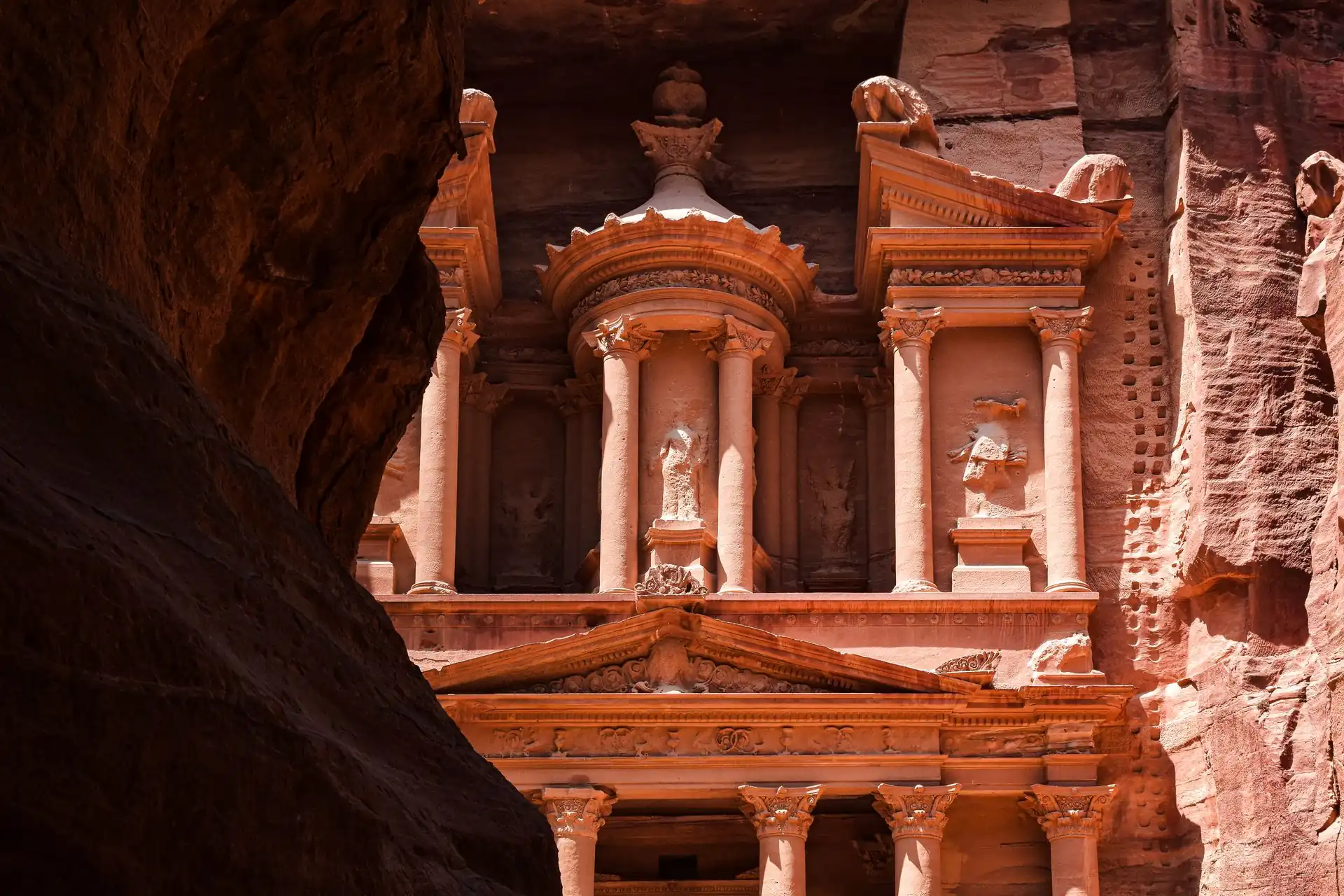
If Amman is the base, Petra is the reason most women come, and it is the most organised part of the trip. The site is heavily visited, tourism police are present, and solo women walk the Siq and climb to the Monastery every day. Go early, before the heat and the crowds, and carry more water than feels necessary, because heatstroke at Petra is a genuine emergency risk, not a line in a guidebook. Book through the official channels where you can, and be wary of anyone offering a shortcut or a private entrance.
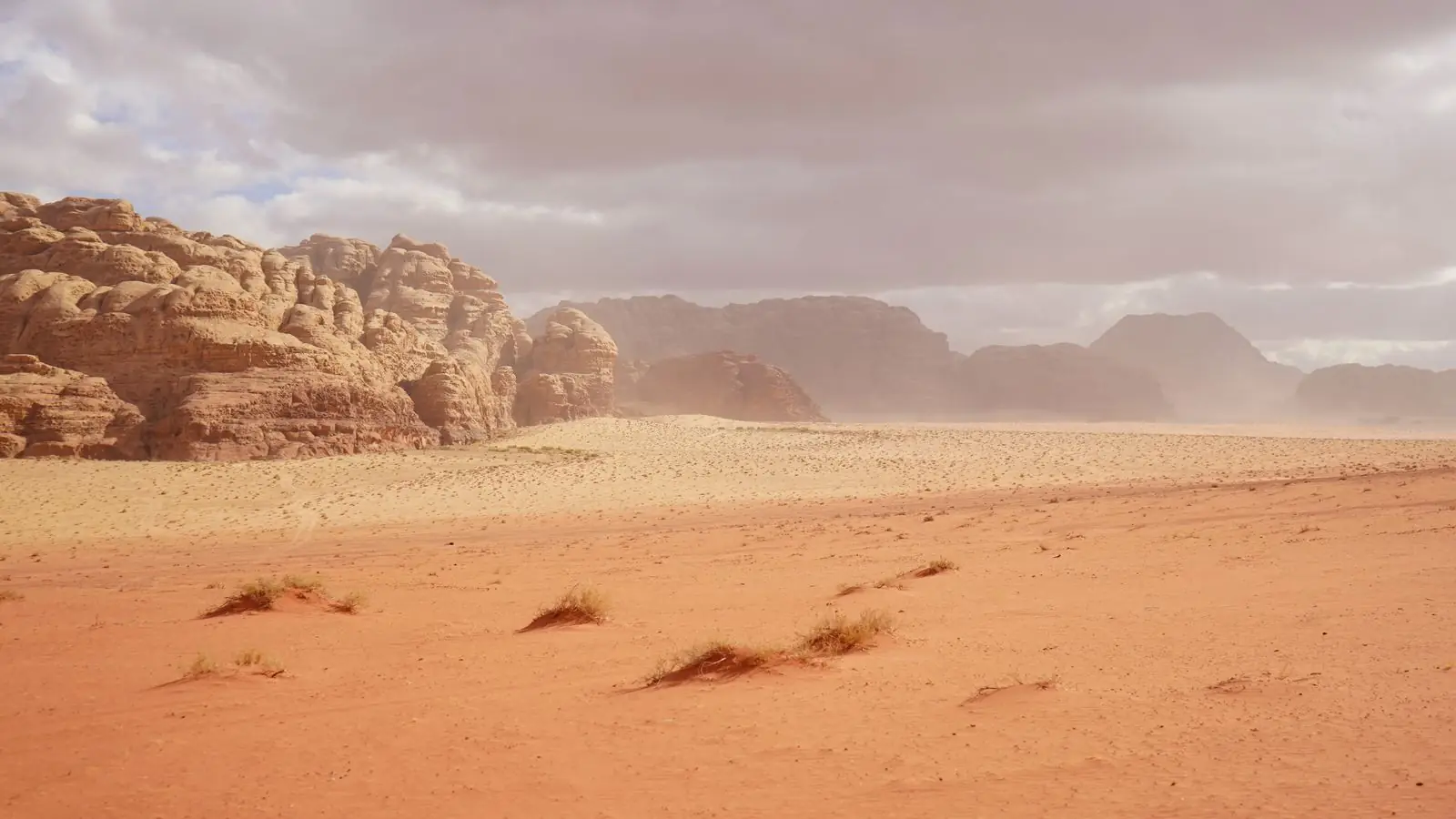
Wadi Rum is the second half of the trip, and it needs a reputable camp. Book a well-reviewed, family-run camp, not the cheapest seller in the street, and check the reviews written by solo women specifically. The desert is beautiful and it is also serious. Flash floods kill hikers most years, so never enter a wadi when rain is forecast anywhere upstream, even if the sky above you is clear. The camps know this rule and a good one will not take you out when it applies. Petra and Wadi Rum are the part of Jordan where solo women most often say they felt safe.
Harassment and Dress Code
The friction most solo women meet in Jordan is verbal harassment and staring: catcalling and persistent invitations, usually not threatening. The standard advice works. A firm “la shukran”, no thank you, and then ignore it. Do not stop for conversations you did not start, and do not smile it away. Dress is the first lever, and it is not about modesty as a moral question. It is about attention. Cover your shoulders and knees, wear loose-fitting clothing, and carry a light scarf for mosques. A headscarf is not generally required in Jordan, but it is expected inside a mosque, and carrying one costs nothing. Sunglasses help, not for the sun alone but because they break eye contact, which is half the game. And one small habit helps more than it should: do not advertise that you are alone. If someone asks, mention casually that your friends are joining you soon. It is a small piece of social armour, and it costs nothing.
Taxis and Getting Around
Jordan’s taxis are the one thing every guide warns about, and the warning is fair. Use Uber or Careem, which give you fixed pricing and a digital record of your driver, or use a car arranged by your hotel. Agree the fare before you get in where apps do not work, and never get into a car without knowing the price. The intercity buses and the JETT coaches are reliable and cheap, and they are the best way to move between Amman, Petra and Aqaba. For the Dead Sea, a hotel car or a pre-booked driver beats a public bus, because the resorts sit a long way from the bus stops. The rule that runs through this whole series applies here too: a booked car is worth more than any saving, and after dark it is not optional.
The Karak Shooting and the 2026 Regional Picture
On 23 October 2026, a shooting at a church in Karak Governorate caused several casualties. That was a dated incident, and it is reported in the UK advice with the instruction to follow local authorities and monitor local media. It is not an ongoing event, and it is not a reason to change a Petra itinerary, but it is a useful reminder of the rule: watch the news, avoid crowds and demonstrations, and do not join them.
The wider picture is the reason the advisory was reissued in October. The US reissue reflects increased Iranian-supported Houthi regional aggression, and the UK warns that the context in the Middle East remains deeply unpredictable, that the risk of sudden escalation is high, and that airspace closures and flight cancellations are possible. In March 2026, the US ordered the departure of non-emergency government personnel and their families from Jordan, citing safety risks, and raised the advisory to Level 3. That order is a dated March event. In late October, the US also trimmed some embassy staffing across the region, including Jordan, Lebanon, Qatar and the UAE. That is not an ordered departure, and the advisory level did not change. Check the advisories again before you fly, even if you checked them when you booked. The regional picture is the one thing in this guide that can change while you are reading it.
The Jordan Pass and Practical Planning
The Jordan Pass is the one piece of practical planning worth doing before you land. It is the official government tourist package. It waives the visa fee and gives you one to three days in Petra plus free entry to more than 40 attractions, including Jerash, the Amman Citadel, Wadi Rum and Ajloun Castle. Prices change, so check the official site for the current ones, but the concept is simple: one pass, one payment, and the visa fee covered. US passport holders can otherwise get a visa on arrival, and the pass is the cheaper way to do the same trip if Petra is on your list, which it is.
Plan the order of the trip around the heat and the light. Petra early in the morning, Wadi Rum for the sunset and the stars, the Dead Sea for the middle of the day, when floating beats walking. Book the Wadi Rum camp before you arrive, not when you get there, and read the reviews written by solo women. A camp that other solo women recommend is worth more than any star rating.
Practical Safety Kit for Solo Women in Jordan
Save these numbers before you land. The emergency number in Jordan is 911, one free call that reaches police, ambulance and civil defence, 24 hours a day, answered in Arabic and English. Print 911 only. The older direct lines conflict between sources, so do not use them. The tourist police are on +962 79 550 5755, and they are the first call for scams, harassment or disputes with a vendor or driver. Get travel insurance that covers the areas you are visiting, and read the exclusion for travelling against government advice. If you go somewhere your government advises against, your policy may not pay. That is the real reason to respect the map in this guide, more than any abstract warning. Credit and debit cards are accepted in Amman and at the main sites, but carry cash for Wadi Rum camps, markets and small towns, where cash is preferred. And carry more water than feels necessary, everywhere, because the desert does not warn you twice.
For the general habits that work everywhere, our tips for solo female travellers cover the basics, and our best places to solo travel list shows where Jordan sits among the other destinations on this site. Egypt is another country in this series where the tourist route and the border warnings live in different worlds, and reading the two together gives you a better sense of the region than either one alone.
On the tourist corridor, yes. Amman, Petra, Wadi Rum, the Dead Sea and Aqaba are operating normally, and solo women travel them every day. But Jordan is a Level 3 country, and the risk is real in the border zones, so the answer is regional, not national: the corridor is safe, the northeast border is not.
Level 3, Reconsider Travel, because of terrorism and armed conflict. The advisory was updated on 23 October 2026, with no change to the level or the risk indicators. The do-not-travel areas are Mansheyat al Ghayyath, Ruwayshid and the border with Syria and Iraq.
Do not travel to Mansheyat al Ghayyath, Ruwayshid or anywhere near the Syrian or Iraqi border. The UK also advises against all travel within three kilometres of the Syrian border. These zones are hundreds of kilometres from Petra and Wadi Rum, and they do not affect the tourist corridor.
Yes. Petra is heavily visited, tourism police are present, and solo women walk the site every day. Go early for the heat and the crowds, carry more water than feels necessary, and book through official channels. Petra is not named in the UK or French travel advice.
In March 2026 the US ordered non-emergency government personnel and their families out of Jordan, citing safety risks, and raised the advisory to Level 3. It was a dated event in March 2026. The advisory was reissued in October 2026 with no change to the level, and a later reduction in embassy staffing is not the same thing as an ordered departure.
911, one free call for police, ambulance and civil defence, 24 hours a day, answered in Arabic and English. The tourist police are on +962 79 550 5755 for visitor-related help.
US passport holders can get a visa on arrival, but the Jordan Pass is the better option if Petra is on your list. It is the official government package: it waives the visa fee and gives you one to three days in Petra plus free entry to more than 40 attractions. Check the official site for current prices.