Is Egypt Safe for Solo Female Travellers? The Short Answer
Yes, with your eyes open. Egypt is broadly safe for a woman travelling alone, and the tourist trail is one of the most heavily policed in the world. Serious crime against visitors is exceptionally rare. About 18 million tourists visited in 2025, and most of them went home with nothing worse than a story about a taxi driver. But Egypt is not a place where you can switch off. Harassment is real, frequent and tiring. Stares, catcalls, photo requests and pushy conversation are part of a normal day in Cairo, and sometimes it goes further than words. The honest answer is that Egypt is safe in the way that matters most, and hard in the way that shapes your trip. This guide gives you both halves, plus the practical playbook that makes the difference between a trip you love and a trip you endure.
What the Official Advice Says
The US State Department rates Egypt Level 2, Exercise Increased Caution, because of terrorism, crime and health. The entry was updated on 14 July 2025, when Egypt was moved down from Level 3, and it was kept at Level 2 in the March 2026 regional review, while several neighbouring countries were raised. It is the same level the US gives France, Germany and the United Kingdom. The Global Peace Index 2026 ranks Egypt 113th of 163 countries, with a score of 2.186. The UK Foreign Office updated its Egypt advice on 27 October 2026, and the update is worth reading properly, because it says two things at once. It advises against travel to specific areas, listed below, and it does not advise against travel to any of the main tourist centres. Cairo, Luxor, Aswan, Hurghada and Sharm el-Sheikh are all open. The update also warns that the regional context is deeply unpredictable, that the risk of sudden escalation is high, and that airspace closures and flight cancellations are possible. That is about the region, not about walking around Luxor. Read the advisory for the map it draws, not for the headline.
One thing the advisories agree on is where not to go, and this guide follows them exactly. The do-not-travel areas are the North and Middle Sinai Peninsula, the Western Desert unless you are with a licensed tour company, and the border areas, which are military zones. Sharm el-Sheikh is specifically excluded from the Sinai warning. The UK adds its own detail, covered in full in the areas section below. Everything in this guide about where to avoid is scoped to those named areas. Nothing here is written as if it applies to Cairo or Luxor, because it does not.
Harassment Is the Real Story, Not Danger
Let us be direct about this, because it is the part that actually decides whether a solo woman enjoys Egypt. You should expect stares, catcalls, photo requests and pushy conversation. It happens in daylight, in busy areas, in central Cairo, and it is cumulative. One comment is nothing. The twentieth in a day is exhausting. Canada’s travel advice puts it plainly: foreign women are frequently subject to unpleasant male attention, sexual harassment and verbal abuse, including touching, with reported incidents in daylight and busy areas of Cairo. That is not a warning to stay home. It is a warning to arrive prepared.
What helps is not complicated. Dress is the first lever, covered below. The second is movement: keep walking, do not stop for conversations you did not start, and say no once, firmly, without smiling it away. A firm no in English works. A polite maybe does not. The third is company on the hard days. Hiring a licensed guide for Giza or the Cairo markets changes the whole experience, because it gives you a social buffer and someone who knows the scripts before you hear them. And the fourth is knowing that you are not alone in this. Solo women travel Egypt every day, and they talk about it openly. The harassment is real, and so is the trip on the other side of it.
For the wider context, our guide to the safest countries for solo female travellers shows where Egypt sits among the places on this site. It is not in the top tier, and this guide does not pretend otherwise. The solo female travel safety tips guide covers the habits that work everywhere, and they matter more in Egypt than in most places.
Cairo for Solo Women: Where to Stay and How to Move
Cairo is loud, crowded and wonderful, and it rewards a good base. Stay in Downtown or Zamalek, the two neighbourhoods with established tourist infrastructure, hotels that are used to solo women, and streets that stay busy after dark. In Luxor, anywhere on the East Bank works. Read reviews obsessively before you book, especially reviews written by solo female travellers. A hotel that other solo women recommend is worth more than any star rating.
For getting around, download Uber the second you land. Uber and Careem both work in Cairo and Alexandria, and in Hurghada too. They give you fixed pricing, GPS tracking and a digital record of your driver, which eliminates the whole negotiation. Drivers sometimes call to confirm the pickup spot, and they sometimes prefer cash, but it is still safer and more transparent than a random taxi. The Cairo metro is cheap and efficient, and it has women-only cars, marked with green signs. Walk to the centre of the platform to board them. The metro does not reach the Pyramids or the airport, so you will still need a car for those. For longer distances between cities, Go Bus is reliable, affordable and far less hassle than negotiating with drivers at bus stations. Agreeing a fare before you get into any street taxi is the rule, because drivers routinely ask double, triple or four times the real price, and sometimes claim on arrival that the agreed amount was per person, or in British pounds instead of Egyptian pounds.
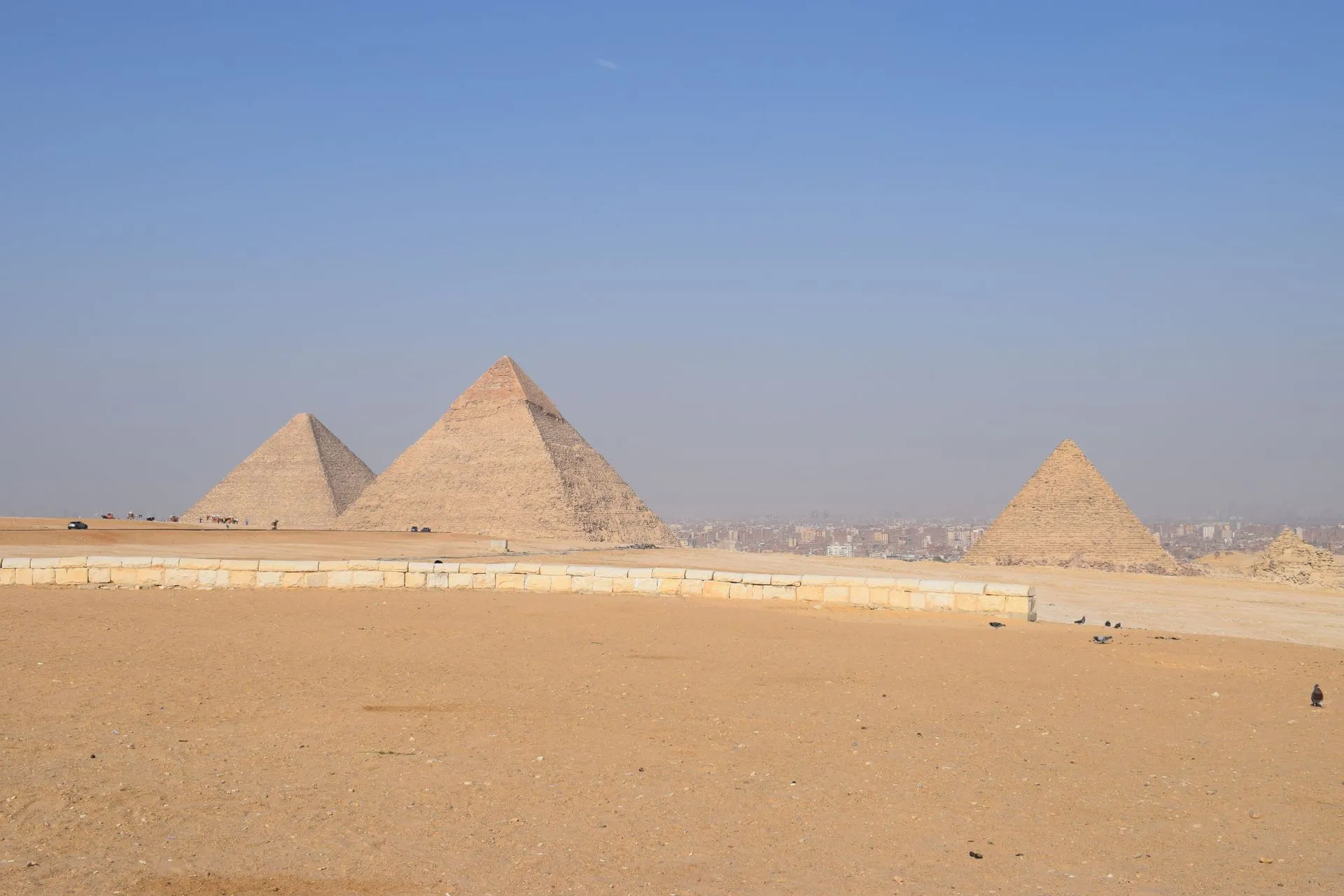
The Giza Pyramids: Scams at the Gate
The Pyramids are the reason most people come to Egypt, and the area around them is where most of the scams live. The pattern is always the same: pressure, confusion, then a price you never agreed to. The most reported trick is the camel ride. A man offers you a ride, loads you onto the camel first, and only then quotes a hugely inflated price for a short ride, while you are already sitting on the animal. The same shape appears with so-called gifts, with guides who attach themselves to you, and with drivers who offer to take you to a viewpoint and then charge for the privilege. The defence is one sentence, used before anything else happens: agree the price first. Never accept a camel ride, a taxi ride, a tour or an item without agreeing the price in Egyptian pounds first, and be ready to walk away if the price changes. Walking away works. The pressure depends on you staying.
Hiring a licensed guide for Giza is worth the money, and not only for the history. A guide handles the touts, knows the real prices, and keeps the day moving. If you go alone, go early, when the site is cooler and calmer, and keep your bag in front of you in the crowds. Pickpocketing happens in markets, on the metro and at busy sites. It is the same rule as anywhere: the crowd is where your bag needs attention.
Luxor and Aswan: The Calmer Half of Egypt
If Cairo is the test, Luxor is the reward. The city is smaller, slower and much easier for a solo woman. The East Bank holds Luxor Temple and the city centre, and the West Bank holds the Valley of the Kings, the Temple of Hatshepsut and the Colossi of Memnon. Tourist police are visible at the major sites, at hotels and at airports, and the whole Nile corridor from Luxor to Aswan runs on tourism. It is the part of Egypt where solo women most often say they relaxed.
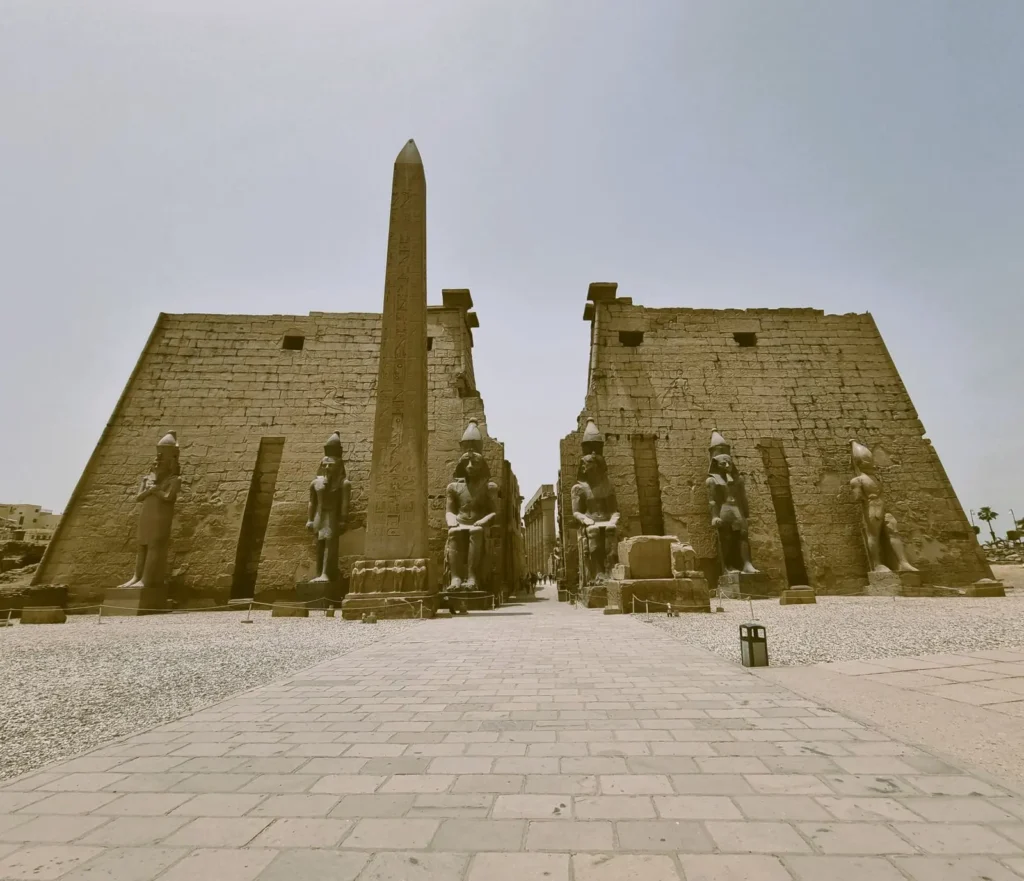
Two trips are worth planning properly. The first is the Valley of the Kings, best visited early in the morning before the heat and the crowds. The second is Abu Simbel, the temples of Ramses II near the Sudanese border. The usual way to get there is the overnight sleeper train from Cairo or Aswan, booked through Watania Sleeping Trains, arriving at sunrise. Book the sleeper in advance, and book a car and driver for the desert road to Abu Simbel through your hotel rather than finding one on arrival. Aswan itself, further south, is the calmest of the three cities, and a good place to end a trip. The Nile cruise corridor between Luxor and Aswan is well travelled, well policed, and an easy way to see the temples without moving hotels every night.
The Red Sea: Sharm, Hurghada and Resort Life
The Red Sea resorts are a different Egypt, and for many solo women they are the easiest part of the trip. Sharm el-Sheikh, Hurghada and Marsa Alam run on resort tourism, and the UK Foreign Office describes travel to the Red Sea tourist areas in the southern Sinai as generally low risk, with routine security checks on vehicles and at airports. Sharm is specifically excluded from the US do-not-travel warning for Sinai. The resorts are bubbles in the best sense: hotels with their own beaches, dive centres used to solo travellers, and a crowd that is mostly other tourists. The dress code relaxes inside resorts, the harassment drops sharply, and a woman alone at a resort restaurant is unremarkable. If Cairo feels like a lot, the Red Sea is where you recover. It is also worth knowing that the FCDO advice for the region can change with the regional situation, so check it again before you fly, even if you checked it when you booked.
What to Wear, and What Not to Worry About
Dress is the single most effective thing you control in Egypt, and it is not about modesty as a moral question. It is about attention. Loose trousers, maxi skirts and shirts that cover your shoulders and chest reduce the volume of comments noticeably. In the streets of Cairo and Luxor, cover your shoulders and knees. Carry a scarf for mosques, where covering your hair is expected. Inside resorts and at hotel pools, normal holiday dress is fine. On Nile cruises, the dress code is relaxed, but the towns you stop in are not resorts, so keep a cover-up in your bag.
What you do not need to worry about is covering your hair in the street. Egyptian women in Cairo dress in every possible way, and a foreign woman in loose, covered clothing blends in well enough. Sunglasses help, not for the sun alone but because they break eye contact, which is half the game. And one small habit helps more than it should: do not advertise that you are alone. If someone asks, mention casually that your friends are joining you soon. It is a small piece of social armour, and it costs nothing.
Money, Taxis and the Baksheesh Question
Egypt is largely cash-based outside the major hotels, so plan for it. Withdraw Egyptian pounds from ATMs in larger amounts, because the machines have withdrawal limits that make small withdrawals painful. Keep small notes for tips, because you will need them constantly. That is the baksheesh culture, and it is the part of Egypt that confuses visitors most. Tipping is expected for small services: bathroom attendants, porters, people who point you in the right direction. It is fine to tip when a service was genuinely helpful, and it is fine to say no politely when it was not. The pressure to tip more, and then to tip again, is part of the same pattern as the scams at Giza. A firm, friendly no is enough.
For transport, the rule from the Cairo section applies everywhere: use Uber or Careem where they exist, agree the fare before you get in where they do not, and never get into a car without knowing the price. In the markets, haggle firmly and be ready to leave. The first price is never the price. Research prices before you go, especially for camel rides, boat trips and day tours, so you know when a number is invented. If a price feels wrong, it is wrong.
The Areas You Should Not Go
This section is short because the map is clear. Do not travel to the North and Middle Sinai Peninsula, to the Western Desert unless you are with a licensed tour company, or to the border areas, which are military zones. The UK adds its own lines: no travel within 20 kilometres of the Egypt-Libya border, except the town of El Salloum, where it advises against all but essential travel; no travel to the North Sinai Governorate; no travel except for essential reasons to the northern part of South Sinai beyond the St Catherine to Nuweiba road, except for the coastal areas; and no travel except for essential reasons to the area west of the Nile Valley and Nile Delta, with exceptions that include Luxor, Aswan, Abu Simbel and the Valley of the Kings. The Hala’ib Triangle and the Bir Tawil Trapezoid are also on the UK’s list.
Read that list again and notice what is not on it. Cairo is not on it. Luxor is not on it. Aswan, Hurghada, Sharm el-Sheikh and the Nile cruise corridor are not on it. The warnings are about named, remote areas, and this guide has kept them scoped that way throughout. If a tour or a driver offers to take you somewhere on that list, the answer is no, and the reason is that your travel insurance will be invalid if you go. The UK is explicit about that, and it is the practical point that matters most.
If Something Goes Wrong: Tourist Police 126
Save these numbers before you land. Police 122, ambulance 123, fire 180, tourist police 126, and the unified emergency number 112 also works. The tourist police, reached on 126, are the number to remember. They are the first call for scams, harassment, a lost passport, or a dispute with a vendor or driver, and there are English-speaking officers in the tourist areas. Tourist police are visible at major sites, hotels, airports and museums, and they take reports seriously, because tourism is the business. If someone harasses you and will not stop, go to the nearest hotel entrance or police post and say so. Hotel entrances have security and luggage scans, and they are safe places to step into. Report serious incidents. It helps the next woman, and it creates the record that matters if you need to claim on insurance.
Travel insurance is not optional for Egypt. Check that your policy covers the areas you are visiting, and read the exclusion for travelling against government advice. If you go somewhere your government advises against, your policy may not pay. That is the real reason to respect the map above, more than any abstract warning.
Practical Kit: Visa, Money and Staying Connected
Most nationalities can get a visa on arrival at Egyptian airports for about 25 US dollars for a single entry, and a multiple-entry visa costs around 60 dollars and is valid for six months. A separate five-year multiple-entry visa costs $700. Check the official Egypt e-Visa portal before you fly, because the rules change and the e-Visa is the smoother option if your nationality qualifies. Get a local SIM or an eSIM at the airport so you have data for Uber, maps and the tourist police number. Share your itinerary with someone at home, and check in with them. And keep your passport in the hotel safe, carrying a photo of it instead, because a lost passport in Egypt costs you days.
For the general habits that work everywhere, our tips for solo female travellers cover the basics, and our best places to solo travel list shows where Egypt sits among the other destinations on this site. Morocco is the closest comparison in this series, another North African country at Level 2 with a similar mix of low danger and real street hassle, and reading the two together gives you a better sense of the region than either one alone.
FAQs: Is Egypt Safe for Solo Female Travellers?
Yes, broadly. Serious crime against tourists is exceptionally rare, and the main tourist trail is heavily policed. The real issue is harassment, which is frequent and tiring, especially in Cairo. With modest dress, Uber or Careem, and the tourist police number saved, most solo women travel Egypt without serious problems.
Level 2, Exercise Increased Caution, because of terrorism, crime and health. Egypt was moved down from Level 3 in July 2025 and kept at Level 2 in the March 2026 review. The do-not-travel areas are the North and Middle Sinai, the Western Desert without a licensed tour, and the border areas. Sharm el-Sheikh is excluded.
Yes, and it is better to know that before you go. Stares, catcalls, photo requests and pushy conversation are daily in Cairo, and Canada’s advice notes touching and verbal abuse in daylight and busy areas. Modest dress, a firm no, women-only metro cars and a licensed guide for the busy sites all help. It is tiring, not dangerous, and that distinction matters.
Yes. Uber and Careem are the safest way to move around Cairo, Alexandria and Hurghada. They give you fixed pricing, GPS tracking and a driver record. Drivers sometimes call to confirm the pickup spot and sometimes prefer cash. Avoid unmetered street taxis, or agree the fare in Egyptian pounds before you get in.
In the streets, cover your shoulders and knees, and carry a scarf for mosques. Loose trousers, maxi skirts and shirts that cover your chest reduce unwanted attention noticeably. Inside resorts and at hotel pools, normal holiday dress is fine.
The tourist police are the first call for scams, harassment, a lost passport, or disputes with vendors and drivers, and English-speaking officers work in the tourist areas. The general emergency numbers are police 122, ambulance 123, fire 180, and the unified number 112.
Most nationalities can get a visa on arrival at the airport for about 25 US dollars for a single entry, or a multiple-entry visa for around 60 dollars. Check the official Egypt e-Visa portal before you fly, because rules change by nationality.