Is Colombia Safe for Solo Female Travellers? The Short Answer
Colombia is a Level 3 country, and this guide starts there, because a guide that buries the advisory is not honest. The US State Department rates Colombia Level 3, Reconsider Travel, because of crime, terrorism, civil unrest, kidnapping and natural disasters, and that is the joint-highest advisory level of any country in this series, matched only by Jordan. But Level 3 is not one verdict for the whole country. Bogotá, Medellín and Cartagena are all Level 3, and none of them sits inside a Level 4 department. The do-not-travel zones are the border departments in the far north and east, and the tourist cities are a long way from them. This guide gives you the city-by-city verdict, plus the solo-woman playbook that makes the difference between a trip you love and a trip you endure.
What the Official Advice Says
The US advisory was issued on 31 March 2026, and it is worth reading for the map it draws rather than the headline. The Global Peace Index 2026 ranks Colombia 141st of 163 countries, with a score of 2.735, down four places, the lowest-ranked mainstream South American destination alongside Brazil. The Women, Peace and Security Index for 2025/26 ranks Colombia 149th of 181, with a score of 0.551, and security is its weakest dimension. The UK Foreign Office updated its Colombia advice on 30 October 2026. It does not advise against travel to Colombia’s main tourist areas. It does advise against all but essential travel to parts of the country: all of Norte de Santander including Cúcuta, all of Arauca, Chocó except the capital Quibdó and the whale-watching towns of Nuquí, Bahía Solano and Capurganá, the western part of Valle del Cauca including Buenaventura, and remote rural border areas. The UK also warns that your travel insurance could be invalid if you travel against its advice, which is the practical point that matters most.
For the wider picture, our guide to the safest countries for solo female travellers shows where Colombia sits among the places on this site. It is not in the top tier, and this guide does not pretend otherwise. The solo female travel safety tips guide covers the habits that work everywhere, and they matter more in Colombia than in most places.
Two Colombias: The Tourist Cities vs the Level 4 Zones
This is the section that decides whether the guide is honest, so here it is plainly. The US advisory sets Level 4, do not travel, for Arauca, Cauca excluding Popayán, Valle del Cauca excluding Cali, and Norte de Santander, plus anywhere within ten kilometres of the Venezuelan border. In late October 2026 the Colombian government also ordered a temporary deployment of security forces in Cúcuta, the border city in Norte de Santander, with further measures expected. That is another reason the border zone is not a day trip.
Now the distance, because it is the whole point. Bogotá sits in the centre of the country, Medellín in the mountains of Antioquia, Cartagena on the Caribbean coast. The Level 4 departments are the border zones in the far north and east, and the tourist cities are a long way from them. Nothing in this guide about the border applies to Bogotá, Medellín or Cartagena, and nothing about the tourist cities applies to the border. If a tour or a driver offers to take you somewhere on the do-not-travel list, the answer is no.
Medellin for Solo Women
Medellín is the city most solo women come for, and it rewards a good base. Stay in El Poblado for the hotels, the restaurants and the other travellers, or in Laureles for the quieter streets and the cafes. Both are neighbourhoods where solo women are common, and both have hotels used to guests travelling alone. Read reviews obsessively before you book, especially reviews written by solo female travellers. A hotel that other solo women recommend is worth more than any star rating.
Medellín after dark needs a plan rather than a worry. El Poblado and Laureles are lit and full of people at night, but Comuna 13 after dark is not a place for a solo woman, and neither is Ciudad Bolívar. Use Uber or Cabify, or a car arranged by your hotel, rather than hailing a street taxi after dark. If someone follows you or will not stop, step into the nearest hotel entrance or shop and say so. Hotel entrances have security, and they are safe places to step into. Medellín is the city where solo women most often say they felt safe in El Poblado.
Cartagena for Solo Women
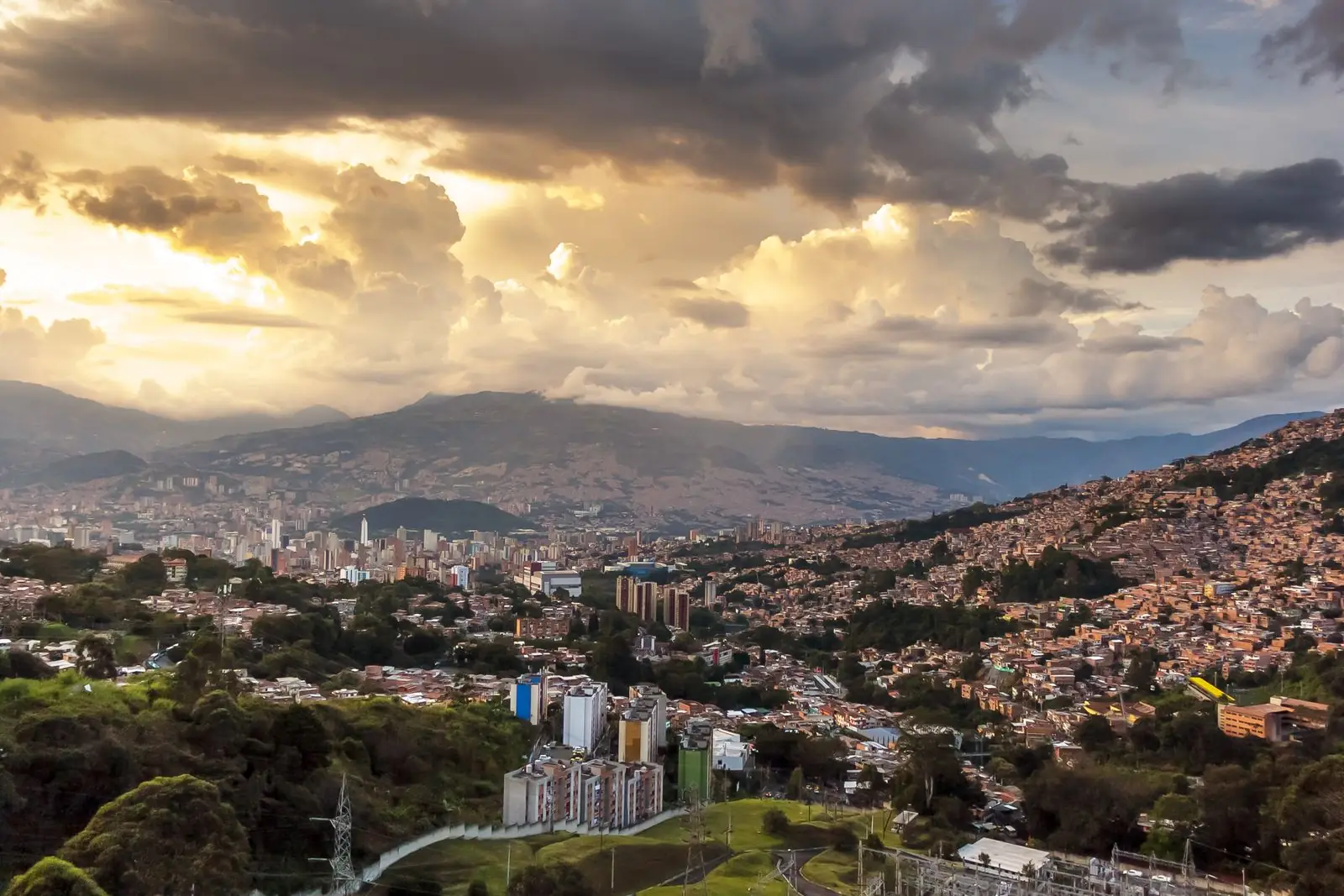
Cartagena is the prettiest city in the series and the one where the street rules matter most. Stay inside the walled city, in Centro or Getsemaní by day, and walk the old town in the evening when the streets are full. The walled city is compact, lit and full of people, and it is where the hotels, the restaurants and the other travellers are. Getsemaní is livelier and cheaper, and it is fine by day, but at night stay on the main streets and take a car back to your hotel rather than walking the quiet ones.
The street sellers in Cartagena are persistent, and the rule is simple: a firm no, then keep walking. Do not stop for conversations you did not start, and do not accept anything pressed into your hand. The beach vendors and the men offering massages are the same. A polite no and a steady walk is the whole playbook, and it works.
Bogota for Solo Women
Bogotá is a capital city, and it behaves like one. Stay in the north, in Chapinero or Usaquén, for the walkable streets and the cafes, and avoid downtown Bogotá at night. The north is where the hotels and the restaurants are, and it is where solo women are common. The historic centre, La Candelaria, is worth a day, not a night. See it by day, with a guide or with other travellers, and take a car back north before dark.
Bogotá is also the city where the altitude matters. At 2,640 metres, the air is thin, and the first day should be slow. Drink water, skip the alcohol on the first night, and do not plan a long walk uphill before you have acclimatised. It is a small point, and it is the one that keeps a headache from ending your first day early.
Scopolamine: The Scam to Name Plainly
Scopolamine is the risk most specific to Colombia, and it is worth naming plainly. It is a drug, sometimes called devil’s breath, that can be slipped into a drink or blown into a face, and it leaves the victim compliant and unable to remember what happened. It is widely reported in Cartagena and Medellín, and the targets are often solo travellers. The playbook is simple. Never accept a drink from a stranger. Never leave your drink unattended, not for a minute. Be wary of overly friendly strangers offering help or drinks, especially at night, and do not follow anyone to a second location. If you feel strange after a drink, tell someone immediately, and get to a hospital. The drug is real, the risk is real, and the habits that stop it are small.
Getting Around: Taxis, Apps and Night Movement
Colombia’s taxis are the one thing every guide warns about, and the warning is fair. Use Uber or Cabify, which give you fixed pricing and a digital record of your driver, or use a car arranged by your hotel. Agree the fare before you get in where apps do not work, and never get into a car without knowing the price. At night, a booked car is not optional. By day, the metro in Medellín is clean, cheap and safe, and it is the best way to cross the city. Between cities, the buses are reliable and cheap, and the domestic flights are short and affordable.
Keep your phone out of sight on the street, because phone theft is the crime most visitors actually meet. Do not walk with your phone in your hand, and do not stop on a street corner to check a map. Step into a shop or a cafe, check the map there, and then walk. Use ATMs inside malls and banks only, never on the street, and cover the keypad. Spanish basics help more in Colombia than in most countries on this site, because English is thin outside the tourist zones. Learn the numbers, the directions and the polite no, and the trip gets easier.
Yellow Fever and Health
Yellow fever is the health question to settle before you fly. The CDC has a Level 2 yellow-fever notice for Colombia, updated on 18 September 2026, and vaccination is recommended outside Bogotá and the major cities. That means the Amazon and the coffee region, not a Bogotá city break. Check the current CDC notice for your own itinerary, and get the vaccine at least ten days before you travel if your route needs it. Bogotá itself does not need it.
The other health habit is the altitude. Bogotá sits at 2,640 metres, and the first day should be slow. Drink water, skip the alcohol on the first night, and do not plan a long walk uphill before you have acclimatised. Tap water is safe to drink in Bogotá and Medellín, which is unusual in the region, but buy bottled water elsewhere. And pack repellent, because dengue and Zika are present in the lowlands, and the evenings are when the mosquitoes come out.
Practical Safety Kit for Solo Women in Colombia
Save these numbers before you land. The emergency number in Colombia is 123, one free call that reaches police, ambulance and fire. Get a local SIM at the airport so you have data for Uber, Cabify and maps, because you will use them constantly. Pack repellent, a small padlock for guesthouse doors that do not lock well, and a copy of your passport, keeping the original in the hotel safe. US passport holders do not need a visa arranged in advance for a short tourist stay, but check the current entry rules for your own passport before you fly, because they change. And keep your cards in the hotel safe when you do not need them, because card fraud is flagged in the UK advice.
For the general habits that work everywhere, our tips for solo female travellers cover the basics, and our best places to solo travel list shows where Colombia sits among the other destinations on this site. Jordan is the only other country in this series at Level 3, and reading the two together gives you a better sense of what a Level 3 trip actually looks like than either one alone.
On the tourist route, yes, with a plan. Bogotá, Medellín and Cartagena are Level 3, and none of them sits in a Level 4 department. The risks that matter are street crime, scopolamine and the border zones, and all three are manageable with a good base, a booked car at night and a drink you never leave unattended.
Level 3, Reconsider Travel, because of crime, terrorism, civil unrest, kidnapping and natural disasters. The advisory was issued on 31 March 2026. The do-not-travel areas are Arauca, Cauca excluding Popayán, Valle del Cauca excluding Cali, and Norte de Santander, plus within ten kilometres of the Venezuelan border.
No. All three cities are Level 3, and none of them sits inside a Level 4 department. The Level 4 zones are the border departments in the far north and east, a long way from the tourist cities. The UK also advises against all but essential travel to parts of the country, but not to the main tourist areas.
Scopolamine, sometimes called devil’s breath, is a drug that can be slipped into a drink or blown into a face, leaving the victim compliant and unable to remember what happened. It is widely reported in Cartagena and Medellín. Never accept a drink from a stranger, never leave your drink unattended, and be wary of overly friendly strangers offering help or drinks.
El Poblado for the hotels, restaurants and other travellers, or Laureles for quieter streets and cafes. Both are neighbourhoods where solo women are common. Avoid Comuna 13 after dark and Ciudad Bolívar, and use Uber or Cabify at night rather than hailing a street taxi.
123, one free call for police, ambulance and fire. Save it before you land, and get a local SIM at the airport so you have data for ride apps and maps.
It depends on your route. The CDC recommends vaccination outside Bogotá and the major cities, for the Amazon and the coffee region, in a notice updated on 18 September 2026. Bogotá itself does not need it. Get the vaccine at least ten days before you travel if your itinerary needs it.