

When I travel internationally, staying connected is one of my top priorities. The moment I land in a new country, I want to get online without stress. I have spent recent years testing eSIM providers across Asia and Europe, and eSIMs have become my favorite travel tools.
Old international roaming plans from major carriers were expensive and slow. Today, travel eSIMs offer better value, wider coverage, and reliable mobile data for less money. They are easy to set up before departure and feel truly convenient once you reach your destinations.
I still remember navigating unfamiliar cities in Japan while playing Pokémon GO with friends. Strong mobile data kept me keeping in touch with my family and helped with searching local attractions on the go. These small experiences showed me why a good eSIM is essential on any trip.
This guide compares seven eSIM providers that stand out in Asia. I share each one’s strengths and weaknesses, plus which is best suited for longer trips, short trips, exploring places, or managing itinerary changes mid-route. Affordable plans, strong reliability, and carriers with solid networks were my main filters.
If you want a trusted name to recommend to others traveling around the world, this list will help. I tested each option against roaming alternatives so you can skip the old, clunky travel tools and pick a smarter one instead.
Best eSIMs for Asia: Experts’ Traveler Recommendations
My Top Pick: Sim Local
After many trips across Asia, my favorite brand is Sim Local. It connects with major internet providers in 153 countries, which is rare for a single partner. The website is user-friendly, even for people who are not tech-savvy.
Sim Local taps into the strongest internet providers in each region. This helps you escape roaming charges and avoid the huge bill that often hits at the end of travels. Old-style roaming charges simply do not match this kind of value.
You pick a data package that fits the length needed for your travel. For a single stop, choose by country visited. For a multi-country adventure, the eSIM Global option with global packages covers most countries across Asian countries like Singapore, Sri Lanka, and Pakistan.
How to buy and activate:
- Open the website and scan the deals
- Pick your first destination or a regional bundle
- Tap “Buy Now” to buy the eSIM
- Get an emailed receipt with a QR code
- Use the setup instructions to activate the line
- A follow-up email shares how-to videos if you need help
I installed mine right before my flight to Singapore once. By the time the plane was ready to take off, my host country line was already loaded and ready to go.
My pre-trip checklist:
- Confirm the country visiting is supported
- Match the data package to the length needed
- Save the emailed receipt and setup instructions in one folder
- Watch the how-to videos if it is your first eSIM
I plan to visit next year with the same setup again.
Holafly: My Pick for Unlimited Data
When I want a no-fuss option for long trips, I reach for Holafly. It is the best unlimited-data option I have tried across Asia. Plans run from 5–90 days, so you can pick exactly what you need without building a custom plan.
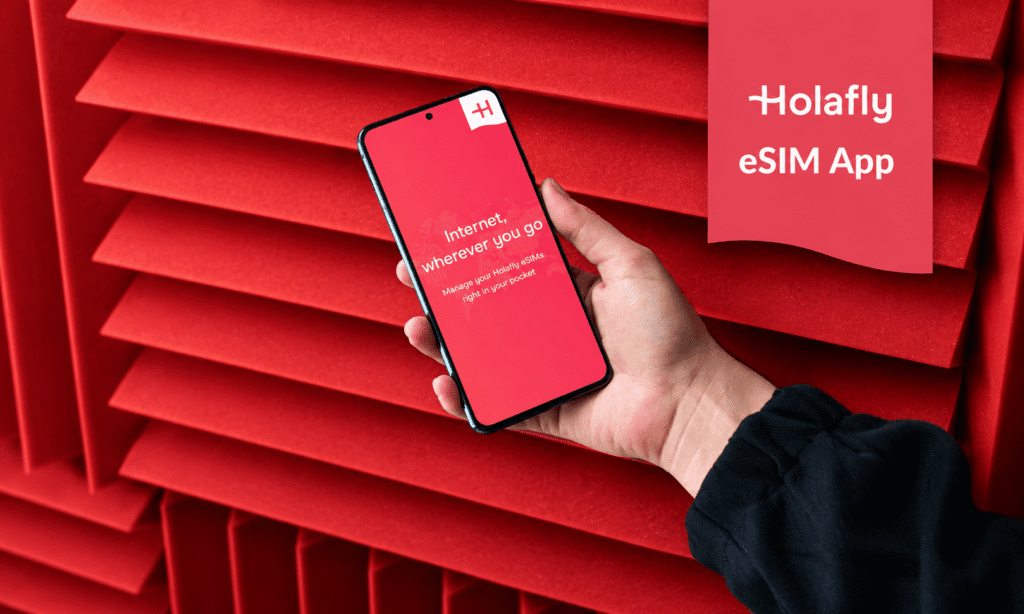
The pricing starts at $19 for 5 days and goes up to $99 for 90 days. That price range sits on the higher pricing side, but you are paying a premium for true unlimited data with no daily caps.
Why it stands out:
- Foolproof setup using a single QR code
- Solid 4G/LTE signal across major cities
- Strong coverage in Thailand and Vietnam
- Smooth for messaging, Google Maps, and streaming
I tried it on a trip from Bangkok to Hanoi last spring. I scanned the QR code right at the airport gate and was connected in two minutes flat. Even my non-techy friend handled the purchasing online flow without help.
Things to know before buying:
- No hotspot tethering is allowed on these plans
- Weaker speeds can appear once you leave the city
- The signal feels slower in rural areas and remote towns
- You are buying ease, not raw speed
The premium for convenience felt fair to me on that trip. Walking around Hanoi at night with a working map saved real time, and Bangkok traffic was easier to plan with steady mobile data.
Holafly is best if your route stays near major cities in Thailand or Vietnam. If you plan to spend most days in rural areas, expect some weaker speeds and adjust your hopes about that.
Jetpac eSIM: The Budget Winner
When I plan short hops on a tight budget, Jetpac eSIM is my first pick. It is a true budget eSIM without the stress of hunting for local SIM cards at the airport. The fixed pricing model helps me control spending from day one.

This plan is data-only, with no SMS support, which keeps the cost low. You still get smooth WhatsApp, Instagram, and Google Maps access for daily needs. Backpackers love it for the simple value vs. price balance it offers.
Why it works for budget travelers:
- One of the cheapest per GB options across Asia
- Clean multi-GB bundles built for regional use
- Easy topping up data when you run low
- Quick installation with a single QR code
- No surprise roaming fees or hidden roaming charges
I used Jetpac eSIM on a loop through Thailand, Malaysia, and Vietnam last winter. Connectivity stayed strong in cities, and booking a Grab ride was never a problem. I added more mobile data mid-trip in under a minute.
Best fit for these travel habits:
- Short trips with multiple destinations in one route
- Flexible travel plans across the region
- People who want cost savings without losing convenience
- Those who like switching plans between countries
The performance is steady for daily use, though it sits in the middle ground for raw speed. Reliability and stability were fine for me; middle grounders may want a premium pick instead.
A few things to know before buying:
- Coverage in Japan can feel patchy in remote zones
- Prepaid data plans are capped, so plan your usage
- Best for staying connected with light apps, not heavy streaming
I keep a Jetpac eSIM in my regular rotation now for any quick Asia hop.
Sim Local: My Go-To for Regional Travel
For anyone hopping between countries, Sim Local is my go-to eSIM in the region. Its multi-country plan covers 34 countries, which makes it ideal for a real multi-destination Asia plan. Few providers match this kind of reach with one single line.
The full Asia plan stretches from 5 to 30 days, and the price range sits between $4.50 and $88. You can grab 20GB for around $32, which feels fair for what you get. It is not unlimited, but the cap is generous for daily needs.
Why it stands out:
- Wide coverage across Southeast Asia
- Reliable 4G/LTE in most cities
- Quick setup with a clean QR flow
- Strong reliability for digital nomads
- Helpful customer service when issues pop up
I used Sim Local during a six-country loop through Singapore, Malaysia, Indonesia, and the Philippines. It gave me the smoothest experience I have had on a regional trip. I could hotspot laptop sessions from a café and get work done without drama.
Best fit for these travelers:
- Digital nomads working remotely from cafés or co-working spots
- People backpacking across Southeast Asia for weeks
- Anyone who wants solid data for WhatsApp and video calls
- Travelers who hate juggling many eSIMs at once
A few honest notes:
- Slower speeds can appear in rural areas
- Smaller islands in Indonesia or the Philippines may show weak signal
- Raw speed is good in cities but not record-breaking
For most regional trips, this multi-country plan has earned its place in my phone. It balances cost, coverage, and ease in a way few rivals can match right now.
Why Use an eSIM for Traveling in Asia?
Skip the Roaming Bill Shock
A good eSIM is the simplest way to cut sky-high roaming costs on any international travel plan. Old carrier roaming fees can wipe out a budget in days. A prepaid eSIM locks in your cost before you even leave home.
As a full-time travel writer, I am constantly on the move across many time zones. My income depends on staying online for digital meetings and filing articles to my editors on tight deadlines. A weak signal is not just annoying; it costs me real work.
Why an eSIM beats roaming for working travelers:
- Flat pricing means no shock bill at the end of a trip
- Strong data lets you work efficiently from any café
- Acts as a solid backup when hotel WiFi drops in the cafe.
- Saves you during power outages that kill local routers
- Keeps you connected in remote off-grid areas with cell signal
Five years ago, I switched from roaming plans to eSIMs for every trip around the globe. The change paid for itself within one month of travel. I rarely think about data costs now, which lets me focus on the actual writing.
I still remember one digital meeting call from a tiny island where the WiFi died mid-sentence. My eSIM kicked in as a backup and saved the meeting in seconds. Moments like that are why I never switch off my travel eSIM during a trip anymore.
Quick tips to avoid roaming traps:
- Disable carrier roaming before takeoff
- Activate your eSIM only after you land
- Keep one eSIM as a backup line for emergencies
- Top up early if a long workday is coming
Ready to Use the Moment You Land
One of the biggest advantages of an eSIM is that you can set up before flight. No more hunting for a kiosk in a crowded airport after a long flight. You board the plane with a working data plan already loaded on your phone.
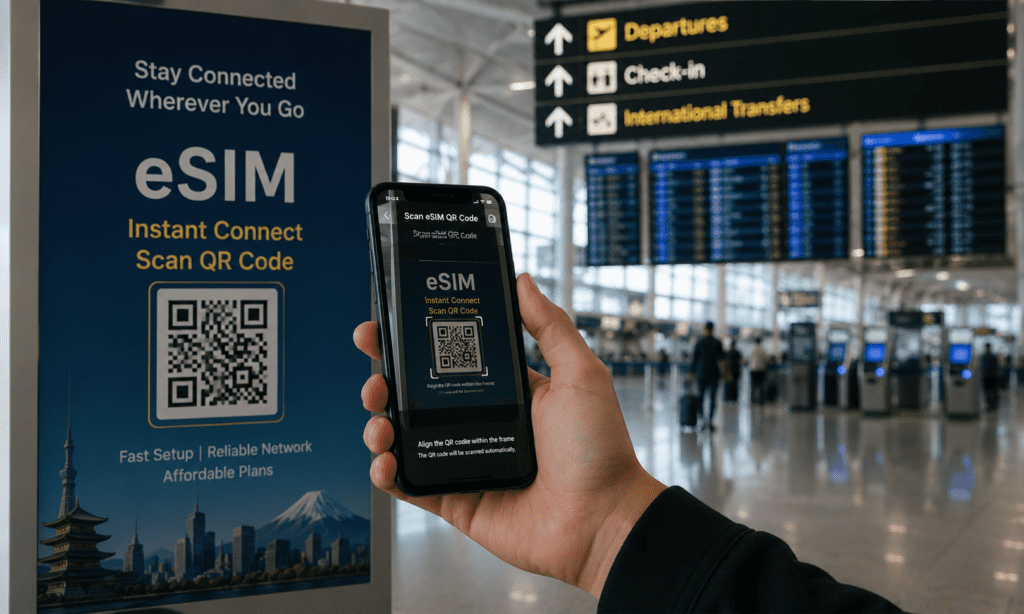
A traditional physical SIM card needs a visit to a local store or phone shop. You also fiddle with tiny SIM trays and pin tools at the worst time. An eSIM skips all of that since it is activated remotely through software.
Why instant activation matters:
- Your data plan is ready before landing
- No need to find a kiosk while jet-lagged
- Maps and ride apps work the second you step off the plane
- You skip queues at the local store or phone shop
- No risk of losing a tiny physical SIM card mid-trip
I once downloaded my eSIM in the lounge before a red-eye flight to Tokyo. The line was active by the time wheels touched the runway. While other travelers crowded a kiosk, I was already in a taxi using Google Maps.
A simple pre-flight routine:
- Buy the eSIM the day before takeoff
- Install the profile while still on home WiFi
- Confirm it is downloaded but not yet active
- Switch it on right after landing
- Turn off carrier data to dodge roaming fees
One thing to know: most travel eSIMs do not give you a working local number for calls and texts. If you truly need a local number, pair it with a small physical SIM card later. For data alone, the eSIM wins on every trip I take now.
Travel Across Multiple Countries Easily
For anyone planning multi-country travel, an eSIM is a real game-changer. You no longer need to chase local SIMs in every new destination you visit. One profile keeps you connected as you cross borders on a single trip.
A traditional SIM forces you to deal with swapping cards at airports and bus stops. That eats time and adds roaming charges the moment you forget to switch. With regional plans, that whole mess disappears in one tap.

Standout benefits of regional eSIM use:
- Seamless connectivity across many countries on one line
- No swapping cards between flights or train rides
- One bill instead of receipts from many local SIMs
- Maps and chat apps work without interruption
- Quick top-ups while hopping between countries
I tested multi-country plans during a three-week loop across Southeast Asia last year. Crossing land borders by bus used to mean an hour of setup at each stop. This time, my eSIM simply kept working as I rolled into the next country.
When regional plans win every time:
- Backpacking routes with five or more stops
- Family trips that cross two or three nations
- Work travel where every meeting needs steady data
- Any single trip with tight transfer windows
Quick tips to get the most from regional plans:
- Confirm each destination is listed before you buy
- Pick a plan length that matches your full route
- Keep your home line off to dodge roaming charges
- Save the QR code in case you reinstall mid-trip
For me, the freedom from swapping cards is the real win. Seamless connectivity turns long regional routes into smooth, low-stress days on the road.
Going Fully Digital With Your Mobile Line
The biggest shift with an eSIM is that you no longer need a physical SIM card at all. The line lives inside your device as a digital carrier profile. There is nothing to lose, snap, or misplace at the bottom of a backpack.
For frequent travelers, this change feels truly liberating. Carrying multiple SIMs in a tiny plastic case used to be part of every trip. Now, switching between lines takes a few taps in your phone settings.
Why going SIM-free just works:
- No more foreign SIM cards rattling in your wallet
- Easy scanning of a QR code to load a new plan
- No fear of a lost or damaged chip mid-trip
- Setup is far faster than a shop visit
- One eSIM-compatible phone holds many lines at once
I keep an old travel phone that has held six lines at once during long trips. Switching between them in seconds saved me real time at border crossings. The whole flow feels stress-free in a way old SIM swaps never did.
Best moments to go digital:
- Right before a long international flight
- When buying a new plan for a fresh country
- During quick layovers with no time for a phone shop
- Any time your main line is acting up and you need a backup
A few honest reminders:
- Confirm your device is eSIM-compatible before buying
- Save each QR code in a safe folder for reinstallation
- Some older phones still need a physical SIM card slot
The shift away from plastic chips is one of the quiet joys of modern travel. Once you try scanning a QR code instead of fumbling with foreign SIM cards, you rarely look back.
Coverage Across Asia
A solid data eSIM is a real game-changer for any modern Asian trip. Strong network reach across the region is what makes the whole tool feel essential day to day. Without it, you are back to paper itineraries and asking strangers for directions.
Most data plans today tap into local carriers in each travel destination. That means turn-by-turn directions on Google Maps keep working as you move. You can hop between cities and still load maps, chat apps, and booking sites with ease.
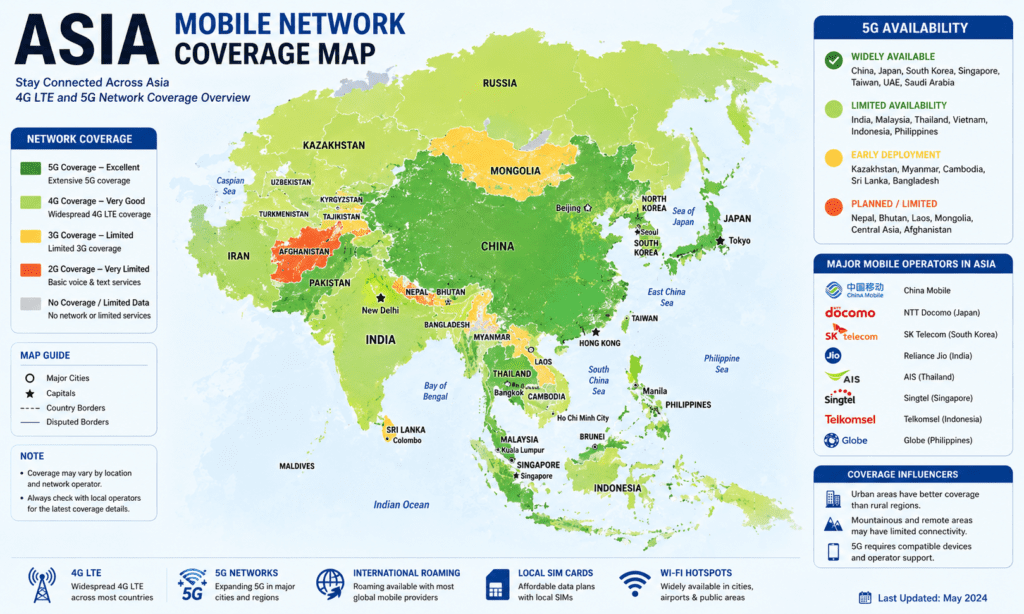
Why coverage matters more than raw speed:
- Maps load instantly in busy city centers
- Turn-by-turn directions keep going in tunnels and metros
- Translation apps respond fast when you need them most
- Ride apps confirm pickups without delay
- Travel without data in a new country feels inconvenient fast
I learned this on a rainy night in Hanoi when my map froze for ten minutes. A strong data eSIM later that week made the same kind of trip feel effortless. The contrast was huge, and I never travel without solid coverage now.
One honest limit to know: Most travel eSIMs do not give you a usable phone number. You cannot make normal phone calls or receive texts through SMS on these lines. If a hotel or bank needs to send a code, this gap matters.
Smart ways to handle the no-number issue:
- Use WhatsApp or Telegram for chats instead of SMS
- Keep your home phone number active on Wi-Fi calling
- Rent a phone with a local line for business trips
- Add a cheap local SIM only when a number is truly needed
For pure data, an eSIM is cost-effective and easy to manage. Just plan around the no-number gap before you fly, and the rest of the trip stays smooth.
Data Limits & Fair Usage Policy
Most travel eSIMs come with a clear data cap, not true unlimited access. Reading the fine print before checkout saves real money and stress later. Every data plan has a finite allowance, even when the label looks generous at first glance.
A common example is the Sim Local Asia regional plan. You get 20 GB, 50 SMS, and 15 minutes of calling for around $35 USD regionally, covering most daily data needs for a regular two-week trip without strain.
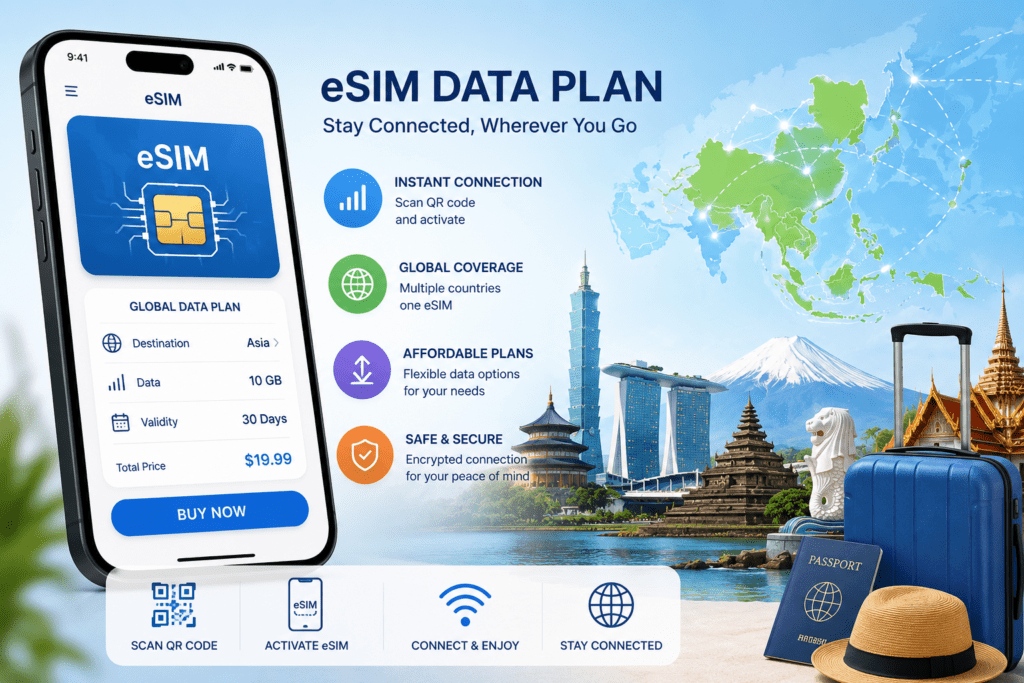
Why understanding limits matters:
- Prepaid eSIM plans stop working once the cap is hit
- Heavy streamers burn through data far faster than expected
- Using a hotspot for multiple devices drains the bundle quickly
- Background app updates can quietly eat your remaining data
- A surprise cutoff mid-trip is the worst kind of travel headache
I once ran my plan dry on day six of a ten-day trip in Bangkok. Auto-play videos and a constant hotspot for my laptop were the real culprits. Since then, monitoring usage every two days has become part of my routine.
Smart ways to track what you use:
- Open your phone’s cellular settings for a built-in usage tracker
- Check the provider’s in-app tracker for live numbers
- Set a soft daily limit in your head before the trip starts
- Watch your remaining data every couple of mornings
About the fair usage policy: Even plans that say “unlimited” usually hide a fair usage policy in the fine print. After a soft cap, speeds drop sharply for the rest of the cycle. So real unlimited access is rare in practice, even when marketed that way.
If you run low mid-trip:
- A quick top up through the app is the most reliable workaround
- Switch off auto-play on streaming and social apps
- Pause cloud photo backups until you reach WiFi
- Avoid using your line as a hotspot for multiple devices
Knowing the data limits before you fly turns surprises into simple planning. A short check of the fine print keeps your trip smooth from day one to the last flight home.
Validity Period
Every plan has a clock attached, and the validity period is what sets that clock. Most eSIM plans start the countdown the moment you activate the line. So picking the right length matters as much as picking the right data amount.
For example, the Sim Local Asia Regional plan runs for 31 days from activation. That window fits most standard international trips across the region. Anything longer needs a fresh plan or a top-up before time runs out.
Why the validity window matters:
- A short plan can expire before you even land at home
- Activating too early wastes days of paid coverage
- A plan expiring mid-journey kills your maps and chats
- Long travelers need careful timing to avoid gaps
- Group trips mean syncing plans with everyone’s flights
I once activated my line three days before takeoff by accident. Those three days were gone before I even reached the airport. Since then, I always wait until I am at the boarding gate to switch it on.
Smart steps to plan the right length:
- Match the travel duration to the closest plan tier
- Add a small buffer of two or three extra days
- Activate only after you land, not before takeoff
- Set a phone reminder one day before the plan ends
- Keep a backup top-up ready for the final stretch
For most regional routes, 31 days is the sweet spot of cost and time. If your trip is shorter, pick a tighter window to save money instead. Either way, a quick check of the validity period at checkout keeps your trip free of nasty surprises.
What You Really Pay for Asian Data
Smart pricing is where travel eSIMs truly shine against old carrier plans. The real test is not the sticker price but the value for money you get per gigabyte. A quick side-by-side compare makes the gap painfully clear.
Take the SIM Local Asia Regional plan as a baseline. You pay $35 USD for 20 GB of data-only access across the region. That cost-per-GB sits comfortably inside most people’s travel budget without strain.
How leading providers stack up:
- Sim Local Asia Regional plan: $35 USD for 20GB
- Airalo: around $39 USD for a similar regional bundle
- Ubigi: about $44 USD for 25GB with solid speeds
- All three are data only, with no SMS or voice lines included
Now compare those to a Verizon 31-day international plan at $372 USD. The price gap is not small; it is enormous for the same kind of trip. That is the real cost of relying on carrier roaming instead of a travel eSIM.
Why the math favors eSIMs every time:
- You skip the daily roaming fees most home carriers charge
- A clear flat rate means no shock bill at the end of the trip
- Data-only plans cut out features you rarely use abroad anyway
- Most travelers use chat apps, not SMS or voice, while overseas
I once paid a friend’s roaming bill of nearly four hundred dollars after a short Asia trip. The same coverage on Sim Local would have cost under forty dollars. That single example turned every traveling friend of mine into an eSIM user within a month.
Quick tips to stretch your travel budget:
- Match the GB amount to your real daily use, not your worry
- Compare cost-per-GB, not just the headline price tag
- Add a small top-up later instead of overbuying upfront
- Skip plans bundling SMS and voice if you only need data
For most Asian travelers, the answer is simple: a regional eSIM wins on pricing every single time. The savings often pay for an extra night of your trip on their own.
How Fast and Steady Is Your Signal
The real story behind eSIM performance lives in the local networks your plan connects to. Every travel eSIM rides on existing carriers in each country you visit. So the network quality you feel comes from the provider partners behind the scenes.
Most strong travel eSIMs link up with major telcos instead of smaller backup networks. In Europe, that often means names like Vodafone, Orange, or Movistar. These big players give you the same comparable speeds that local users enjoy every day.
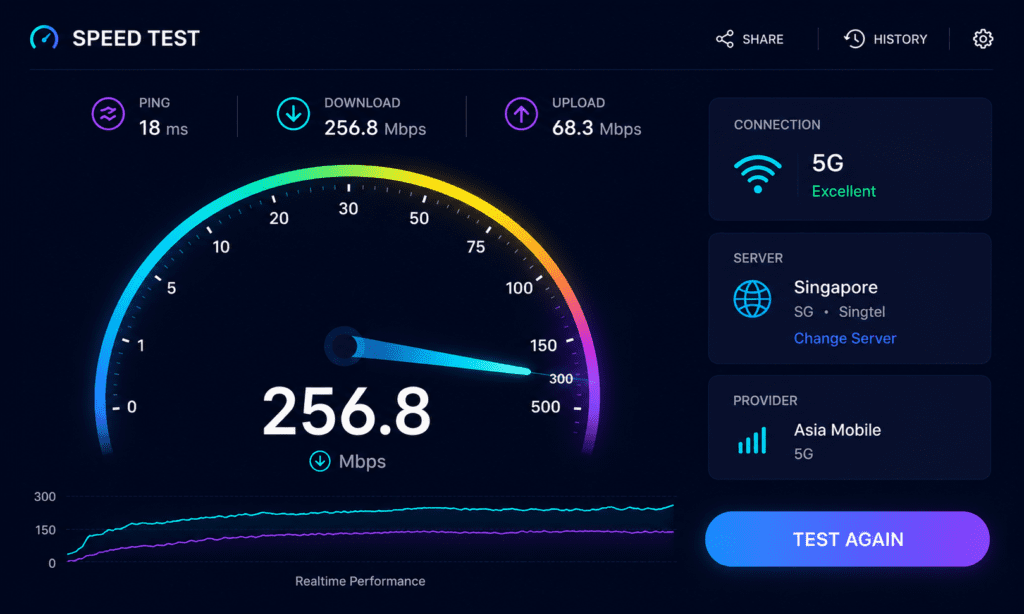
Top network partners across Asia:
- KDDI/SoftBank in Japan for wide city coverage
- TrueMove H in Thailand for fast urban data
- Major local networks in Singapore, Malaysia, and Indonesia
- Tier-one operators in Vietnam and the Philippines
For urban travelers, this setup delivers a truly reliable connection day after day. Maps, video calls, and streaming all run without lag in busy city centers. The speed in places like Tokyo or Bangkok often beats what I get back home.
I tested my plan side by side with a local friend’s SIM in Osaka last spring. The two phones showed almost identical bars and download numbers all afternoon. That kind of consistent experience is exactly what a good travel eSIM should give you.
Where things get tricky:
- Signal can drop sharply in rural areas far from cities
- Mountain valleys and small islands often show weaker bars
- Remote areas may fall back to slower 3G in some moments
- Border zones sometimes ping the wrong country’s network
Smart ways to protect your speed on the road:
- Pick a plan tied to top major telcos, not budget backups
- Check coverage maps before heading to remote areas
- Restart your phone if speeds suddenly drop in a new city
- Toggle airplane mode for ten seconds to refresh the line
Across Asia, the strongest plans ride on networks like KDDI/SoftBank and TrueMove H. Pair those with smart usage habits, and your trip stays connected from the first morning to the final flight.
Customer Support
Solid help from eSIM providers matters more than most travelers expect. A plan can look perfect on paper and still fail at the worst moment. That is when strong customer support turns into the deciding factor between brands.
Top providers like Airalo run a real 24/7 support channel with live chat and email. You can reach real agents any hour, which feels rare in the telecom world today. Their support network also handles multiple languages, which helps across Asia’s many time zones.
What strong eSIM support looks like:
- Live chat that answers within minutes, not hours
- Real agents instead of stiff scripted bots
- Help in multiple languages, not just English
- Clear steps to install eSIM profiles on tricky phones
- Quick checks to see if your device compatible with their plan
I once had a plan refuse to activate at midnight in Hanoi after a long flight. The 24/7 support channel had me back online inside fifteen minutes flat. As a full-time traveler, that single moment paid back the cost of the plan many times over.
Common moments you may need help:
- A QR code that refuses to scan during eSIM setup
- Data suddenly cutting out mid-trip with no clear reason
- Roaming settings that need a deeper fix on older phones
- Confirming your phone model is truly device compatible
How to make support work for you:
- Save the support link in your phone before takeoff
- Keep your order email handy for fast account lookup
- Note your phone model and OS version before reaching out
- Try a quick airplane-mode reset before opening a ticket
Old-style help from a traditional telecom company often means long phone queues. The best eSIM brands skip that mess with chat-first customer support built for travelers. That shift alone makes them feel built for the road in a way carriers rarely match.
ESIM Provider Comparison Table
| Provider | Best For | Data | Plan Duration | Price Range | Hotspot | Countries | Verdict |
| Sim Local | Multi-country travel | Up to 20GB (unlimited in some) | 5–30 days | $4.50–$88 | Yes | 34 (Asia plan) | Best overall for Asia hopping |
| Holafly | Unlimited data users | Unlimited | 5–90 days | $19–$99 | Limited (500 MB/day) | 200+ | Best for heavy data, premium price |
| Airalo | Light/first-time users | 1GB–50GB | 7–90 days | $4.50–$100 | Yes | 200+ | Best app; good for short trips |
| Saily | Long-term travelers | Unlimited option | 7–180 days | $4–$179.99 | Yes | Multiple | Reliable but higher cost per GB |
| Jetpac | Regional travel | Fixed GB or unlimited-ish | 7–30 days | Varies | Yes | 200+ | Fast speeds; confusing pricing |
| Truely | Multi-stop trips | Unlimited (throttled after 10GB/day) | 1–30 days | ~$6.90– $75 | Yes | 190+ | Best for border-crossers; no SIM swaps |
My Shortlist of Top eSIM Brands for Asia
After many trips and dozens of plans tested, seven names rise above the rest. Each brand has its own sweet spot, so the right pick depends on your travel style. Below is a clear breakdown of how they compare on the road.
Sim Local
Sim Local is my top pick for a true multi-destination Asia plan. It reaches 153 countries and gives a truly strong local network feel in each one. The setup is foolproof, and the performance stays steady across cities.
- Plans cover 34 countries in one bundle
- Helpful customer service when issues pop up
- Strong value for frequent flyers
Holafly
Holafly stands out for its unlimited data plans with no daily cap. Pricing starts at $19 and stretches up to $99 for longer windows. The brand suits travelers who hate watching data limits during a trip.
- Plans run 5 to 90 days across major countries
- Strong in major Asian cities but weaker on smaller islands
- One catch: no hotspot sharing on these plans
Airalo
Airalo is one of the most beginner-friendly brands in the space. It offers wide connectivity across 200+ countries with simple per-GB bundles. The app makes installation smooth even for first-time users.
- Plans from 1GB to 50GB to match any trip length
- Validity windows from 7 to 90 days
- Solid reliability across most Asian routes
Jetpac
Jetpac wins on raw per-GB pricing for budget travelers. It is a no-frills option built for shorter trips and quick hops. The plan keeps you connected for chat apps like WhatsApp without burning cash.
- Best for travelers hopping between destinations
- Light on extras, heavy on savings
- Great for backpackers on tight budgets
Nomad
Nomad offers clean bundles with consistent coverage across the region. Its network partnerships with strong local carriers keep speeds reliable. The app is polished and easy to use the moment you land.
- Great mix of price and solid coverage
- Smooth account dashboard for tracking usage
- Strong fit for mid-length trips of two to three weeks
Ubigi
Ubigi built its name on deep network partnerships with major telcos. It delivers solid coverage across most of Asia, including parts of Indonesia and the Philippines. The brand feels built for travelers who care about steady speeds.
- Trusted by airlines for in-flight WiFi
- Stable line quality in busy city centers
- A safe pick for business travel days
Saily
Saily comes from the team behind NordVPN, so it is a privacy-first choice. It pairs travel data with built-in security features for safer browsing. Pricing starts around $1 per 1GB in many regions, which is hard to beat.
- Strong security layer baked into the app
- Clean design built for first-time eSIM users
- Best for travelers who care about data privacy
I used Sim Local during a loop through Indonesia and the Philippines last winter. Even on smaller islands, the line held up for daily maps and chat. That trip is why it stays my top pick for serious Asia routes today.
Quick guide to picking your brand:
- For long trips with unlimited data plans: pick Holafly
- For a true multi-destination Asia plan: pick Sim Local
- For beginner-friendly ease: pick Airalo
- For shorter trips on a budget: pick Jetpac
- For privacy-first users: pick Saily
Any of these seven will help you stay connected across Asia in 2026. The real question is just which one fits your route, budget, and travel style best.
Picking Between Regional and Single-Country Plans
The choice between a regional eSIM and a country-specific eSIM shapes your whole trip. One gives you broad reach across borders; the other gives you deep value in one spot. Picking the right type early saves both time and money later on.
A regional eSIM is built for multi-stop trips across many nations. Sim Local offers an Asia plan that covers 34 countries on a single line. You stay connected the moment you cross a border, with no setup needed in each new spot.
When a regional eSIM wins:
- Long backpacking routes through Southeast Asia
- Trips touching multiple countries in two or three weeks
- Anyone working remotely while moving across borders
- Tight schedules where setup time is precious
- Group trips where convenience beats squeezing every cent
A country-specific eSIM plays a different game entirely. It taps into local carriers directly and often wins on per-GB cost. You also get smoother network prioritization since you ride the home network natively.
When a country-specific plan wins:
- Trips with one single destination and no border crossings
- Stays of two weeks or more in one country
- Travelers who want maximum data at minimum cost
- Heavy users who need more data for less money
- Anyone chasing a true local plan with better rates
I once split a Thailand-only trip with a friend who used a regional plan. My local Thai SIM gave me almost twice the data for the same price. That single test showed me how much a single destination plan can save when used right.
A simple rule to follow:
- One country, two-plus weeks → pick a country-specific eSIM
- Two or more countries in one trip → pick a regional eSIM
- Mixed plans (a long base stay plus side trips) → use both together
Quick checklist before you buy:
- Map your full itinerary on paper first
- Count how many borders you will actually cross
- Compare regional plans against the local option in each stop
- Add up data needs per day to size the bundle right
For most modern Asian travelers, the answer leans toward a regional eSIM for the convenience alone. But if you plan to settle in one spot for weeks, the savings of a local plan still win big.
Getting Your eSIM Ready Before You Fly
A smooth eSIM setup process starts well before departure, not at the airport. Doing it at home with strong WiFi avoids stress when you land tired. The whole flow takes under ten minutes once you know the right steps.
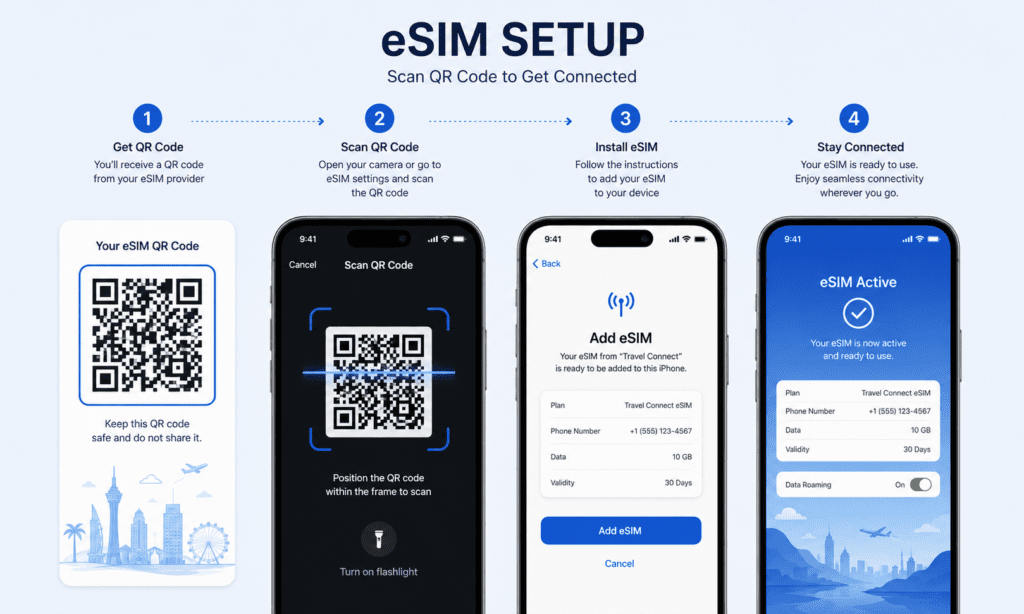
Step 1: Check device compatibility
Not every phone supports an eSIM, so device compatibility is the first check. All modern iPhones from the iPhone XS forward handle it without issue. Most recent Android devices and flagship devices from Samsung, Google, and OnePlus work too.
- Open your phone settings and search for “eSIM.”
- If “Add eSIM” appears, you are ready to go
- Older phones may still need a regular SIM instead
Step 2: Buy your plan
Head to your chosen provider website and pick a data plan that fits your trip length. Complete purchase with a card, and the brand emails you a QR code within minutes. Save that email in a safe folder before you board your flight.
Step 3: Install eSIM profile
Now it is time to install eSIM while still on home WiFi. Open Cellular or Mobile Data in your phone settings and tap Add eSIM. Then scan the QR code from the email using your phone camera.
- The phone loads the eSIM profile in under a minute
- Add a clear “Travel Asia” label so you can find it later
- Keep your home line as the default for now
Step 4: Activate after landing
Once you arrive, it is time to activate mobile data on the new line. Open cellular settings and switch your default data line to the travel eSIM profile. Turn on data roaming for that line only, not your home line.
Step 5: Test connection
Run a quick test connection before leaving the airport zone. Open Google Maps to confirm the active data line is working as expected. If it loads tiles fast, you are good to head into the city.
I once forgot to disable my home line’s data roaming on a Tokyo trip. The mistake cost me almost forty dollars before I noticed at lunch. Now I always double-check both lines as soon as the plane door opens.
Quick troubleshooting tips
If the line refuses to work, simple troubleshooting usually fixes it fast.
- Toggle airplane mode for ten seconds to refresh the network
- Restart your phone if speeds feel oddly slow
- Confirm data roaming is on for the travel line only
- Reinstall the eSIM profile from the original QR code if needed
With the line active, you can pull up directions, run a translation app, and book rides without delay. That smooth landing is the real reward of a clean eSIM setup done right.
Avoid These Travel eSIM Slip-Ups
Even seasoned travelers run into the same common mistakes when using an eSIM abroad. A few small habits can save you real money and stress on the road. Knowing them ahead of time turns a rough first day into a smooth landing.
Mistake 1: Skipping compatibility checks
The first slip is skipping checking compatibility before buying a plan. Not every phone is eSIM-ready, so always verify compatibility in your phone settings first. If your phone supports eSIM, the option shows up under cellular menus right away.
Mistake 2: Activating too early
Many travelers make the mistake of activating too early, days before they fly. The validity period starts the second you switch it on, not when you land. That clock keeps counting down even while your phone sits at home.
- Always set up in advance but never activate until after landing
- The best moment is right after you turn off airplane mode at the airport
- Even a half-day early can eat into long trip plans
Mistake 3: Buying too little data
Buying too little data is another quiet trap, especially for heavy users. A small bundle looks cheap but rarely lasts a full week of travel. Running dry mid-trip means scrambling for a top-up in a strange city.
- A 20GB plan suits most two-week trips with light streaming
- Digital nomads uploading content should aim much higher
- Hotspotting laptop sessions drain data three times faster than expected
- Streaming maps all day adds up more than people think
Mistake 4: Ignoring fair usage limits
Picking an unlimited option without reading the fine print trips up many buyers. Most carry a hidden fair usage policy with a fair usage cap built in. Once you cross it, throttled speeds kick in for the rest of the cycle.
- Check the daily data ceiling before buying any “unlimited” plan
- Real unlimited use is rare across eSIM providers today
- Some plans slow to crawl after just a few GB per day
Mistake 5: Ignoring coverage maps
Ignoring coverage is one of the most painful mistakes for off-the-beaten-path trips. Service from local carriers varies sharply between regions inside the same country. Coverage varies even within the same provider depending on the local networks they tap into.
- Speeds are strongest in urban areas with dense towers
- Rural areas often fall back to slower 3G connections
- Match your itinerary to the provider’s published coverage map
I once bought a tiny bundle for a two-week Vietnam trip and ran out on day six. Streaming maps every day was the real culprit, not video or social use. Now I always size up my 20GB plan to cover that habit without thought.
Quick checklist to avoid the traps
- Confirm your phone is eSIM-ready before paying
- Set up in advance but activate only after landing
- Read the fine print on any unlimited option
- Plan extra data if your itinerary includes rural areas
- Keep a top-up option saved for emergency use mid-trip
A few minutes of prep saves hours of frustration once you reach Asia. These slip-ups are easy to dodge once you know exactly where they hide.
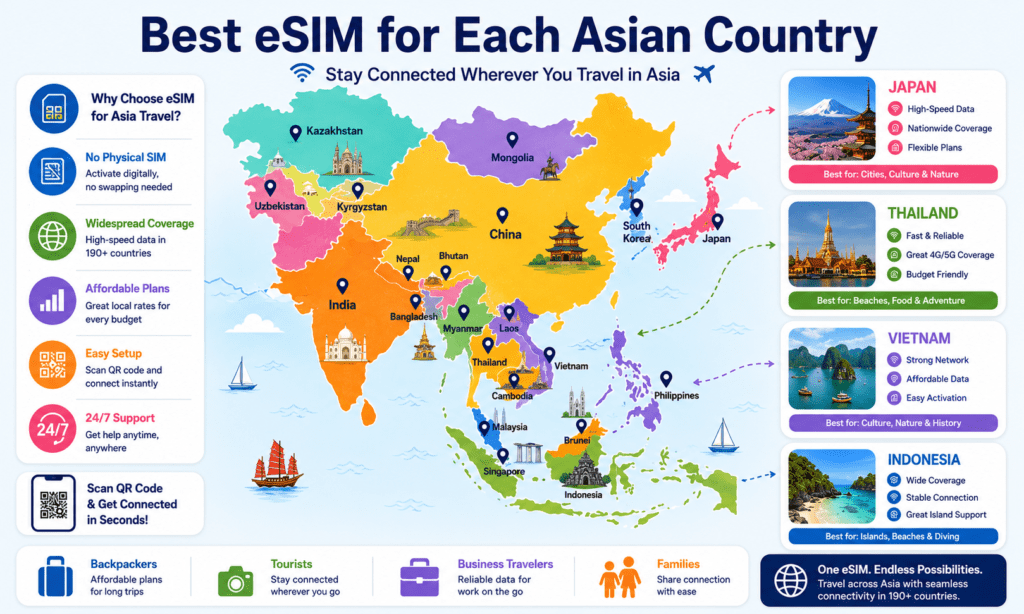
Best eSIM for Each Asian Country
Every Asian country has its own network quirks and top picks for travelers. The right brand in one place can be a weak choice in the next. Below is a clear country-by-country guide based on what really works on the ground.
Best eSIM for Thailand
Thailand offers strong 4G coverage in most travel zones today. TrueMove H and AIS are the top picks behind most travel eSIMs in the country. Both deliver a reliable network across Bangkok, Chiang Mai, and Phuket.
- Sim Local is my top picks for a multi-city Thai route
- Airalo works well for budget travelers staying near cities
- The signal can dip in rural areas and far northern areas near the border
I rode a sleeper train from Bangkok to Chiang Mai with SIM Local active. The line held strong for almost the entire ten-hour ride. That kind of consistency is rare on cross-country rail trips anywhere in Asia.
Best eSIM for Japan
Japan is a dream country for connected travelers thanks to wide 5G reach. SoftBank and IIJmio power some of the fastest mobile speeds in the region. Tokyo, Osaka, and Kyoto all enjoy near-flawless coverage day and night.
- Sim Local delivers consistent performance across major cities
- Airalo is a solid backup with simple bundles
- Speed drops can appear in rural areas like Hokkaido
- Hiking trips in the Japanese Alps may show weaker bars
This setup suits city-focused travelers who hop between metro hubs by Shinkansen. For deep countryside trips, plan for some quiet zones along the way.
Best eSIM for Vietnam
Vietnam is where data is cheap and quality is surprisingly strong. Viettel powers most travel eSIMs and offers solid urban coverage in Hanoi and Ho Chi Minh City. The country gives excellent value for budget travelers on long routes.
- A country-specific plan wins for two-plus week stays
- Regional plans suit shorter cross-border trips
- Rural reach can fade in the Mekong Delta during peak hours
- Signal drops are common in mountainous regions like Ha Giang
For most travelers, a Vietnam-only plan gives better value than a wide regional one. The local pricing here is simply hard to beat.
Best eSIM for Indonesia (Bali Focus)
Indonesia is a tricky case thanks to its spread of islands and varied terrain. Telkomsel is the strongest carrier here, powering most major eSIM providers. It delivers reliable 4G in Bali and other main tourist areas.
- Sim Local is my pick for Bali-focused trips
- Strong signal in Seminyak, Canggu, Ubud, and Kuta
- Lombok holds up well in tourist zones
- Northern highlands and remote islands show weaker bars
I worked from a café in Ubud for two weeks on a Sim Local line. The speed handled video calls without a single drop in that whole stretch. Bali simply rewards travelers who pick the right network partner.
Best eSIM for South Korea
South Korea is arguably the easiest country in Asia for staying connected. Heavy government investment built one of the world’s best 5G infrastructure networks. SKT, KT, and LG U+ all deliver some of the fastest mobile networks on the planet.
- Pick any major eSIM provider for an outstanding experience
- Even rural areas show strong 5G signal
- Underground coverage in metros is fast and stable
- Easy to stay connected in cafés, trains, and parks
For travelers crossing South Korea end to end, the network simply gets out of your way. You stop thinking about data and just enjoy the trip.
Real-World Use Cases
Different travelers need different eSIM setups, and one plan rarely fits every trip. Below are four real-world profiles that match how most people travel in Asia today. Each one points to the brand that actually delivers for that style of trip.
Best eSIM for Backpackers in Asia
Backpackers need wide reach, low spend, and zero fuss across borders. Sim Local wins here with its 34-country Asia option built for long routes. The regional plan removes the hunt for a new SIM at every stop.
- True multi-country coverage on a single network profile
- Low cost per gigabyte for travelers on a budget
- Hotspot support lets you share data with friends in hostels
- No commitment means you can drop the plan anytime
- Easy to cross borders without losing signal
I met two backpackers in Laos who used to swap SIMs every three days. After they switched to Sim Local, the whole hassle vanished overnight. That kind of flexibility is exactly what long backpacker routes need.
Best eSIM for Digital Nomads
Digital nomads need steady data, plenty of it, and reliable upload speeds. Sim Local and Saily are the two strongest picks for this crowd. Both offer stable data with a clean 30-day validity for monthly travel cycles.
- A 20GB bundle covers most heavy workload days
- Strong hotspot support for laptop remote work
- Smooth video calls without lag in major cities
- Reliable line for uploads to cloud drives and clients
- Acts as a backup when co-working Wi-Fi drops out
For high-volume data users, the plan should match real usage, not hope. Casual browsing alone uses far less than days packed with calls and file transfers.
Best eSIM for Business Travelers
Business travelers value reliability and speed above almost everything else. Aclean and Sim Local both shine here with premium local networks behind them. A clean, fast setup means no scrambling between flights and meetings.
- Pre-arrival activation removes airport stress
- Instant activation the moment you land
- Strong line to take calls and join meetings without lag
- Built to dodge activation delays and patchy connections common on work trips
- The safest choice when a deal depends on a good signal
I once joined a client call straight from a Tokyo taxi on a SIM local line. The audio held up the whole twenty-minute ride without a hiccup. That kind of polish is exactly why business travelers stick with these brands.
Best eSIM for Short Trips (3–7 days)
Short trips call for small plans, low cost, and a quick setup with no learning curve. Airalo is the cleanest fit here thanks to its easy app and affordable plans. A 3–5GB bundle handles a typical quick trip without overspending.
- Short-validity plans match weekend and 5-day routes perfectly
- Simple QR code activation in under two minutes
- Enough data for maps, messaging, and social media
- Skip the large data plan for a 3–7 days city break
- A top-up is easy if you run a bit short near the end
For a quick 3–7-day city hop, paying for a big bundle is wasted money. A small, sharp plan keeps your travel budget tight and your phone connected.
Cost Breakdown – Which eSIM Gives the Best Value?
Picking the cheapest plan is not always the smartest move on a long trip. The real win comes from the lowest cost per GB paired with strong coverage and speed. Below is a clear cost breakdown across the seven brands I tested most this year.
Cost per 1GB Comparison Table
A side-by-side table makes the cost per GB gap impossible to miss. Here is how the top travel eSIMs stack up on a standard Asia plan.
| Provider | Price | Data | Cost per GB |
| Sim Local | $32 | 20GB | $1.60/GB |
| Ubigi | $44 | 25GB | $1.76/GB |
| Airalo | $39 | 20GB | $1.95/GB |
| Nomad | $28 | 10GB | $2.80/GB |
| Saily | $35 | 10GB | $3.50/GB |
| Jetpac | $19 | 5GB | $3.80/GB |
| Holafly | $49 | unlimited (throttled) | n/a |
The winners on raw cost per GB are clearly Sim Local and Ubigi. Both pair low pricing with solid network reach across the region.
Unlimited vs Fixed Data Plans
The choice between unlimited plans and fixed data plans trips up many first-time buyers. Each model has a different catch, so reading the fine print matters here.
- Unlimited plans sound great but hide a fair usage policy in the terms
- After a daily cap of around 500MB to 1GB, speeds slow to 2G-level performance
- These throttled speeds kill video calls and large uploads instantly
- A generous fixed plan is often a smarter pick for heavy days
- Hidden speed limits make some “unlimited” labels misleading
Sim Local and Airalo stay transparent about their limits, which builds real trust. You know exactly when your data runs out and can plan a top-up before it stings.
I once relied on an unlimited plan for a Bali workday and hit the cap by lunch. The rest of the afternoon ran at near-dial-up speeds, killing every call. Since then, a clear, generous fixed plan has been my go-to for working trips.
Cheapest eSIM for Long-Term Travel (30+ Days)
For long-term travel of 30+ days, the math shifts in important ways. Per-GB cost matters more than the headline price tag at this length. The brands with the lowest pricing for extended use are not always the same ones that win short trips.
Top picks for stays of 30+ days:
- Sim Local with its 30-day regional plans offers the best value for cross-region routes
- Saily stretches all the way to 180 days on a single profile
- A regional eSIM removes the cost of buying new plans at every border
Why these brands win on long trips:
- Strong coverage across many countries on one line
- Easy top-up data packs when the bundle runs low
- Built for digital nomads and long-stay travelers who move often
- Skip the hassle of fresh setups at border crossings
- Predictable cost per GB across extended trips
For travelers chasing the lowest spend on slow Asia routes, Sim Local and Saily lead the pack. Both shine at keeping costs low while delivering solid coverage across the region.
Device Compatibility Guide
Before buying any travel plan, the most important check is your phone itself. Not every device works with this tech, and a quick check saves a wasted purchase. Here is a clean breakdown of what works and how to fix things if they go wrong.
Which Phones Support eSIM in Asia?
The good news is that most modern smartphones released after 2018 support eSIM technology. Apple started the shift with the iPhone XS, and Samsung and Google followed soon after. Today, the list of eSIM-compatible phones covers nearly every major flagship on sale.
Apple devices that work:
- iPhone XS and newer Apple phones
- iPhone 14, iPhone 15, and the iPhone 16 series
- The iPhone 16 series in the US is US eSIM-only, with no physical SIM tray at all
Samsung devices that work:
- Samsung Galaxy S20 and all newer S-series models
- The Z Fold and Z Flip foldable lines
- Some A-series models support eSIM functionality too
Google Pixel devices that work:
- Google Pixel 3 and all newer models
- Pixel 6, Pixel 7, Pixel 8, and Pixel 9
- Strong eSIM support across the entire recent Pixel lineup
One important catch: Phones bought in mainland China often skip eSIM entirely. The regional variant of a model decides whether the hardware supports eSIM or not. Always verify model numbers on the maker’s site before you fly.
I once helped a friend buy an Airalo plan, only to find his Chinese-market Pixel could not load it. We had to grab a regional eSIM for his backup phone instead. That five-minute check on the maker’s site would have saved us an hour of stress.
eSIM Not Working? Common Fixes
Even on supported phones, you can sometimes hit connecting issues after installation. Most problems trace back to a small handful of settings, not the plan itself. Here are the common fixes that solve the issue almost every time.
Quick checks to try first:
- Toggle data roaming off and on for the travel line
- Open mobile data settings and confirm the travel line is the default
- Try a QR re-scan with the original code from your email
- Restart the phone to refresh APN settings in the background
If the plan still refuses to work:
- Delete profile of the failed setup completely
- Visit the provider website to request new code if needed
- Reinstall using a fresh QR code from the new email
- Try manual APN configuration if your provider lists APN values
When to call for help:
- A failed eSIM profile that keeps refusing to install
- Persistent roaming issues even after fixing settings
- Any signal that drops within minutes of every restart
- Open the brand’s support chat with your order number ready
Toggling data roaming is the single fix that solves most travel problems. It sounds basic, but newcomers forget this step more than any other. Once you build the habit, your travel eSIM rarely gives trouble again.
Hidden Problems With eSIMs
Most reviews skip the rough edges that only show up once you hit the road. Even top travel eSIMs carry small catches that can ruin a busy work day. Knowing these traps ahead of time turns small surprises into minor speed bumps.
Fair Usage Policy Limitations
Almost every “unlimited” plan hides a quiet rule buried deep in the plan terms. The fair usage policy is the hidden catch that few buyers spot at checkout. Most unlimited plans set a daily data threshold that kicks in fast.
- A typical limit sits around 500MB per day of full-speed data
- After that cap, throttled speeds drop you down to 2G speeds
- That is enough for basic messaging, but little else
- The headline data figure rarely matches real-world use
- Some plans add a total data threshold on top of daily caps
I once burned through a daily cap in two hours of map-heavy walking. The rest of that afternoon felt like dial-up from the early 2000s. Reading those terms before buying would have saved the whole work session.
Slowdowns After Certain GB Usage
Even fixed data plans can slow down before you hit the listed cap. This happens through network-level deprioritization in busy zones. The carrier quietly pushes travel eSIM users behind local SIM holders at the back of the line.
- A deprioritized connection shows up during peak network hours
- Heavy local network traffic in evenings can drop your speed sharply
- The usage threshold for this varies by country and brand
- It is not your device, your installation, or a bug
- This pattern is common in dense Asian markets at night
You may notice slower speeds without any clear warning sign on your phone. The plan still works; it just feels sluggish until the network calms down again.
Country Switching Issues
Regional plans look magical until you actually cross a border crossing. A truly seamless crossing is rare in practice, even on premium plans. The phone often stays glued to the old country’s local network for hours.
Quick fix when you switch countries:
- Open Settings on your phone
- Tap Mobile Data, then Network Selection
- Switch from automatic to manual mode
- Pick the strongest local carrier in your new country
- Toggle back to automatic once the line locks in
If you see no signal for too long after crossing, this is the fix. Manual network selection is the single trick that saves regional plan users the most pain.
Network Auto-Switch Problems
The network auto-switch feature sounds smart but often fails in busy regions. Many travel eSIM users find their phone clinging to a weaker network for no clear reason. This causes poor speeds even when good coverage sits right next door.
- The phone picks first available, not the strongest available network
- It may skip your preferred network carrier entirely
- An optimised carrier is not always picked by default
- Trust me, the automatic setting is rarely the smartest one
How to take back control:
- Open phone settings and find Network Selection
- Switch to manual selection mode
- Pick the carrier with the strongest bars in your spot
- Watch as the connection improves within a few seconds
I now run this check every time I land in a new Asian country. It takes thirty seconds and often doubles my download speeds on the spot. Small habits like this are what turn a so-so travel eSIM into a great one.
eSIM vs Local SIM vs Pocket WiFi
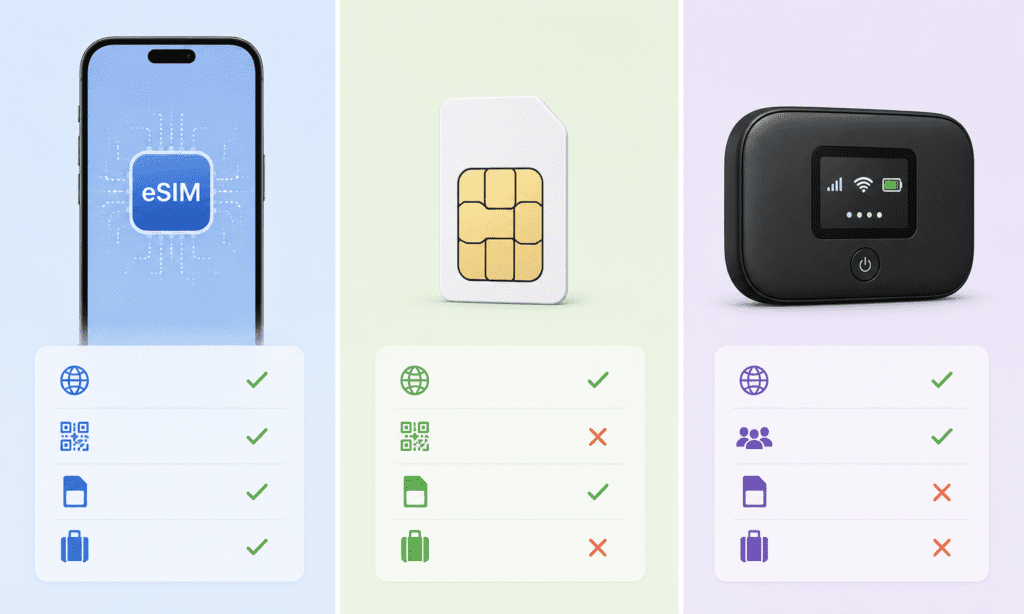
Travelers have three real ways to stay online in Asia today. Each has its own sweet spot, and the best pick depends on how you actually travel. Here is a clean side-by-side comparison to help you choose without guesswork.
eSIM vs Physical SIM
The eSIM wins on speed and ease, while a physical SIM wins on raw price. Local SIMs in countries like Thailand and Vietnam often offer generous data for very little money. But the savings come with real friction that most travelers underestimate.
Where local SIMs lose ground:
- Hunting for a vendor at the airport after a long flight
- Dealing with language barriers during signup
- Losing a card mid-trip with no easy backup
- Swapping cards at every border crossing on regional trips
- No way to set up from home before takeoff
Where eSIM clearly wins:
- Ready before you even leave the house
- Zero queues or paperwork on arrival
- Easy to manage many lines on one phone
- Smooth across border crossing moments
On pure price, a local SIM still wins for long single-country stays. But the convenience gap is so wide that most travelers happily pay a little more for the eSIM.
eSIM vs Pocket WiFi
Pocket WiFi is the third option, and it shines for group travel. One unit can share a connection between multiple people at once. That makes the per-person cost very low when splitting costs across a travel group.
Where Pocket WiFi struggles:
- It is an extra device to carry in your bag
- Needs a second battery or no charging kills your day
- The whole group loses connectivity the moment the unit dies
- One bad battery can ruin a sightseeing afternoon
Where eSIM beats it:
- Solo travelers and pair travelers stay independently connected
- No extra device to charge, lose, or babysit
- Each phone keeps working even if one battery dies
- Better fit for trips with split itineraries
I once relied on a Pocket WiFi unit in Tokyo with three friends. When the battery died at lunch, every map and chat app died with it. Since that day, our group has switched to individual eSIMs for every trip.
Which One Should You Choose?
The right pick comes down to your travel style and group size. Here is a simple guide that holds up across most Asia routes.
- A local SIM wins if you stay in one country for an extended period and want maximum data at minimum cost
- Pocket WiFi wins for a group trip with light data needs and easy splitting cost
- eSIM wins for almost everything else, especially traveling solo or crossing borders
For modern travelers moving through Asia, the eSIM is the default choice today. It strikes the best balance of convenience, cost, and staying truly connected all trip long. The other two still have their moments, but they are slowly fading into the background.
Expert Recommendation Matrix
| Traveler Type | Best eSIM | Reason |
| Backpacker | Sim Local | Cheapest per GB, 34-country Asia coverage, hotspot included |
| Digital Nomad | Sim Local or Saily | High data, 30-day validity, stable hotspot for remote work |
| Business Traveler | Airalo | Instant activation, premium network partners, reliable app |
| First-Time eSIM User | Airalo | Foolproof app, simple QR setup, wide country coverage |
| Unlimited Data Seeker | Holafly | Unlimited plans up to 90 days, no data-counting stress |
| Short Trip (3–7 days) | Airalo or Jetpac | Small affordable plans, fast activation, no overkill data |
| Long-Term Traveler (30+ days) | Saily | Plans up to 180 days, hotspot supported, reliable coverage |
| Budget Traveler | Sim Local or Jetpac | Lowest cost per GB, flexible plan sizes |
| Group Traveler | Sim Local | Hotspot sharing means one plan can support multiple devices |
| Island Hopper (Indonesia/Philippines) | Sim Local | Strong Telkomsel partnership, reliable even on smaller islands |
| Privacy-Conscious Traveler | Saily | Backed by NordVPN’s security-first reputation |
| Multi-Continent Traveler | Sim Local Global | Covers 153+ countries, one plan for the whole trip |
Frequently Asked Questions
Sim Local is the best overall pick, covering 34 Asian countries with strong 4G/LTE on top local carriers.
Yes, in most major Asian countries, but mainland China is the main exception due to strict network rules.
A 20GB plan suits most travelers, while digital nomads and heavy users should aim for 30GB or more.
Most travel eSIMs are data-only, but you can still call through WhatsApp, Telegram, or FaceTime over mobile data.
Yes, a travel eSIM can cut your roaming charges by up to 90 percent compared to home carrier plans.
Most phones released after 2018, including the iPhone XS, Samsung Galaxy S20, and Google Pixel 3 or newer, support eSIM.
Install the profile at home on WiFi, but activate the line only after you land to avoid wasting paid days.
Final Thoughts
Picking the right travel eSIM for Asia comes down to matching the plan to your real travel style, not just the price tag. Sim Local stays my top pick for most travelers thanks to its wide regional reach, fair pricing, and steady network quality across 34 Asian countries. Holafly, Airalo, and Saily each shine in their own lanes for unlimited users, first-timers, and privacy-focused travelers.
After years of testing eSIM providers across Southeast Asia, East Asia, and beyond, the lesson is simple: a good travel eSIM pays for itself in saved roaming bills, smoother border crossings, and zero airport SIM hunts. Read the fair usage fine print, match your data plan to your daily habits, and activate only after you land. Do that, and your Asia trip will stay smoothly connected from takeoff to touchdown.
