
The first time I planned a road trip, I priced out flights first, out of habit, before realizing the whole point was to skip that entirely. It took a second trip and a much tighter bank account to actually sit down and figure out how to road trip on a budget without just winging it and hoping for the best.
That trip ended up teaching me more than any guide I’d read beforehand. Half the useful advice came from strangers online who’d already done the driving-through-the-night, sleeping-at-rest-stops version, not the polished travel-blog version. The other half I learned by getting a few things wrong myself.
This is the version I wish I’d had going in: real numbers, real tradeoffs, and the stuff nobody puts in the brochure.
Set Your Road Trip Budget First
A road trip can be luxurious or completely bare-bones, depending on your budget. That’s why the first step is to establish exactly how much you can comfortably spend before hitting the road.
Knowing your number helps you decide on must-see destinations, plan a logical route, assess lodging options, and consider food choices ahead of time. Fuel costs, souvenirs, and unexpected expenses all need a place in that number too.
Leaning toward a bare-bones trip? Start thinking about what you’re willing to sacrifice. Camping can shave a significant amount off lodging costs, though it isn’t an option for everyone. Factor in gear costs too, since a tent, sleeping bag, and sleeping pad add up before you even leave the driveway.
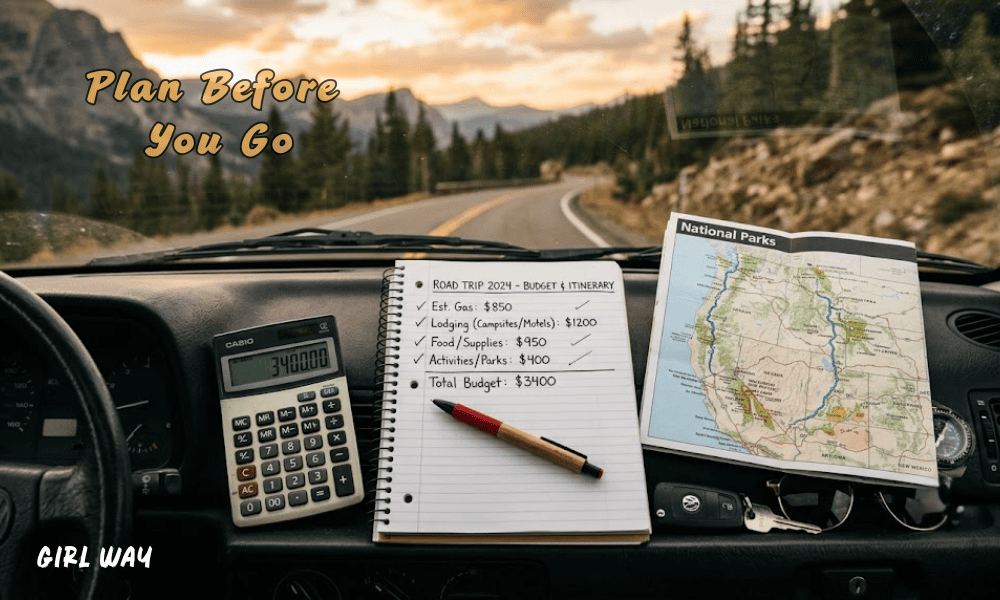
Real numbers help more than guesswork. One traveler pulled off a full cross-country move for just $782.48, spending only one night in a hotel and leaning on family and friends the rest of the way. Another spent $32 filling a tank without covering some boring 300-mile stretch, a solid starting point for estimating fuel costs.
One family budgeted $2,800 for a December trip, setting aside $1,100 for food and fuel alone. They’d already been saving $15 a day leading up to it, proof that small daily habits add up to a real travel fund.
These same principles carry over from saving money for solo travel, just applied to a car instead of a plane ticket.
Plan Your Route (and Save Money Doing It)
Planning your route in advance saves more than just money; it saves time too. Knowing which route you’re taking ahead of schedule brings real relief: no scrambling to figure out tolls, hours on the road, or where you’ll rest for the night.
Mapping out stops in advance makes budgeting for each one so much easier, and that alone can save real money. One helpful trick is using navigation like Apple or Google Maps to find the fastest route, or one that skips tolls entirely, while keeping an eye on traffic delays before they slow you down.
Some travelers take it a step further by sticking to roads with a 55 or 60 mph speed limit. These routes tend to offer better mileage than highways, plus more of a chance to actually see something interesting along the way.
Scouting with Google Maps ahead of time can turn up odd roadside stops worth a detour. As one traveler put it, these little finds are often cheap or free, and they make for a genuinely good break from driving.
I’ve used this exact approach planning a road trip through Florida’s Keys, scouting stops before committing to a route.”
Where to Sleep for Less
Free & Dispersed Camping
If saving money matters most, BLM (Bureau of Land Management) land is a great place to start. Camping here runs completely free through dispersed camping-no fees, no reservations.
Some travelers still opt for campgrounds, which typically cost around $10, while National Forest camping is mostly free too. State parks average closer to $20 per night, still a modest initial cost compared to what you’d spend over a year of hotel stays, easily saving thousands down the line.
Crowding can sometimes force campgrounds to close temporarily, which makes dispersed camping an even better fallback option. For finding open spots, freecampsites.net is a solid website for tracking down free places to park, cook, and sleep for the night.
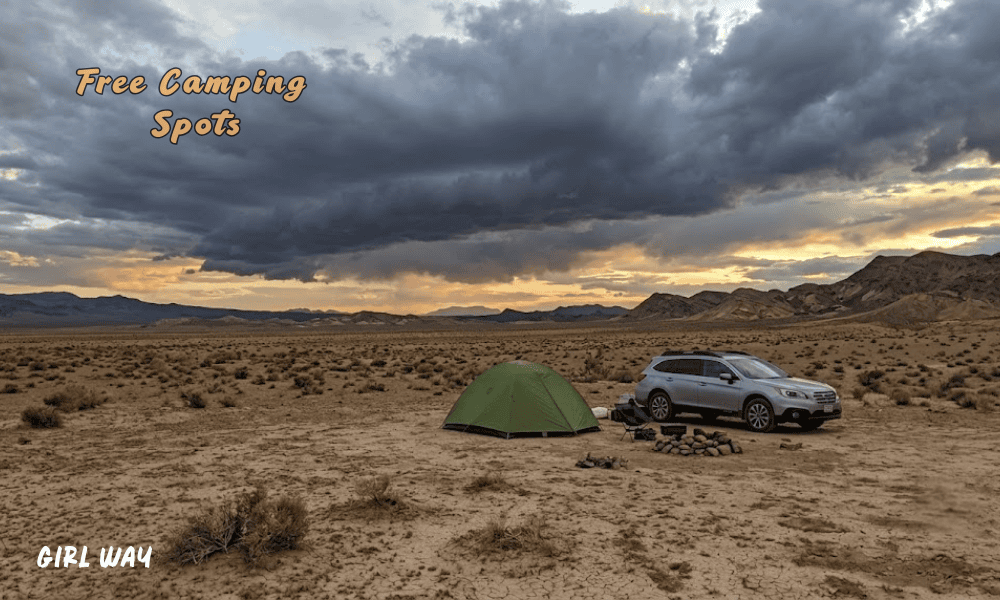
Before settling into any dispersed site, it’s worth checking current BLM camping rules for that specific area.
Beyond free options, paid camping is still far cheaper than hotels or Airbnb. Campgrounds generally run $25-$50 per night, a fraction of typical lodging costs elsewhere.
True free camping looks a bit different, though, since it skips established amenities and runs entirely first-come-first-serve. A few apps make finding these spots easier: Campendium, iOverlander, the Free Campsites website, and Recreation.gov all help track down legitimate free camping options nearby.
Sleeping in Your Car
For some travelers, car sleeping is the real budget hack. Highway rest stops and Walmart parking lots work well across the entire country and cost absolutely nothing.
The window between 7pm and 11pm tends to work best for settling in, since heading to bed earlier makes the next morning’s drive noticeably easier. The first night is always the hardest part, but every night after that gets easier as you adjust to the routine.
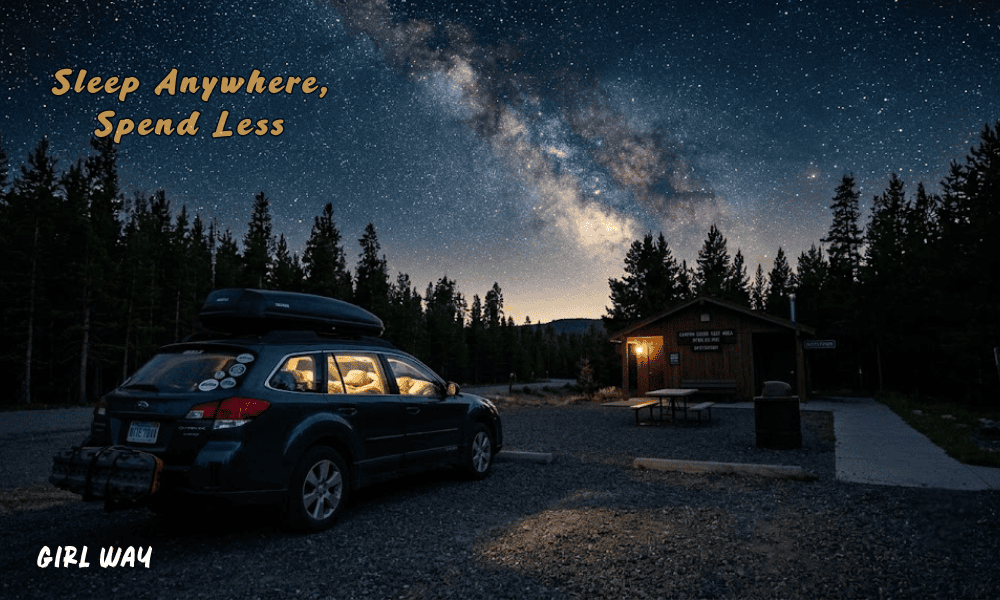
Truck stops and Cracker Barrel parking lots offer the same cheap or free setup, making them solid go-to spots when you need somewhere reliable to park overnight.
Mixing things up with different dispersed camping spots keeps the routine from feeling repetitive. Come morning, a portable propane stove handles the coffee, while a cooler stocked with cheap beer and simple sandwich stuff covers the rest.
If you’re doing this solo, it’s worth pairing these spots with general solo travel safety tips before you settle in for the night.
Budget Hotels & Airbnb
Instead of defaulting to hotels, it helps to consider alternative accommodations. Camping is a great option for families who enjoy the outdoors, since it opens up a completely different travel style. State and national parks often offer affordable camping facilities set against genuinely beautiful natural surroundings, so you don’t have to sacrifice scenery just to save money.
Beyond camping, websites and apps like Airbnb and VRBO offer a wide range of budget-friendly lodging options, including guesthouses and cabins that often beat standard hotel pricing. Just make sure to read the fine print before booking, since extra fees can quietly show up on these platforms. It’s worth double-checking what’s actually included before you commit to a booking.
Prep Your Vehicle Before You Go
If you’re not mechanically inclined, get a mechanic to run a full pre-trip inspection before you leave. It’s far better to spot a problem now than to deal with it stranded somewhere down the road. While you’re at it, make sure insurance, registration, and inspections are all current and up to date.
Pack a plug or patch kit for flats, along with a jack, flashlight, and a few small tools. A proper roadside emergency kit matters too, stocked with first aid supplies, jumper cables, and reflective triangles. If your GPS fails or you drive through an area with minimal signal, a physical map makes a solid backup you shouldn’t skip.
Beyond emergency prep, how you drive matters for your budget too. Sticking to routes with a 55 or 60 mph speed limit tends to deliver better mileage than blasting down highways. Choosing a fuel-efficient car over something gas-heavy, like a minivan, is its own budget lever worth considering before the trip even starts.
Eating Cheap on the Road
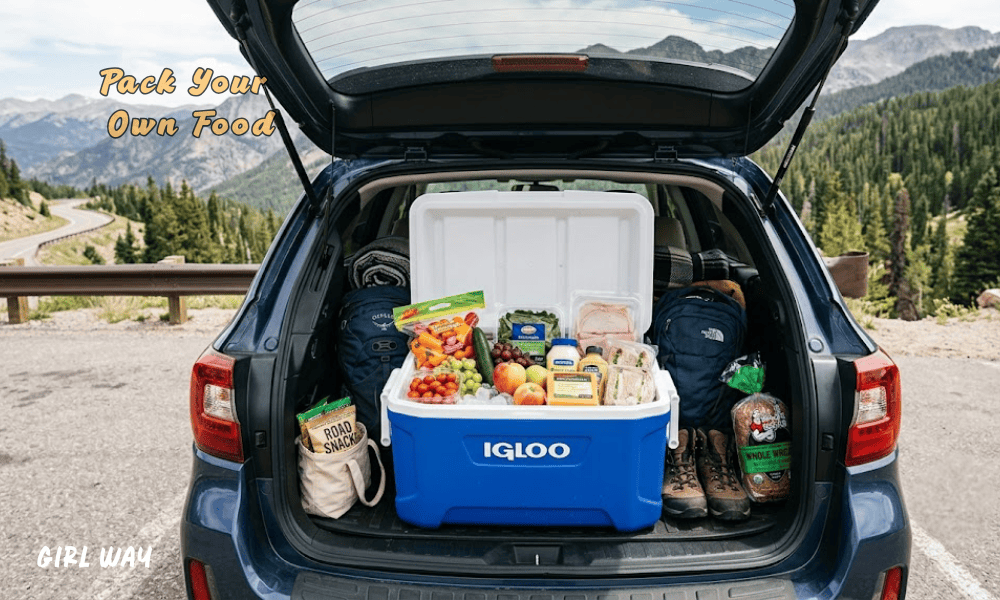
Bring reusable water bottles and snacks along, plus a cooler packed with essentials, so you can avoid pricey pit stops altogether. Pack a picnic lunch when you can. A portable camping stove or grill lets you cook your own meals right at campsites or picnic areas, keeping your budget intact while still enjoying homemade food on the road.
Keep that cooler stocked with grocery store finds instead of relying on restaurants. Fruits and vegetables like apples, oranges, bananas, avocados, carrots, peppers, and cherry tomatoes travel well in the back seat. Tortillas, hard cheeses, nut butters, condiments like mustard and hot sauce, and dry-cured meats hold up fine too, even without constant ice.
Insulated water bottles are worth the investment. Refill them at rest stops and filling stations along the way instead of buying bottled water every time you stop.
Still leave room in the budget for local delicacies here and there. Grabbing a taco from a truck near Venice Beach or stopping for beignets and chicory coffee in New Orleans is worth it. But day to day, simple sandwiches and veggies beat restaurants both on cost and how you’ll feel afterward.
My full solo female travel packing list covers exactly what earns cooler space on a trip like this.
Free & Low-Cost Things to Do
Before you arrive anywhere, spend a few minutes researching free or low-cost attractions at your destinations. Many cities offer free walking tours, public parks, and cultural landmarks that are worth exploring without spending a cent. Hiking, biking, and swimming round out the list as genuinely family-friendly activities that won’t cost you a single dime.
For a more structured approach, the America the Beautiful National Parks and Federal Recreational Lands Pass is worth considering. It’s a cost-effective way to take in natural landscapes across the country, covering entrance fees at over 2,000 federal recreation sites, including national parks and national forests. Visit more than two national parks in a year, and the pass essentially pays for itself.
Here’s one most people miss entirely: your local library system might already have you covered. Some libraries lend out passes for state parks and museums, and a few even let you rent camping gear directly. You can buy the America the Beautiful pass directly through the National Park Service before you go.
The National Park Service also runs free entry days throughout the year, opening up parks that would otherwise charge admission. A quick search for their current schedule can turn a planned expense into a completely free stop on your route.
Saving on Gas
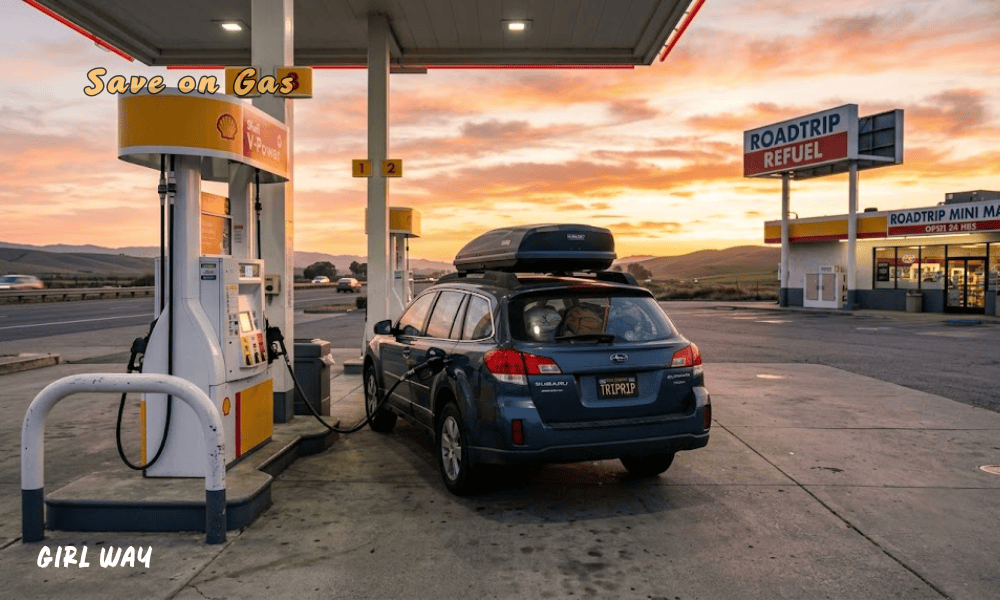
Gas is the biggest expense you’ll face while road tripping, no way around it. Planning ahead helps here; consider how many miles per gallon your car gets before you fill up and roughly when you’ll need to stop next.
A few things can genuinely cut this cost down:
- GasBuddy: Download the app before you leave to track down cheap gas in whatever area you’re passing through, instead of just guessing at prices
- Driving at 55 or 60 mph and sticking to routes with this speed limit tends to deliver better mileage than blasting down highways at top speed
- Take slower routes on purpose as a bonus; these usually mean more interesting things to see along the way
Keep this in mind while budgeting: gas is the one expense you’ll stop for most often, and it adds up fast over a long trip.
Use Credit Cards Strategically
Learning how to road trip on a budget often comes down to how you pay for things, not just what you buy. The ultimate tip here is to use a mix of cash and credit cards. Keep some cash on hand for cash-only purchases or cheaper gas when it’s available, then put everything else on one or two credit cards to optimize the rewards you earn from road trip expenses.
Some cards offer a suite of rewards practically tailored for this kind of travel:
- Blue Cash Preferred Card cash back on grocery, gas, parking, and streaming service spending
- American Express Green Card points on hotel and restaurant spending
- Combine both, and you’re picking up rewards on nearly every card-based transaction of the trip
Those rewards can later go toward statement credits or future travel experiences, saving money now and down the road.
Some travelers take this further with a real-user strategy worth knowing about:
- Put every single expense, utilities, groceries, and gas, on a travel rewards card
- Pay the full amount before the due date every time, no exceptions
- If the annual fee gets waived once you cross a spend threshold, and bonus points show up on top, the value adds up well past the fee itself
A debit card can still play a role too, earning airline miles on the side. Sticking with the same rewards card for every trip means the occasional perk shows up, like 2X points on a hotel rate or a surprise $50 gift card. None of this requires aggressive card churning, just a little consistency, to genuinely help fund future travel.
Splitting Costs with a Group
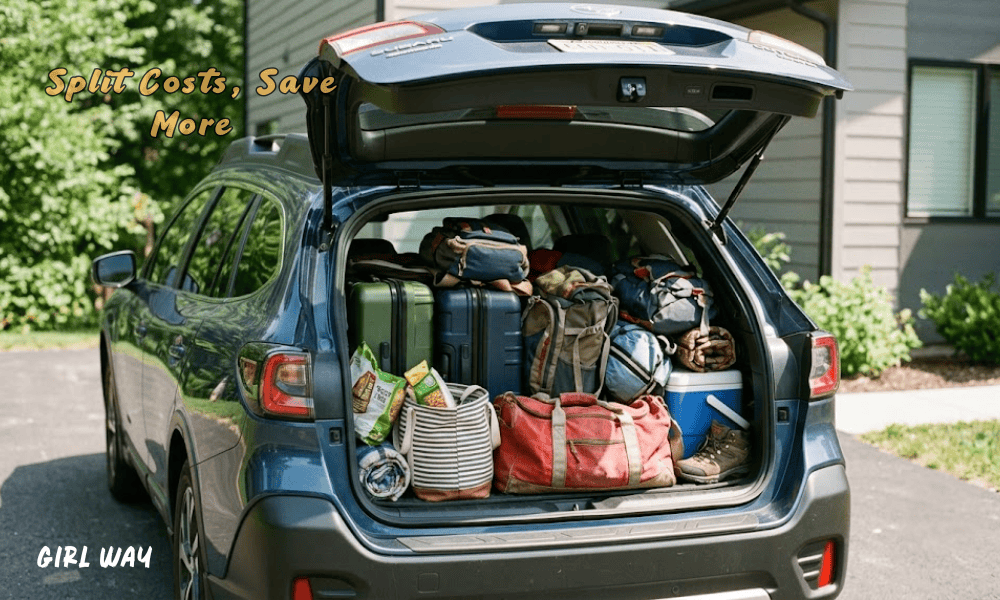
One of the simplest ways to figure out how to road trip on a budget is to bring people along. Bringing your own food and drinks along, as much as possible, saves a genuinely good chunk of money right off the bat.
Splitting a 4-bedroom cabin among a group works especially well, since even something like a kayak rental becomes cheap once couples split the cost between them.
A few real examples show how this plays out:
- Four log (a group of four) can pile into one car, split expenses together, sleep in the car, cook their own food, and keep the whole trip genuinely cheap
- A traveler and a friend once drove through the night to cover 300 miles, splitting gas the whole way
- With more people in the car, the tank cost gets divided further, dropping the per-person expense significantly
Whether it’s a full cabin split four ways or just gas split between two friends, the math works the same: more people sharing one trip means everyone spends less individually.
Sample Road Trip Budget Breakdown
Numbers help more than vague advice when you’re figuring out how to road trip on a budget. Here’s a realistic breakdown for a 7-day trip covering roughly 1,500 miles, based on a mix of free camping and the occasional budget motel:
| Category | Estimated Cost | Notes |
| Gas | $180 | ~1,500 miles at 25 mpg, averaging $3/gallon |
| Camping (5 nights) | $75 | Mix of free BLM land and $15-25/night state parks |
| Motel (2 nights) | $140 | $70/night for outskirts-of-town budget rooms |
| Food & groceries | $210 | $30/day for two people, mostly cooler meals |
| Activities | $60 | One paid attraction, rest-free hikes, and parks |
| Vehicle prep | $50 | Pre-trip inspection, basic emergency kit top-up |
| Miscellaneous | $85 | Parking, tolls, one splurge meal, souvenirs |
| Total | $800 | For two people, one week on the road |
This isn’t a fixed formula; your actual numbers shift depending on the route, group size, and how much camping versus hotel stays you’re comfortable with. But it’s a solid starting point for building your own version before you commit to a full itinerary.
FAQs: Road Trip on a Budget
A week-long trip for two usually lands around $700-$900, covering gas, food, and a mix of camping and budget motels. Costs shift based on distance, group size, and how much you camp versus stay in hotels. Building a rough daily number ahead of time keeps things realistic.
Yes, camping almost always wins on cost. Free BLM land and state parks run $0-$25 a night, while hotels average $70-$100. Over a week-long trip, that difference alone can save several hundred dollars.
Generally yes, especially at rest stops, Walmart lots, and truck stops that allow overnight parking. Some cities and private lots restrict it, so it’s worth checking local rules first. Sticking to well-known spots keeps things simple and safe.
Gas is typically the single largest cost, especially on longer routes. Food comes in second if you’re eating out often instead of cooking. Lodging can rival gas too, unless you lean heavily on free or cheap camping.
With a group, almost always. Splitting gas, lodging, and even groceries across three or four people can cut the per-person cost dramatically. Solo trips give more flexibility but shoulder the full cost alone.
Not required, but it helps. Cards with cash back on gas and groceries, paired with cash for smaller stops, tend to stretch a budget further. The savings come from using what you already have strategically, not from getting a new card just for the trip.
A few weeks is usually enough for a shorter trip, especially if you’re camping and staying flexible. Longer trips, or ones involving national park campsites, benefit from booking a month or more ahead since spots fill up fast in peak season.
Conclusion
Road tripping on a budget isn’t about cutting the fun out of the trip; it’s about being smarter with where the money actually goes. Free camping, a cooler full of groceries, and a car sleeping in a rest stop here and there can stretch a $500 trip into something that feels a lot bigger than it cost.
What surprised me most about putting this together is how much of the real savings comes from people who’ve actually done it, not polished advice, but rest-stop tips and gas-splitting hacks that only show up when you ask real travelers. That’s where the good stuff usually is.
If there’s one thing to take away, it’s this: plan the big stuff (route, budget, vehicle prep) in advance, then stay flexible on the small stuff. Once you know how to road trip on a budget the right way, that’s usually where the best, cheapest memories end up happening anyway.
