
Is Taipei Safe for Solo Female Travellers? The Short Answer
Yes. Taipei is one of the safest cities in Asia for a solo female traveller, with extremely low violent crime, a clean MRT that runs until midnight, and night markets that stay busy and well-lit until 1 or 2am. The US State Department rates Taiwan Level 1, exercise normal precautions, with the advisory issued on 25 November 2025. The main risks are practical, not criminal: scooter traffic, pickpockets in the biggest crowds, and a small set of scams. For what to do with that safety, read our Taipei travel guide, which covers the 25 best things to do in the city.
- Key takeaways: Taipei is Level 1, one of Asia’s safest cities, and Numbeo ranks it 3rd in the world for safety in 2026.
- Stay in Xinyi, Da’an or Zhongshan for a first trip; Ximending for energy and crowds.
- Night markets are safe until 1-2am; the real risks are scooters, pickpockets and the tea-ceremony scam.
- Emergency numbers are 110 for police and 119 for fire and ambulance.
| At a glance | Taipei |
|---|---|
| Verdict | Yes, safe for solo female travellers |
| Advisory level | US Level 1, exercise normal precautions, issued 25 November 2025 |
| Emergency numbers | 110 police, 119 fire and ambulance |
| Best first base | Xinyi or Zhongshan |
| Best season | October to April, outside the summer typhoon season |
| Main risk | Scooter traffic and pickpockets in crowds |
What the Advisories Say About Taipei
The US State Department rates Taiwan Level 1, exercise normal precautions, with the advisory issued on 25 November 2025, and no part of Taiwan carries a higher level. The advisory notes the risk of natural disasters, including earthquakes, tsunamis, typhoons, flooding and extreme heat, which is the real planning point for Taipei rather than crime. For the Taiwan-wide picture and the general safety rules that apply across our destination guides, read our solo female travel safety tips guide. The emergency numbers are 110 for police and 119 for fire and ambulance, and the Taiwan Tourism Bureau runs a 24-hour helpline on 0800-024-111 with English, Japanese and Korean support.
Where to Stay: The Areas
Xinyi and Zhongshan are the best first bases, Da’an is the calmest, and Ximending is the liveliest. Xinyi is the modern district around Taipei 101, with luxury malls, excellent nightlife and the highest safety of any area in the city. Da’an is filled with students, cafes and MRT lines, calm both day and night, and the best choice for a slower trip. Zhongshan is hotels, night markets and riverside paths, safe to walk even late at night, though petty theft is slightly more likely in the crowded shopping zones. Ximending, in Wanhua, is the young and energetic district, safe overall but the most crowded, so belongings stay zipped and in front. The streets to be careful on after midnight are the Wanhua backstreets, the side streets off Lin Sen North Road, and Snake Alley, also called Huaxi Street, at night.
| Area | Best for | Night feel | Transport |
|---|---|---|---|
| Xinyi | First trip, Taipei 101 | Busy, well-lit, extremely safe | Red line MRT |
| Da’an | Slow trip, cafes | Calm, quiet, very safe | Red and brown lines |
| Zhongshan | Hotels, night markets | Busy, safe late | Green and red lines |
| Ximending | Energy, shopping, nightlife | Crowded, lively, safe | Blue and green lines |
| Shilin | Night market, families | Busy at peak, very safe | Red line |
Night Markets After Dark
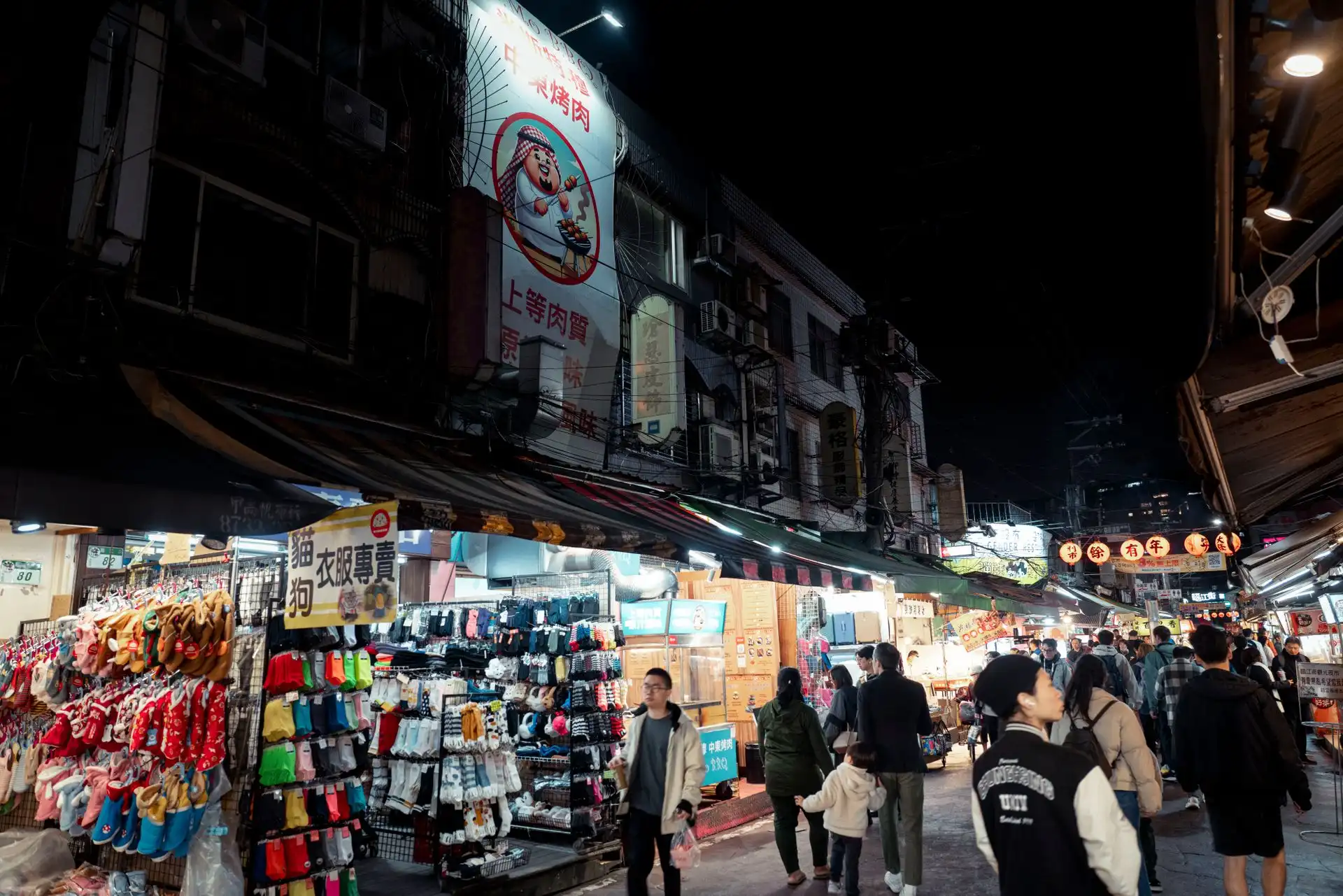
Shilin, Raohe and Ningxia night markets are safe and brilliant after dark, busy and well-lit until 1 or 2am, and they are the best nighttime activity in the city for a solo woman. The markets are packed with families and tourists, which is safety through numbers, and the food stalls, the shopping and the crowds run late into the night. Pickpockets are uncommon but they work the crowded spots, so the bag stays zipped and in front of you, nothing sits in back pockets, and the phone stays in a front pocket when the crowd thickens. For the full list of the fourteen best markets, with food and tips, read our Taipei night markets guide. The one extra habit is the bag: choose a bag with a zipper and hold it in front of your body, because the most common problem visitors report is pickpocketing and bag snatching in crowded places like night markets and train stations.
Getting Around: MRT, EasyCard and Taxis
The MRT is the safest way to move around Taipei, clean and fast, running from about 06:00 to midnight, with women-only waiting areas marked on platforms at night. Buy an EasyCard at any MRT station or convenience store for NT$100 for the card, then top it up, because it covers the MRT, buses and convenience stores, with NT$8 off when you change from the MRT to a bus within an hour. Single MRT fares are NT$20 to NT$65, and most trips between the central sights cost NT$20 or NT$25, while city buses cost NT$15 per segment. Taxis are metered and safe, but take only the official queue at the airport and at stations, because the overpriced-taxi reports come from the unofficial pickup zones. The main traffic risk is not the taxi but the scooter: scooters do not always yield to pedestrians, so cross only at pedestrian crossings and wait for the signal even if the road seems clear, and do not rent a scooter unless you ride one at home.
Scams to Know in Taipei
Taipei has fewer scams than most tourist destinations, but a few exist, and the tea-ceremony invitation is the one to know. A friendly English-speaking stranger near Taipei 101 or the National Palace Museum invites you to a tea ceremony or to practise English, then steers you to a tea shop where the bill runs to 3,000-5,000 TWD for tea and snacks that were never priced up front. The shut-down line is a short no and a walk away, because the invitation is the scam and the walk away is the defence. The second scam is the fake monk in Ximending, where a person dressed as a monk forces a bracelet or amulet on a passerby and then aggressively demands a donation. The third is the karaoke bar invitation, which is rare but reported: a friendly local invites you to a fun bar that charges extreme prices for drinks and hostess company. For the full pattern of how these scams work anywhere, including the shut-down line for each, read our solo female travel scams guide. The mistakes guide covers the same ground from the other side, with the fifteen mistakes that make a solo trip harder.
Earthquakes and Typhoons: What to Do
Taiwan sits in an earthquake zone and in the typhoon path, and the US advisory names earthquakes, tsunamis, typhoons, flooding and extreme heat as the natural-disaster risks. The practical rules are short. In an earthquake, drop, cover and hold on, stay away from windows and tall furniture, and do not use the lift. In a typhoon, stay indoors, keep away from the coast and rivers, and follow the Central Weather Administration warnings, which are published in English. Hotels in Taipei are built to modern seismic codes, and the MRT closes in severe weather, so the plan is to stay put and wait it out. The typhoon season runs through the summer, which is one reason October to April is the more comfortable stretch for a first trip.
What It Costs in Taipei
Taipei is inexpensive by big-city standards, and the transport and the food are the cheap parts. The table below gives the figures that matter for planning, checked in September to November 2026, and prices are in New Taiwan dollars. A night-market dinner runs NT$200 to NT$400, a day of four or five MRT rides on an EasyCard comes to about NT$100 to NT$150, and the most expensive single ticket in the city is the Taipei 101 observatory.
| What | Price | Notes |
|---|---|---|
| MRT ride | NT$20-65 | Most central trips NT$20-35 |
| EasyCard | NT$100 | Card only, then top up; NT$8 off MRT-to-bus transfer |
| City bus | NT$15 | Per segment |
| Taipei 101 observatory | NT$600 adult | NT$540 child; open 10:00-21:00 |
| National Palace Museum | NT$350 | Closed Mondays |
| Night-market dinner | NT$200-400 | Street food and a drink |
| Airport MRT | About NT$150-160 | Express about 35 minutes to Taipei Main Station |
How Many Days in Taipei
Three days is the right first trip, with a fourth day for a day trip. Day one is the old centre and the food streets around Dongmen, with the night at Ningxia Night Market. Day two is the National Palace Museum in the morning and Shilin Night Market in the evening. Day three is Taipei 101 and the Elephant Mountain viewpoint, with Raohe Night Market at Songshan to finish. The fourth day is the day trip to Jiufen, the old mining town in the hills, and our Jiufen guide covers the nine best things to do there. For a slower morning between the sights, our best cafes in Taipei lists the coffee spots worth the stop. If this is a first solo trip of any kind, read our first time solo female travel guide before you go, because it covers the 25 tips that matter most on a first trip.
Arriving: Airport to the City
Taoyuan International Airport is about 40 km from the city, and the Airport MRT is the best way in. The express train takes about 35 minutes to Taipei Main Station and costs about NT$150-160, while the commuter train takes about 50 minutes for the same fare. Buy an EasyCard at the airport station before you board, because it covers the rest of the trip. The taxi queue is official and metered, but take only the official queue inside the terminal, because the overpriced-taxi reports come from the unofficial pickup zones outside it. The first hour is simple: MRT to Taipei Main Station or Zhongshan, then one change to your base, and the hotel or hostel desk can confirm the last step.
FAQs: Is Taipei Safe for Solo Female Travellers?
Yes. Taipei is one of the safest cities in Asia for solo female travellers, with extremely low violent crime, and Numbeo ranks it 3rd in the world for safety in 2026. The US State Department rates Taiwan Level 1, exercise normal precautions.
No area needs to be avoided entirely. After midnight, stay on the main streets and skip the quiet Wanhua backstreets, the side streets off Lin Sen North Road, and Snake Alley at night. The main streets anywhere in the city are fine.
Yes. Shilin, Raohe and Ningxia night markets are busy, well-lit and safe until 1 or 2am, packed with families and tourists. Pickpockets are uncommon but they work the crowded spots, so keep your bag zipped and in front of you.
Yes. The MRT is clean and safe, runs from about 06:00 to midnight, and has women-only waiting areas marked on platforms at night. Buy an EasyCard for NT$100 and top it up; most central rides cost NT$20 to NT$35.
A friendly English-speaking stranger near Taipei 101 or the National Palace Museum invites you to a tea ceremony, then steers you to a tea shop where the bill runs to 3,000-5,000 TWD. Decline the invitation and keep walking.
Drop, cover and hold on, stay away from windows and tall furniture, and do not use the lift. In a typhoon, stay indoors and follow the Central Weather Administration warnings, which are published in English.
Three days is the right first trip, with a fourth day for a day trip to Jiufen. Day one is the old centre and Dongmen, day two is the National Palace Museum and Shilin, and day three is Taipei 101 and Raohe Night Market.
How this guide was made: research-based; the US State Department Taiwan advisory, Taipei Metro and EasyCard fares, and Taipei 101 and National Palace Museum prices were checked on 20 November 2026. No visit is claimed.