Is Barcelona Safe for Solo Female Travellers? The Short Answer
Barcelona is generally safe for solo female travellers, one of the safer big European cities for women travelling alone, and the main risk is property crime, not personal safety. Violent crime against tourists is rare, and the city is widely called Europe’s pickpocketing capital, with professional, organised gangs working the crowded streets. The US State Department rates Spain Level 2, exercise increased caution, for terrorism and civil unrest, with the advisory issued on 1 August 2026, and Barcelona sits outside the only Level 3 area in the same advisory, Ceuta. Portugal, next door, is Level 1, and our Portugal safety guide covers it. The best first base is Eixample, wide, well lit and busy until late, and the rule that shapes every day is simple: bag crossbody in front, zip clipped, phone out of the back pocket and never left on a cafe table. For the wider picture, see our Europe guide.
What the Advisories Actually Say About Barcelona
The advisories agree on the shape of the risk, and they disagree on nothing that matters for Barcelona. The US State Department rates Spain Level 2, exercise increased caution, for terrorism and civil unrest, with the advisory issued on 1 August 2026, and the Level 2 framing covers mainland Spain, Madrid, Barcelona, Valencia, Seville and the islands. Ceuta is the only Level 3 risk area in the same advisory, reconsider travel for unrest, and Barcelona is not in it, so the Level 2 line is about the country, not about the city. The UK Foreign Office gives no advice against travel to any part of Spain, and Australia Smartraveller says to exercise normal safety precautions, updated 28 October 2026. Spain ranks 27th of 163 countries on the Global Peace Index 2026, and that is a national figure, not a Barcelona figure.
The honest reading is simple: generally safe for a solo woman, with the pickpocket risk beside it, and not risk-free. No advisory tells women to avoid Barcelona, and none should be read as one. The emergency number is 112, EU-wide, for police, fire and ambulance, and the local police are the Mossos d’Esquadra, the Catalan police for criminal investigation, and the Guardia Urbana, the municipal police for order and traffic. The best season is November to March, calmer, with fewer crowds on La Rambla, shorter queues and fewer pickpocket opportunities, and that does not mean crime disappears in winter, only that the crowds thin and the work gets harder for the gangs.
Pickpockets: The Real Risk in Barcelona
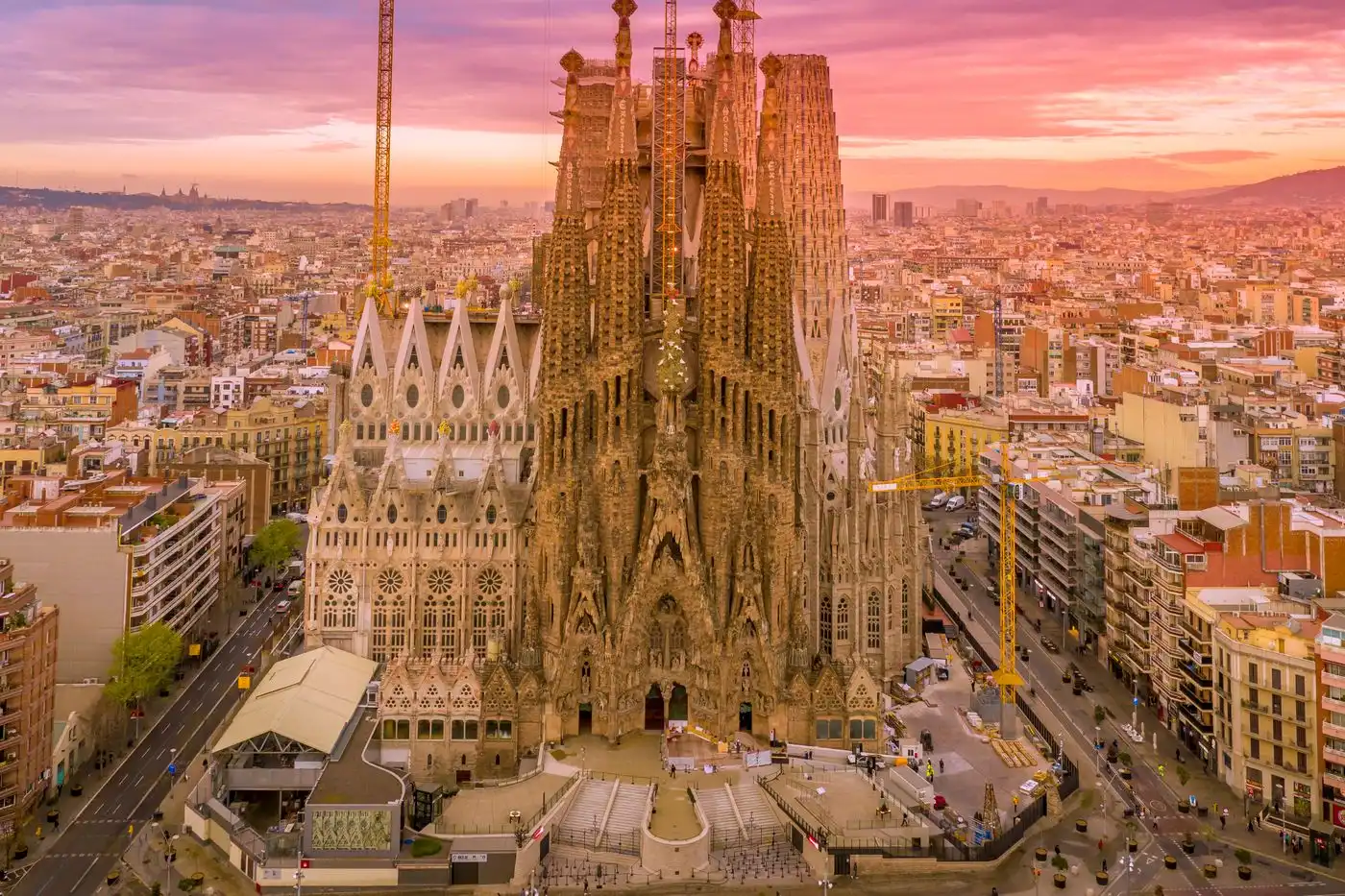
Pickpockets are the core of Barcelona, and they are the reason this section comes first. La Rambla is the most targeted street, 1.2 km from Placa Catalunya to the port, with the flower stalls, the human statues and the La Boqueria entrance, and the crowds are the cover, because a hand in a bag is invisible when the street is full. The metro lines L1, L3 and L4 are the second hotspot, especially Placa de Catalunya and Sagrada Familia stations at rush hour, when the doors close and the crowd pushes, and the Sagrada Familia and Park Guell queues and selfie spots are the third, because a traveller looking up at the towers is not looking at the bag. Barceloneta beach is the fourth: never leave a phone on the towel while swimming, because the towel is the easiest target on the sand.
The other hotspots are the same family, and they are easier to spot. The Gothic Quarter narrow crowded streets, Placa Catalunya, and Barcelona Sants station all work the same way, with the crowd as cover and the bag as the target, and phone snatching on the wide boulevards, Passeig de Gracia and Diagonal, is the variation, because a phone in the hand on a wide street is easier to grab than a bag in a crowd. The fixes are the same for all of them: bag worn crossbody in front, zip clipped, phone out of the back pocket and never left on a cafe table, because the table is the classic spot, and the clipboard is the classic cover. A woman alone in Barcelona is a target for pickpockets, not for violence, and the property is the risk to plan around. For another European city where pickpockets shape the plan, see our Florence safety guide.
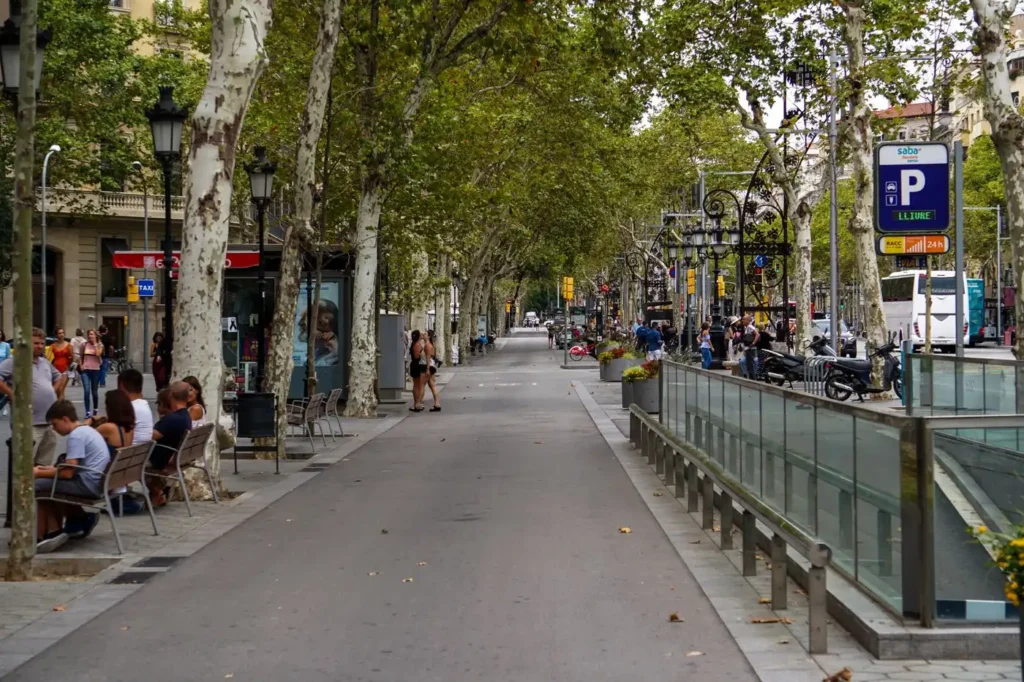
The Scams to Know Before You Arrive
The scams are the smaller family, and they are easier to spot once named. The petition or charity clipboard scam is the classic: a clipboard goes over a phone on a cafe table, the phone goes under the clipboard, and the clipboard walks away. The bracelet scam is the second: a bracelet is wrapped on a wrist, a payment is demanded, and the demand is the scam. Fake guides offer to show the Sagrada Familia, then steer to a shop; the “site is closed” claim sends a traveller to a different shop instead. The fixes are the same for all of them: never leave a phone on a cafe table, never accept a bracelet, never follow a guide who approaches first, and check the opening hours before the trip, because the site is almost never closed.
The rule for the bag is the one to remember, and it is short: crossbody in front, zip clipped, phone in a front pocket, and nothing in a back pocket, because the back pocket is the easiest pocket to reach. A money belt suits a crowded day, because the belt is under the clothes and the bag is the decoy, and a small crossbody suits a normal day, because the bag is in front and the zip is clipped. Both need the same checks, and both are safe in the right area. Barcelona is a city that rewards a plan, and a solo traveller with a plan has an easy trip, because the pickpockets work the unprepared, not the prepared.
Where to Stay: Eixample First, Gracia for Calm
Eixample is the top first base in Barcelona, and it is the base to pick when the trip is short or it is a first time in the city. The area is a wide, well-lit grid, busy until late, with the restaurants, the cafes and the shops on every corner, and the metro lines run through it, so the sights are a short ride away and the base is calm. A woman alone in Eixample in the evening is walking home through streets that feel residential, not touristy, and that is the charm of it. The area sits close to the centre, with the Sagrada Familia on one side and Placa Catalunya on the other, so the sights are close and the nights are quiet.
Gracia is the calm local alternative, with busy squares and a community feel, and it suits a quieter stay, with the same calm streets and a slower pace. Sant Antoni and Poblenou are comfortable alternatives, with the shops and the restaurants close and the transport easy. El Born and Sant Pere are low theft risk compared with La Rambla, with the same charm and fewer crowds. The Gothic Quarter is charming by day, but its empty alleys need care after dark, and El Raval needs the most care: the upper part near MACBA is fine, but the lower Raval, south of Carrer de l’Hospital and Carrer de Sant Pau, toward the port, has higher late-night street crime and harassment, so extra caution after midnight, and do not base there first. The rule is short: base in Eixample or Gracia, visit the Gothic Quarter by day, and take an official taxi home after dark. For a stay in the other Iberian capital, see our Lisbon stays guide.
Nights and Getting Around: Metro, Taxis and No Callem
The nights in Barcelona are the easy part, once the transport is sorted. The metro runs until midnight Sunday to Thursday, until 2am on Friday, and all night on Saturday, and the stations are busy until late, with people, music and hawkers on every platform. Official metered taxis or Cabify are the late-night choice, because the app fixes the price before the ride starts, and the Nitbus night buses have a request-stop for women and minors, so a woman can get off between official stops, closer to home. The rule is the same as in every city: use the app after dark, not walking alone in dark streets after midnight, and keep the accommodation address private.
The women-specific resources deserve a paragraph of their own, because they are the reason Barcelona feels safer than its reputation. The “No Callem” anti-harassment protocol runs in clubs and festivals, Apolo, Razzmatazz, Sonar, Primavera Sound, Sutton and more, with trained staff and Purple Points, Punts Liles, so a woman who feels unsafe can ask for help and get it. The AlertCops app has an SOS button sending a GPS-located alert to police without a call, so the phone is the safety net when the voice is not. Barcelona is a city that takes women’s safety seriously, and a solo traveller who knows the protocol has an easy night.
FAQs: Is Barcelona Safe for Solo Female Travellers?
Barcelona is generally safe for solo female travellers, one of the safer big European cities for women travelling alone, and the main risk is property crime, not personal safety. Violent crime against tourists is rare. The US State Department rates Spain Level 2, exercise increased caution, and Barcelona sits outside the only Level 3 area in the same advisory, Ceuta.
La Rambla is the most targeted street, with the flower stalls, the human statues and the La Boqueria entrance, and the metro lines L1, L3 and L4 are the second hotspot, especially Placa de Catalunya and Sagrada Familia stations at rush hour. The Sagrada Familia and Park Guell queues, Barceloneta beach, the Gothic Quarter, Placa Catalunya and Barcelona Sants station are the other hotspots.
Stay in Eixample for a first trip, because the area is a wide, well-lit grid, busy until late, with the restaurants and the cafes on every corner. Gracia is the calm local alternative. Do not base in the lower Raval first, because it has higher late-night street crime and harassment.
The Gothic Quarter is charming by day, but its empty alleys need care after dark, so visit by day and take an official taxi home after dark. The area is not dangerous, only quiet, and the quiet alleys are the ones to avoid after midnight.
The petition or charity clipboard scam is the classic: a clipboard goes over a phone on a cafe table, the phone goes under the clipboard, and the clipboard walks away. Never leave a phone on a cafe table, and never accept a bracelet from a stranger.
The metro runs until midnight Sunday to Thursday, until 2am on Friday, and all night on Saturday. Official metered taxis or Cabify are the late-night choice, because the app fixes the price before the ride starts, and the Nitbus night buses have a request-stop for women and minors.
No Callem is the anti-harassment protocol in clubs and festivals, Apolo, Razzmatazz, Sonar, Primavera Sound, Sutton and more, with trained staff and Purple Points, Punts Liles. The AlertCops app has an SOS button sending a GPS-located alert to police without a call.