Where to Stay in Lisbon as a Solo Female Traveller: The Short Answer
Stay in Baixa and Chiado for a first trip, because Baixa is flat, central and walkable, with the metro on the doorstep, and Chiado, just uphill, adds bookshops, boutiques and cafe terraces on the same metro links. Principe Real is the best calm base, quieter after dark than the nightlife streets and a short walk from Chiado. Alfama is for charm, not for a first stay, because the lanes are steep and the lighting is limited at night. The advisory is unchanged since our Portugal safety guide was published: Portugal is Level 1, exercise normal precautions, on the US State Department advisory, dated 23 December 2025. For another European city break, see our Florence safety guide. For the wider picture, see our Europe guide.
Baixa and Chiado: The Best First Base
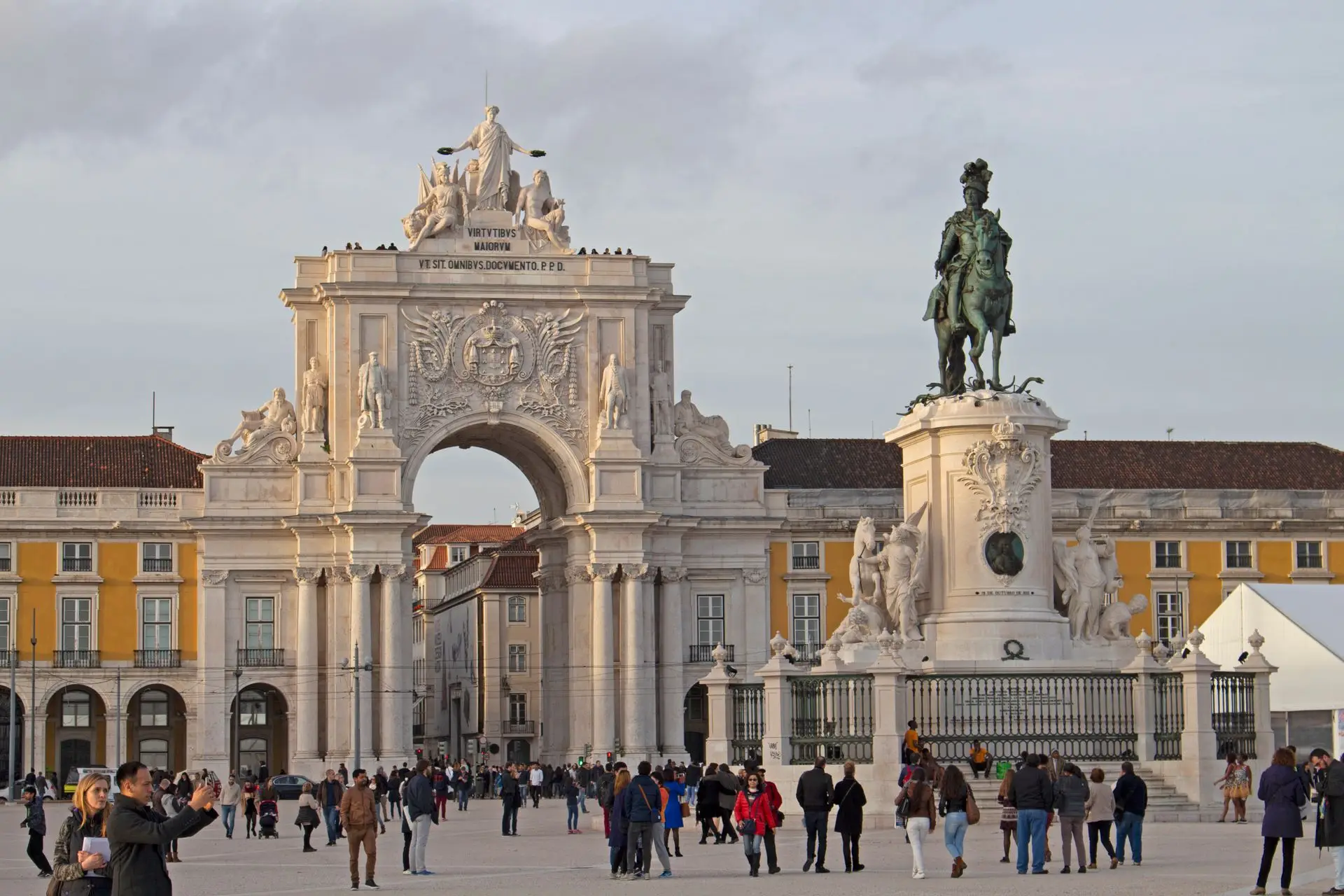
Baixa and Chiado are the best first base in Lisbon, and they are the base to pick when the trip is short or it is a first time in the city. Baixa is flat, a central grid of streets running down to Praca do Comercio, with the metro on the doorstep and most sights within walking distance. The streets stay busy and well lit late, with restaurants, shops and cafes on every corner, and a woman alone in Baixa in the evening is one of many people on the same street. Chiado, just uphill from Baixa, adds bookshops, boutiques and cafe terraces, with the same metro links, and the feel is calmer, with the streets a little quieter and the cafes a little slower. The two areas work as one base, because the walk between them is short and the metro joins them.
The practical case for Baixa and Chiado is the flat ground. Lisbon is a city of hills, and a flat base means the walk home at night is easy, with no steep climb in the dark and no heavy luggage up a slope. Book a place near the metro, because the station is the anchor, and check the walk home in daylight before the first night, because the side streets are quieter than the main grid and the route should be known. Pick a guesthouse or a hotel with a host who answers messages, a lock on the door, and a locker in the room, and read reviews from solo female travellers before booking. Baixa and Chiado are the base that makes Lisbon feel easy, and a city that feels easy is a city that feels safe.
Principe Real: Calm, Trendy and Central
Principe Real is the calm base, and it is the neighbourhood to pick when the trip is about quiet streets and a local feel. The area is trendy, with boutique shopping, gardens and cafes, leafy residential streets and a slower pace than the centre, and it is quieter after dark than Bairro Alto, with the restaurants closing earlier and the streets emptying by ten. A woman alone in Principe Real in the evening is walking home through a neighbourhood that feels residential, not touristy, and that is the charm of it. The area is also Lisbon’s most established LGBTQIA-friendly district, with bars, shops and cafes that welcome everyone, and that openness is part of what makes the area feel safe.
The practical case for Principe Real is the walk to Chiado. The area sits a short walk from Chiado, so the centre is close and the base is calm, and the metro at Rato is nearby. Book a place near the garden, because the streets around it are the brightest and the busiest, and check the walk home in daylight before the first night, because the side streets are quiet and the route should be known. Principe Real suits a longer stay, when the plan includes rest days and slow mornings, and it is the base that feels like a home rather than a hotel. For a first trip, Baixa and Chiado are the better base, and Principe Real is the base to move to on a second stay, when the city is known and the calm matters more than the centre.
Alfama: Charm, Hills and Night Lighting
Alfama is the atmospheric choice, and it is the neighbourhood to pick when the trip is about old Lisbon. The area is the oldest in the city, with steep lanes, fado houses, small squares and views over the river, and the mornings are the best time to be there, when the streets are quiet and the light is soft. The area is good for charm and fado, and it is poor for heavy luggage and for walking alone late, because the lanes are steep, the lighting is limited at night, and the walk home can be a climb in the dark. Say so plainly: Alfama is not the best first base, and a first timer should stay in Baixa and Chiado instead, then visit Alfama by day.
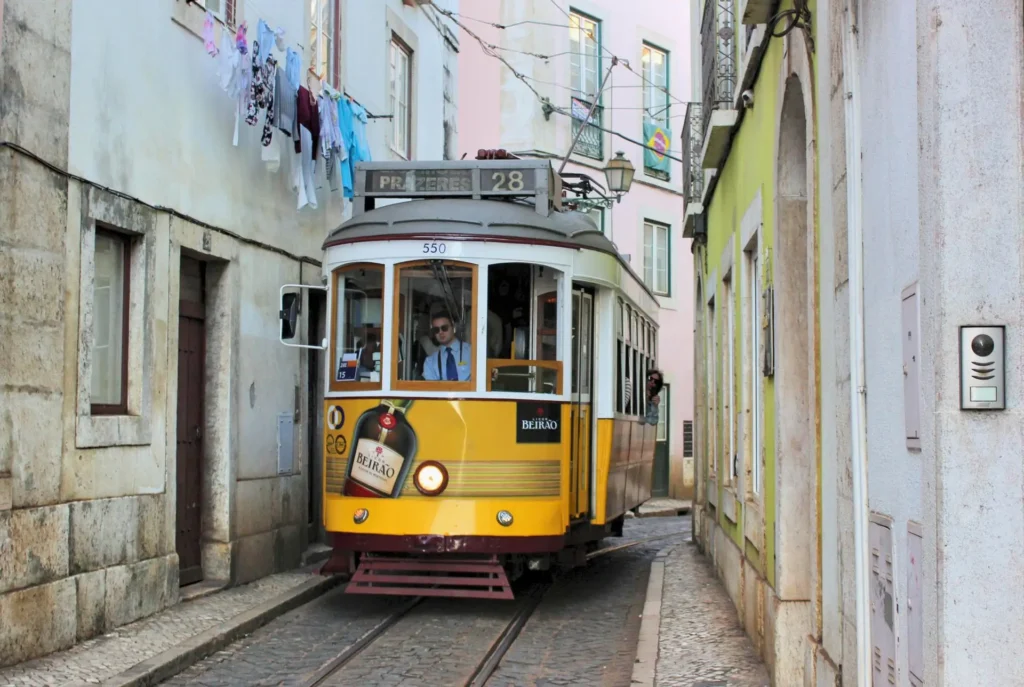
The practical case for Alfama is the day trip. The area sits on Tram 12, which covers the same Alfama stretch as the famous Tram 28 with far fewer tourists, and the tram is the easy way in and out. Tram 28 is a pickpocket hotspot, not a transport recommendation, so ride it once for the view and keep the bag in front, or skip it and take Tram 12. Book a place in Alfama only if the stay is short, the luggage is light, and the plan is to be home before dark, because the lanes are steep and the lighting is limited. For a longer stay, or a first stay, Baixa and Chiado are the better base, and Alfama is the neighbourhood to visit, not to sleep in.
Where Not to Sleep: Bairro Alto Noise and Intendente at Night
Bairro Alto and Cais do Sodre, with Pink Street, are the nightlife districts, and they are the areas to avoid as a base when sleep matters. The bars open into the early hours, and the streets stay noisy past 3am on weekends, with crowds, music and shouting outside the windows. A light sleeper should not base here, because the noise does not stop at midnight and the streets do not quieten until dawn. The areas are good for a night out, with the bars and the music, and they are poor for a base, because the sleep is broken and the mornings start late. Our Portugal safety guide covers the drink-spiking and fake-drug-offer notes for these streets; read that guide before a night out there.
Intendente and Martim Moniz need caution after dark, and the honest advice is to avoid them at night. The areas are busy by day, with markets and shops, and they quieten after dark, with fewer people and less light on the side streets. A woman alone at night should stay on the main streets of Baixa and Chiado instead, where the streets stay busy and well lit late. The rule is short: base in Baixa, Chiado or Principe Real, visit Bairro Alto for a night out, and avoid Intendente and Martim Moniz after dark. One line on the ground: Lisbon’s hills are steep and the polished limestone pavements, the calcada, are slippery when wet, so wear flat shoes and take the metro when it rains.
Getting Around Lisbon at Night
Getting around Lisbon at night is easy from a central base and hard from anywhere else, and that is the real reason the base matters. The metro runs from 06:30 to 01:00, and a base near a station means a short walk on a lit street, while a base far from a station means a long walk or a taxi. Stay near a station you can navigate half asleep, and know the last train time before going out, because the night ends with the train, not with the neighbourhood. After 01:00, ride apps or marked taxis are the tool, and a taxi is cheap for a short ride, with the meter on and the route known. After midnight, the streets in Baixa and Chiado stay busy, and the cafes stay open late, with bright lights and staff on duty.
The tram is the daytime tool, not the night tool, and the rule is the same as in every city: keep the bag in front, the phone zipped away, and the wallet in a pocket. Tram 28 is the famous ride, and it is also the pickpocket hotspot, so ride it once for the view and keep the bag closed, or take Tram 12 for the same Alfama stretch with far fewer tourists. The buses cover the rest, and the ride apps cover the gaps, so the city is easy without a car. Lisbon is a city that rewards a plan, and a solo traveller with a plan has an easy trip. Barcelona is the other European city where pickpocketing shapes the plan, so read our Barcelona safety guide before you go.
Stay Types for Solo Women in Lisbon
Lisbon does stay types well, and they are worth knowing about before booking. Women-only dorms exist in Lisbon hostels, and they are worth asking for, because a dorm of women travelling alone is a comfortable first night in a new city. The dorm is the stay type to book, not a named hostel, because the type is what matters: a women-only room, a lock on the door, a locker in the bed, and a host on site. Guesthouses suit a longer stay, because the common room is where a solo traveller finds company, and apartments suit a stay of a week or more, because the kitchen and the quiet are worth the price. None of these is a safety requirement, because Lisbon is safe without them, but they are a comfort, and a comfortable first night makes the rest of the trip easier.
Eating alone draws no attention in Lisbon cafes, because the tables are small, the coffee is quick, and the city eats alone as often as it eats together. A woman alone at a cafe table is one of many people on the same terrace, reading, working or watching the street, and that is the normal Lisbon afternoon. The rule for choosing a stay is the same as in every city: a lock on the door, a locker in the room, a host or staff on site, and reviews from solo female travellers that mention the night walk home. A hostel suits a short stay and a tight budget, a guesthouse suits a longer stay, and an apartment suits a week or more. All three need the same checks, and all three are safe in Lisbon.
FAQs: Where to Stay in Lisbon as a Solo Female Traveller
Stay in Baixa and Chiado for a first trip, because Baixa is flat, central and walkable, with the metro on the doorstep, and Chiado, just uphill, adds bookshops, boutiques and cafe terraces on the same metro links. Principe Real is the best calm base, quieter after dark and a short walk from Chiado. Pick a base near a metro station.
Yes. Principe Real is calm and central, with boutique shopping, gardens and cafes, leafy residential streets and a slower pace than the centre. It is quieter after dark than Bairro Alto, and it is Lisbon’s most established LGBTQIA-friendly district. It suits a longer stay, when the plan includes rest days and slow mornings.
Alfama is scenic but steep, with limited lighting at night, so it is poor for heavy luggage and for walking alone late. Prefer Baixa and Chiado after dark, and visit Alfama by day, when the streets are quiet and the light is soft. Tram 12 covers the Alfama stretch with far fewer tourists than Tram 28.
Only if nightlife is the priority. Bairro Alto is a nightlife district, with bars open into the early hours and streets noisy past 3am on weekends. A light sleeper should not base there, because the noise does not stop at midnight. Visit for a night out, and sleep in Baixa, Chiado or Principe Real.
Yes. Women-only dorms exist in Lisbon hostels. Book the dorm type, not a named hostel, because the type is what matters: a women-only room, a lock on the door, a locker in the bed, and a host on site. A dorm of women travelling alone is a comfortable first night in a new city.
The metro runs from 06:30 to 01:00. After that, use ride apps or marked taxis, with the meter on and the route known. The streets in Baixa and Chiado stay busy and well lit late. Know the last train time before going out, because the night ends with the train.
Yes. Portugal is Level 1, exercise normal precautions, on the US State Department advisory, and Portugal ranks 7th of 163 countries on the Global Peace Index 2026, a country-level peace measure, not a neighbourhood guarantee. Read our Portugal safety guide for the full detail on pickpocketing, drink spiking and the streets to avoid at night.