
Is Iceland Safe for Solo Female Travellers? The Short Answer
Yes. Iceland is the safest country on earth for a woman travelling alone, and it is not close. Violent crime is so rare that it barely registers in the statistics, Reykjavik was named the safest city in the world for 2026, and I have never heard a solo woman describe feeling unsafe there because of another person. The honest warning is different. The danger in Iceland is not people. It is wind, water, gravel and winter dark. Every year, travellers get into serious trouble on a road they should not have driven, at a beach they should not have walked close to, or in weather they should have checked before leaving. This guide tells you both halves of the truth: how safe the country is from crime, and how seriously to take the nature.
What the Official Advice Says
The numbers are about as clear as they get. The Global Peace Index 2026 ranks Iceland first of 163 countries, and it is the 19th consecutive year at the top. The US State Department carries Iceland at Level 1, Exercise Normal Precautions, in advice updated on 4 May 2026. That is the lowest of the four levels, the same as Japan, Portugal and Thailand. The Women, Peace and Security Index for 2025/26 puts Iceland second in the world with a score of .932, just behind Denmark at .939. And Berkshire Hathaway Travel Protection named Reykjavik the safest city in the world for 2026, for the second year running, in its annual survey of more than 1,500 American travellers. One detail worth knowing: Iceland slipped to fourth in that same report’s safest countries list, behind the Netherlands, Australia and Austria. The city is number one. The country is still near the top. Neither ranking changes the practical point. You do not need to worry about your personal safety from other people in Iceland. You need to worry about the weather forecast.
If you want the wider picture, our guide to the safest countries for solo female travellers puts Iceland in context with the other places on this site. The safety advice in our solo female travel safety tips guide applies here too, but most of it will feel like overkill in Reykjavik. That is the point of Iceland. It is the one destination where the standard precautions are mostly about the landscape.
Reykjavik: The Safest Capital You Will Ever Walk Alone In
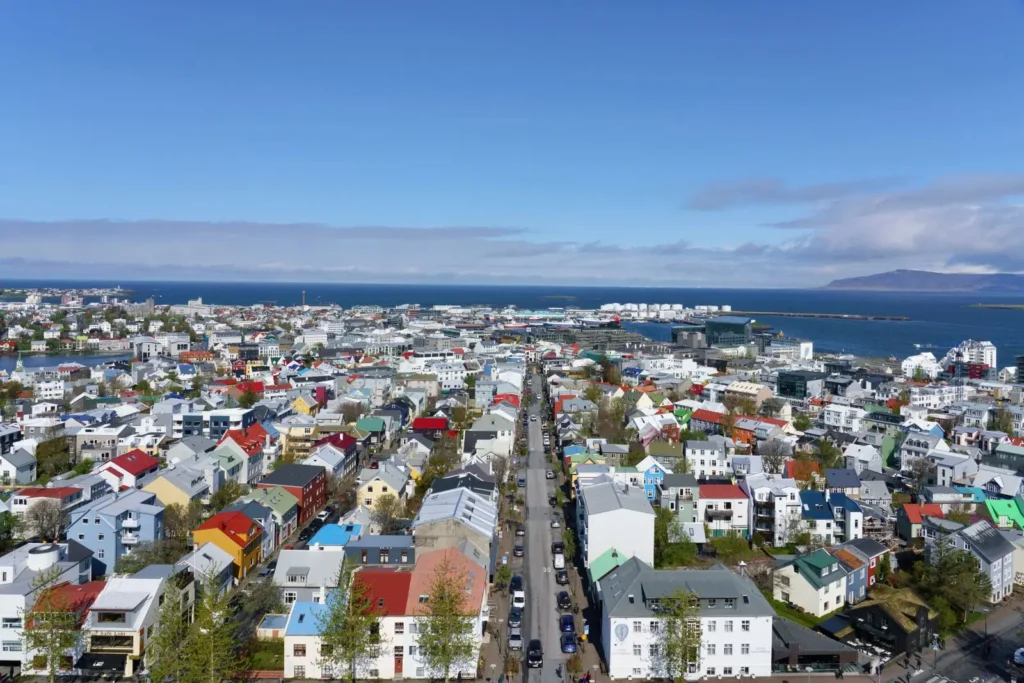
Reykjavik is a small city of about 140,000 people, and it feels like one. Women who have travelled there alone describe walking home at 2 in the morning in the midnight sun, and again in the pitch dark of winter, and feeling safer than they do in their own home cities. Lost wallets get returned within hours. Unwanted advances are frowned on, not tolerated. There is no neighbourhood you need to avoid, and no time of night when the streets become a different place. The travel insurance survey that named Reykjavik the safest city in the world found something rare: according to the data it uses, every neighbourhood in the city is considered exceptionally safe.
That does not mean switching your brain off. Keep your drink in view in bars, the way you would anywhere, and pre-book a taxi after a late night rather than flagging one down. Petty theft exists, mostly opportunistic, mostly in busy summer spots. But the scale of it is tiny, and the feeling of the city is the thing travellers remember. If you have ever wanted to know what it feels like to stop scanning every street, Reykjavik is where you find out.
The Real Risk Is Nature, Not People
Here is the part most Iceland guides bury. Iceland kills and injures visitors through nature, not crime. The wind is the hazard people underestimate most. It regularly blows cars off the road or into the next lane, and it catches car doors so hard it bends the hinges. The weather changes in minutes, and a clear morning can turn into a storm by lunch. Rivers, cliffs, waterfalls and black sand beaches all look calm in photographs and behave differently in person. The country is built for travellers who check conditions every morning and respect what they read. If you do that, you will be fine. If you treat Iceland like a theme park, it will remind you that it is not one.
Driving the Ring Road Alone: What Actually Goes Wrong
Most solo women in Iceland rent a car. The Ring Road, Route 1, runs 1,339 kilometres around the island, and it is the way most people see the country. It is also where most of the trouble happens, and the causes are always the same. Wind gusts catch high-sided cars. Gravel sections appear where the asphalt ends, and traction drops without warning. Single-lane bridges turn up suddenly on two-lane roads, and you yield according to the road markings. Sheep wander onto the road without any traffic awareness at all, and they are most common from May to October. Ice forms on roads even on summer mornings at higher elevations.
The habits that keep you safe are simple. Check road.is and vedur.is every single morning before you set out, and call 1777 for real-time road updates if anything looks uncertain. Drive 10 to 20 kilometres an hour below the posted limit, and remember the limits themselves: 50 in towns, 80 on gravel, 90 on paved rural roads. They are limits, not targets. Keep your headlights on at all times, because the law requires it around the clock. Keep your fuel tank above half, because filling stations thin out fast away from the towns. Park into the wind, hold the car door with both hands, and pull into a designated pullout to let faster traffic past. Icelanders drive fast on roads they know. You do not need to keep up with them.
One more rule, and it is not negotiable: never drive around or past a road closure sign. Driving a closed road is a criminal offence in Iceland. You face fines, full liability for rescue costs, and voided insurance. The closure is there because someone who knows the road decided it was not safe. Believe them.
Winter Driving: The Season That Tests You
Winter in Iceland runs roughly from November to March, and it is the season that separates careful drivers from everyone else. Winter tyres are legally required from 1 November to 15 April, and rental companies fit studded tyres in that window at no extra cost. Around the solstice, daylight shrinks to four or five hours, so plan routes you can finish in daylight and do not drive at night if you can avoid it. Black ice forms on bridges and in shaded dips, and it is invisible until you are on it. Slow down, increase your following distance, and avoid sudden steering or braking.
Before every winter drive, check the colour codes on vedur.is. Yellow, orange and red warnings are serious. If the wind is above 25 metres per second, park the car and wait. In the Highlands, gusts of 40 to 50 metres per second are recorded every winter, and they can flip a vehicle. Carry warm layers, water, snacks, a torch and a phone charger in the car, and carry a headlamp, not just your phone flashlight. If you slip on ice or need to change a tyre in the dark, you need your hands free, and phone flashlights die fast in the cold. If winter driving is not something you are confident about, that is useful information, not a failure. Take a guided tour instead, or come in summer. The northern lights are not worth a ditch.
F-Roads and the Highlands: Know the Line
The Highlands are the vast, uninhabited interior of Iceland, roughly 40 percent of the country, crossed only by rough F-roads. The rules here are strict for a reason. F-roads need a proper 4×4, always, and they are closed most of the year. The opening season is roughly late June to September. River crossings are frequent, and no insurance covers river-crossing damage. The rule is simple: if you would not cross it on foot, do not attempt it in a car. Walk every crossing first, enter at a slight upstream angle, drive slow and steady, and never cross alone. Travel in a convoy of at least two vehicles if you can.
In winter, nearly all F-roads are legally closed, and the only access is by guided Super Jeep on select routes. Independent Highland driving in winter is effectively impossible and often illegal. If you are an inexperienced driver, travelling alone, or tempted to try a closed road in a two-wheel-drive car, the Highlands are not for you. Every year that decision costs lives and triggers expensive volunteer rescues. Register your travel plan at safetravel.is before you set out, and check the site’s alerts during the trip. It takes five minutes and it is the single most useful thing a solo traveller in Iceland can do.
Reynisfjara and the Sneaker Waves
Reynisfjara, the black sand beach near the village of Vik on the South Coast, is one of the most photographed places in Iceland, and one of the most dangerous. Its sneaker waves can rush far up the sand without warning and pull people into the Atlantic. Between 2007 and 2024, the beach saw at least twelve serious emergency rescues and five fatalities. In August 2025, a nine-year-old girl from Germany was swept away by a wave. The beach now has warning signs and coloured lights showing how close to the water it is safe to go. Stay behind the line, stay away from the water’s edge, and never turn your back on the sea to take a photograph. The beach itself keeps changing: in February 2026, after weeks of strong waves and easterly winds, part of its famous basalt columns collapsed. Reynisfjara is beautiful, and it is not a place to be casual.
Volcanoes: The Reykjanes Question
Every Iceland guide written since late 2023 has to answer the volcano question, so here is the current answer. As of 2 November 2026, there is no volcanic eruption anywhere in Iceland. The most recent one, the ninth on the Sundhnukur crater row near Grindavik, started on 16 July 2025 and was declared over on 5 August 2025. The Icelandic Met Office said on 27 October 2026 that magma is still slowly building up under Svartsengi on the Reykjanes peninsula, so a new eruption on the same crater row remains possible, but no one can say when. Grindavik is still at the civil protection uncertainty level, with no evacuation in place, and the Blue Lagoon is open on its normal winter hours, 08:00 to 22:00.
What this means for your trip is straightforward. Reykjavik, the Golden Circle, the South Coast and the airport are not affected. The only area to watch is the Reykjanes peninsula around Grindavik and Svartsengi. Check safetravel.is before and during your trip, check the gas forecasts there if you have asthma or breathing issues, and check the Blue Lagoon’s own booking page on the day you plan to go, because it has taken brief precautionary closures during active eruptions. Never approach an active eruption site on your own. The lava is not the only hazard. The gas is invisible, and it moves with the wind.
Where to Stay and How to Get Around Without a Car
You do not have to drive to see Iceland. Reykjavik is walkable, and the city has hostels, guesthouses and hotels that are used to solo women. Female-only dorms exist in the bigger hostels, and they are worth booking ahead in summer. From Reykjavik, day tours run to the Golden Circle, the South Coast and the Blue Lagoon, and multi-day guided tours cover the Ring Road without you ever touching a steering wheel. Group aurora tours are also a good way to meet people in winter, when the dark evenings can feel long on your own.
If you do rent a car, budget for it properly. A 4×4 costs roughly 80 to 120 US dollars a day in summer, and gravel insurance is worth adding, because flying gravel chips windscreens more often than anyone expects. Iceland is expensive in general, and the car is the biggest single cost after flights. Book the car early, read the insurance terms before you sign, and make sure your travel insurance has a wind-damage clause. It is a clause that exists because Iceland needs it.
Practical Safety Kit for Solo Women in Iceland
Most of what keeps you safe in Iceland fits in a small bag. Download the 112 Iceland app before you arrive. It sends your GPS location to rescuers if you call for help, and it works even in places where you do not know the road name. The emergency number is 112 for everything: police, fire and ambulance, and the operators speak English. Get a prepaid Siminn SIM or an eSIM so you have data outside Reykjavik, because coverage thins out in the Highlands and the east. Tap water in Iceland is some of the best in the world, so bring a bottle and refill it. Pharmacies are marked Apotek, and the main emergency hospital is Landspitali in Reykjavik.
Pack for weather that changes its mind. Thermal base layers, a waterproof outer layer, gloves and proper boots matter even in summer, because the wind bites at the coast and at altitude. If you are coming from outside the Schengen area, remember the 90-day limit, and check your visa rules before you fly. And keep the number for road conditions in your phone: 1777. It is the number you call when the sky looks wrong and you want a straight answer.
For the general habits that work everywhere, our tips for solo female travellers cover the basics, and our best places to solo travel list shows where Iceland sits among the other destinations on this site. Japan is another Level 1 country in this series, and the two make a useful comparison: both are among the safest places on earth, and both reward travellers who prepare properly.
FAQs: Is Iceland Safe for Solo Female Travellers?
Yes. Iceland ranks first on the Global Peace Index 2026, its 19th year at the top, and the US State Department rates it Level 1. Violent crime and street harassment are virtually non-existent. The risks that matter are weather, wind, gravel roads and winter driving, not other people.
Yes. Reykjavik was named the safest city in the world for 2026 by Berkshire Hathaway Travel Protection, for the second year running. Women walk alone at night in both the midnight sun and the winter dark. Keep your drink in view in bars and pre-book taxis late at night, as you would anywhere.
Only if you are a confident winter driver. Winter tyres are legally required from 1 November to 15 April, daylight drops to four or five hours around the solstice, and black ice is common. Check road.is, vedur.is and safetravel.is every morning, and do not drive on orange or red coded roads. If you are unsure, take a guided tour instead.
As of 2 November 2026, no eruption is taking place in Iceland. The last one ended on 5 August 2025. Magma is still building under Svartsengi, so another eruption on the Reykjanes peninsula is possible, but Reykjavik, the Golden Circle and the South Coast are unaffected. Check safetravel.is before visiting the Grindavik area or the Blue Lagoon.
112 for everything: police, fire and ambulance. Operators speak English. Download the 112 Iceland app before your trip, because it sends your GPS location to rescuers automatically.
Not for the Ring Road in summer, where a regular car is fine. You do need a proper 4×4 for F-roads in the Highlands, which are open roughly late June to September, and for winter driving outside the towns. Driving a two-wheel-drive car on an F-road is illegal and voids your insurance.
It is safe if you respect the warnings. Sneaker waves have caused five fatalities and at least twelve serious rescues between 2007 and 2024, including a child swept away in August 2025. Stay behind the warning line, keep away from the water’s edge, and never turn your back on the sea.