

Why Every Woman Deserves to Travel Alone
Solo travel changed something in me the very first time I did it. I stepped off a train in a new city, and every decision was suddenly mine to make. That feeling of freedom is hard to put into words, but once you feel it, you never forget it.
Solo female travel isn’t niche anymore. Women make up an estimated 84% of solo travelers worldwide, per Grand View Research, with the global market past $480 billion and heading toward $1 trillion by 2030. In 2026, solo female travelers join one of the fastest-growing, best-supported movements backed by safety apps, women-only communities, and destinations built to welcome them.
Safety remains the top concern before a solo trip. The 2026 Solo Female Travelers Club survey found 68% of women worry about personal safety when planning to travel alone. Reassuringly, that worry drops sharply afterward 59% say they’d happily travel independently again. Preparation, not luck, is what closes that gap.
This guide gives you 10 practical, field-tested tips to help you travel with real safety and genuine confidence whether you’re planning your first solo trip or your fifteenth. Pair it with a solid packing list for solo female travel and you’ll be ready long before you board the plane.

Solo travel is more than a holiday it’s practice in self-discovery. You learn to trust your own judgment, step outside your comfort zone, and move at your own pace.
Good planning and situational awareness beat any gadget. Being prepared frees you to explore, soak in unfamiliar cultures, and collect memories that last. That’s what makes solo travel empowering: safety and adventure aren’t opposites they walk hand in hand.
Solo Female Travel Safety: Why It Matters More Today Than Ever Before
More women are choosing solo travel than ever before stepping into new environments, crossing borders, and building lives on their own terms. Many now combine remote work with long-term travel, turning a single trip into a full lifestyle. The independence this brings is genuinely life-changing.
Safety still sits at the heart of every journey. Social media has made travel info easier to find, but it’s also created a false sense of security travelers assume a place is safe just because it looks that way online. Real safety research goes deeper than a well-lit Instagram feed.
Organizations like the Global Peace Index and the World Economic Forum’s Gender Gap Report track infrastructure, legal protections, and social conditions that actually affect how safe a destination feels for women traveling alone.
Cultural differences and language barriers can catch even seasoned female travelers off guard. What feels normal at home may not translate elsewhere understanding local customs before you land is core preparation, not an afterthought.
I once booked a last-minute solo weekend trip. Every small decision felt heavier without someone beside me. That discomfort pushed me past my comfort zone, and real growth followed almost immediately.
Personal safety isn’t about feeding fear it’s about building confidence to face the unfamiliar without panicking. Sharper preparation means more peace of mind and more destinations open up to you. Staying informed turns safety from a source of anxiety into a set of manageable, repeatable habits.
Destination choice matters more for first-time solo travelers than most realize. Iceland, Japan, and Portugal top women’s safety indices thanks to strong public transport, low harassment, and easy access to help, not luck. For a full, data-backed breakdown, see our guide to the safest countries for solo female travelers.
Tip 1: Research Your Destination Before You Go
Good pre-trip research is the first real step toward safety. Knowing what to expect helps you land with awareness instead of anxiety, and it makes every moment on the ground feel steadier.
Start by checking crime statistics and safety rankings for your destination rather than relying on gut feeling alone. Resources like the Numbeo Crime & Safety Index and country-specific safety indices give you real, comparable data instead of vague impressions, and they’re a far better starting point than assuming a place is “probably fine.”
The UK Foreign Office publishes official travel advice for countries worldwide, covering entry rules, local risks, and current safety conditions. The US State Department’s women travelers page is just as useful if you’re a US citizen; it also covers the Smart Traveler Enrollment Program (STEP), a free service that sends safety alerts from your embassy and makes it far easier for consular staff to reach you in an emergency. Registering takes five minutes and costs nothing.
Travel blogs by women who’ve visited your destination often beat official sources, covering practical details like which neighborhoods feel different at night or which taxi stands toavoid thatt government pages skip. Recent posts and walkthrough videos give you a genuine feel for the streets before you arrive.
If you’d rather skip the guesswork on where to go altogether, our guide to the safest countries for solo female travelers ranks destinations using exactly this kind of data.
The goal of pre-trip research is simple: arrive informed, not anxious. When you already know the areas to avoid and understand the local context, your awareness sharpens naturally, and that safety net starts building long before you board the plane.
Tip 2: Never Tell Strangers You’re Traveling Alone
Being solo doesn’t mean you have to announce it. When a stranger asks whether you’re alone, your safety comes first; the wrong answer can make you a target, even unintentionally.
Handling this question well is a real skill, the same way public figures deflect a question they’d rather not answer directly without ever lying outright. Solo women can use the same protective storytelling in everyday situations.
Never volunteer your situation to taxi drivers, rideshare drivers, or accommodation staff. A simple, believable story works well; say your husband or friends are meeting you shortly. Pick one story you’re comfortable repeating, keep it short and natural, and anyone who might be sizing you up will think twice when your answer sounds relaxed and unremarkable.
I remember arriving at a small guesthouse late one evening. The owner asked if I was by myself, and I said my group was joining me the next morning. That small piece of misdirection changed the entire dynamic instantly.
A pretend phone call is another useful tool; checking in with someone who’s “expecting” you signals that someone always knows your location, even when no one actually does yet. Safety professionals recommend this kind of conversation management regularly, and you’re never obligated to tell a stranger the truth about traveling solo. Redirect politely if a conversation feels too personal, smile, and move on.
Tip 3: Dress Appropriately for the Local Culture
How you dress has a direct impact on your solo female travel experience. The right clothing choices can lower your risk of unwanted attention and help you move through unfamiliar places with ease. This is one of the most practical safety tools you have, and it costs nothing.
Modesty standards vary enormously between cultures. What feels completely normal at home may draw unwanted attention elsewhere, and observing local women is the fastest way to understand what actually works in a given destination.
In many places, keeping shoulders, knees, and chest covered is both a sign of cultural respect and a practical way to blend in. Even in heat, a light scarf or loose layer solves this easily. Clothing that reads as “tourist” in a conservative area can invite exactly the kind of attention you’re trying to avoid; neither being stared at nor offending locals supports your safety or your goals for the trip.
I once packed a favorite outfit for a temple visit without thinking it through. A kind woman at the entrance handed me a wrap without a word. That quiet moment taught me more about cultural etiquette and appropriate dress than any guidebook had.
Leave flashy jewelry and expensive gadgets at home; they signal wealth immediately to anyone watching. A low-key look helps you blend in, stay safer, and connect more naturally with the people around you. If you’re building your suitcase around this principle, our solo female travel packing list breaks down exactly what earns a spot in your bag.
Tip 4: Keep Your Belongings Safe and Secure
Keep Your Bag in Front of You, Every Single Time
Your bag is one of the first things pickpockets look for. In crowds and busy areas, thieves work fast and quietly; one distracted moment is genuinely all it takes.
Pickpockets often work in pairs: one person creates a distraction while another reaches in, and your wallet is gone before you register what happened. Always carry your bag on your front, never on your back, so your zippers and straps stay in your direct line of sight and are far harder to access unnoticed.
Straps can be slashed and handles cut within seconds on a busy street, and a thief on a motorbike can snatch a purse and be gone before you react. This is a well-documented risk near tourist areas in destinations like Thailand, Italy, and Vietnam.
I once watched someone reach casually into an unattended bag left on the ground at a crowded outdoor event, and nobody around them even flinched. That moment made a secure, front-facing bag a permanent rule for me whether I’m at a night market, a festival, or just walking to dinner.
Guard Your Gear Even When You Sleep
Thieves strike most often when belongings are easiest to access, which usually means while you’re asleep. Never let your guard down completely.
In a hostel, always use a locker for your bag and valuables, and bring your own padlock rather than relying on the hostel to provide one. On a sleeper train or bus, loop your bag strap around your leg; any movement wakes you instantly, and it stops anyone from rummaging through your belongings while you sleep.
I once woke on a sleeper train with my zip half open. Nothing was missing, but it changed everything. My strap never leaves my leg overnight now. In airports, never leave valuables on an empty seat beside you; keep them in your lap or looped around your leg instead.
Book Accommodation With Lockers Worth Trusting
Choosing the right accommodation starts with one question: Are there working lockers? Use the filters on booking sites to show only hostels with secure storage, and always bring your own combination padlock rather than a key-based one; combinations don’t.
Here’s a step competitors always mention that’s easy to skip: before booking, search the property’s reviews specifically for phrases like “solo female” or “woman alone.” Review platforms often surface exactly the details a star rating hides, and this five-minute check catches problems a generic score won’t.
I once stayed at a hostel where the lockers looked solid but weren’t; a simple screwdriver could have opened mine in seconds. Test the mechanism yourself before storing anything valuable, and where possible, choose properties with a staffed front desk or overnight security guard.
Lock Your Bags: Don’t Make It Easy for Thieves
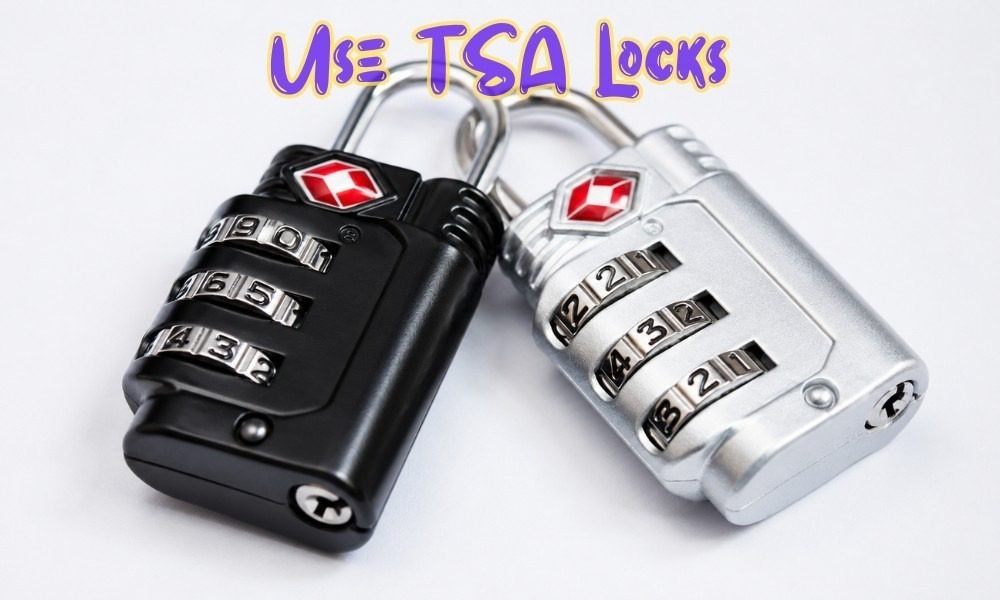
A small padlock through two zippers keeps your bag secure and shows immediately if it’s been tampered with. Smaller locks suit day bags and backpacks; larger ones suit suitcases left in storage or hotel rooms.
I once left a bag unlocked at a ferry dock while out for the day, and a pair of sunglasses disappeared in a classic quick grab. In crowded spots, an unlocked bag is an open invitation; a visible padlock makes thieves move on to an easier target, and it doubles as a way to spot your suitcase quickly on a busy carousel.
Skip the Cleaning Sign and Protect Your Privacy
Your room is your safe space. Turn the cleaning sign to “Do Not Disturb” when you leave for the day; it prevents staff from entering without your knowledge and signals the room is occupied. If you need fresh towels during a longer stay, request them at the front desk instead of allowing daily housekeeping access.
I started doing this after a stranger walked in while I was still inside, simply because the sign hadn’t been switched. Pair the cleaning sign with the privacy latch or chain lock whenever you’re inside the room.
Why a Fake Wallet Could Be Your Smartest Travel Tool
A decoy wallet, sometimes called a fake wallet, holds a small amount of cash and nothing valuable. If you’re targeted, you hand it over and walk away safely.
Petty corruption involving demands for on-the-spot “fines” has been reported by travelers in parts of Indonesia, Thailand, India, and elsewhere. A friend of mine faced exactly this scenario in India. An officer demanded a fine with no clear justification; she handed over her decoy wallet, and the situation ended quickly. Keep your real cash, cards, and passport in a hidden pouch beneath your clothing, and keep the decoy in an easily reachable pocket.
Split Up Your Cash and Cards
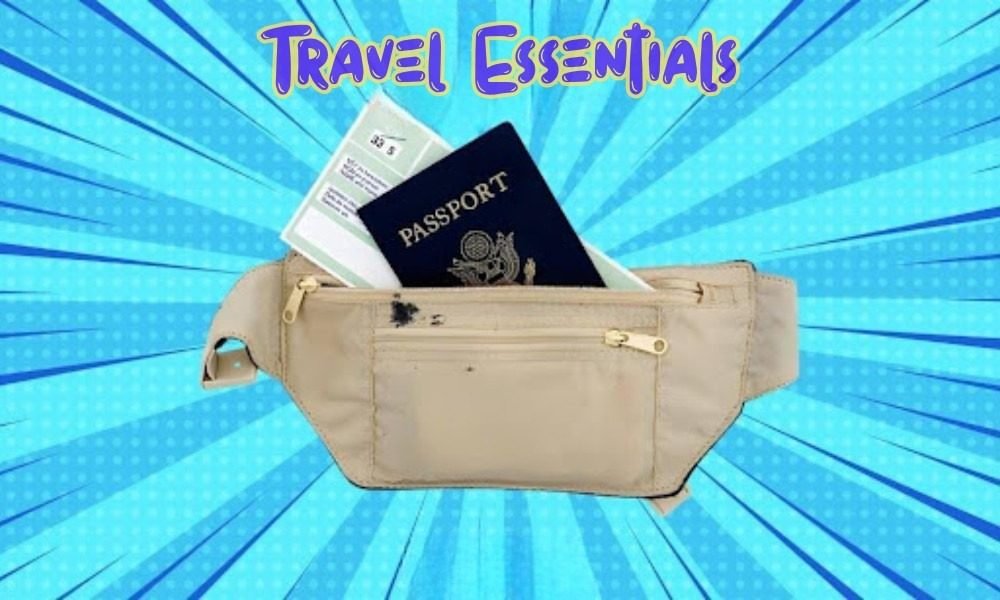
Keeping all your cash and cards in one wallet means losing everything at once if it’s stolen. Split your money across a few spots, some in your bag, some in a money belt, and a backup card kept separate from both.
I watched my partner go through exactly this nightmare in Portugal: his wallet was stolen during an Uber ride home, and he spent two frustrated days waiting for a replacement card before the trip could continue normally. Tap-to-pay on your phone is a strong backup if your physical cards disappear. Splitting your cash and cards takes two minutes to set up and could save an entire trip if something goes wrong.
Keep Copies of Your Passport, Visas, and Key Documents
Losing your passport abroad is genuinely stressful; without it, your identity documents and access to nearly everything disappear at once. Carry a paper copy of your passport and visas in a separate bag or pocket, and keep a digital copy stored in your email or cloud storage so you can access it from any device, anywhere.
I once had water damage to my passport pages from a leaking bottle, and my digital copy saved the border crossing completely. Treat backup documents as a zero-cost insurance policy, one of the smartest five-minute tasks you’ll do before any trip.
Never Let Your Bag Out of Sight When You Sit Down
Opportunists target people who are seated and distracted. A bag left on the floor or hung on a chair back can disappear in seconds, especially at outdoor restaurants where passing crowds give thieves cover. Keep your bag between your feet, on your lap, or looped around a chair leg at all times, including in restroom stalls, where bags left on the floor of a stall can be lifted from underneath.
I had my purse stolen at 17 while Christmas shopping; it held an entire paycheck I badly needed, and I’d set it on the floor beside my chair for less than a minute. That single lesson made me fiercely protective of my bags ever since.
Recommended Anti-Theft Gear
Pacsafe Bag: Built specifically for anti-theft protection, with slashproof material and lockable straps that make it far harder for thieves to cut or snatch. Use it for cameras, laptops, and other valuables, and lock expensive gear in your room rather than carrying it all in an open backpack.
Money Belt & RFID-Blocking Wallet Worn under clothing, a money belt keeps cash, passports, and cards discreetly out of sight in crowded tourist areas, airports, and public transit. An RFID-blocking wallet adds protection against digital card skimming.
Padlocks carry both small and large sizes for different bags. Use TSA-approved locks on checked luggage so security can inspect without cutting the lock, and never leave backpacks or luggage unattended, even inside a hotel lobby.
Tip 5: Always Stay Connected to the Internet and Phone Battery
Internet access isn’t a luxury in solo travel; it’s a core safety tool. Losing connection while navigating an unfamiliar place feels instantly vulnerable, since your phone is effectively your lifeline.
Sort your SIM card or eSIM before you land so you have reliable data the moment you arrive without hunting for a local SIM shop late at night. If Asia is on your route, our best eSIM for Asia guide compares the most reliable, affordable options.
Use apps like Signal, WhatsApp, or Skype for calls that run over data instead of racking up roaming charges. Download key safety apps before you leave home, ones that connect you to emergency services, provide first-aid guidance, or support real-time translation because the moment you actually need them is the worst time to be downloading anything.
Always carry a portable power bank; batteries drain faster than expected when you’re relying on maps and translation constantly. Notify someone trusted every time you move to a new location; a quick message takes ten seconds and keeps you meaningfully safer across a multi-day trip.
Download Offline Maps Before You Travel
Losing signal is more common than most travelers expect, and offline maps work without any connection at all. Download them before you go, not after you need them.
Google Maps lets you save entire cities for offline use. Maps.me is a free app built specifically for remote areas with no signal, showing walking routes and landmarks without Wi-Fi. For cities, Citymapper maps bus, train, and metro routes clearly.
I once found myself in a remote part of Morocco with zero phone signal; my pre-downloaded offline map guided me back without a single bar of connection. TripWhistle is worth adding too; it gives instant access to local emergency numbers wherever you’re traveling, which is otherwise genuinely hard to find without Wi-Fi. Pair these with solid travel insurance and you’re well covered even when you’re offline.
Tip 6: Share Your Location with Someone You Trust
Sharing your location isn’t overkill; it’s basic safety. Make sure someone trusted always knows roughly where you are; this single habit can make a critical difference in an emergency.
Before any hike or solo day out, share your plan with your contacts and drop a pin on WhatsApp. If something goes wrong, your last known location becomes the starting point for help.
Never meet someone from a dating app without telling someone first. Share their profile, the meeting place, and your last location before you go. Cases of solo travelers meeting online contacts who turned out to be dangerous have made international news in recent years, and they’re a sober reminder that you can’t always read a stranger’s intentions from a screen.
Location-sharing apps like Life360 let trusted contacts track your trip in real time, and knowing someone is watching your location adds a quiet, constant layer of protection with almost no effort.
Tip 7: Choose Safe Accommodation and Transport
Picking the Right Place to Stay
Where you sleep directly affects how safe your solo travel experience feels. Hostels are great for meeting other travelers and staying social. A mixed dorm saves money, while an all-female dorm is often the more comfortable choice for solo women who’d rather not share a room with strangers of any gender.
I stayed at a hostel in Mexico with a rooftop bar that doubled as a built-in group setting, the perfect way to socialize without wandering out alone at night. In hindsight, that environment made my first solo trip far less intimidating.
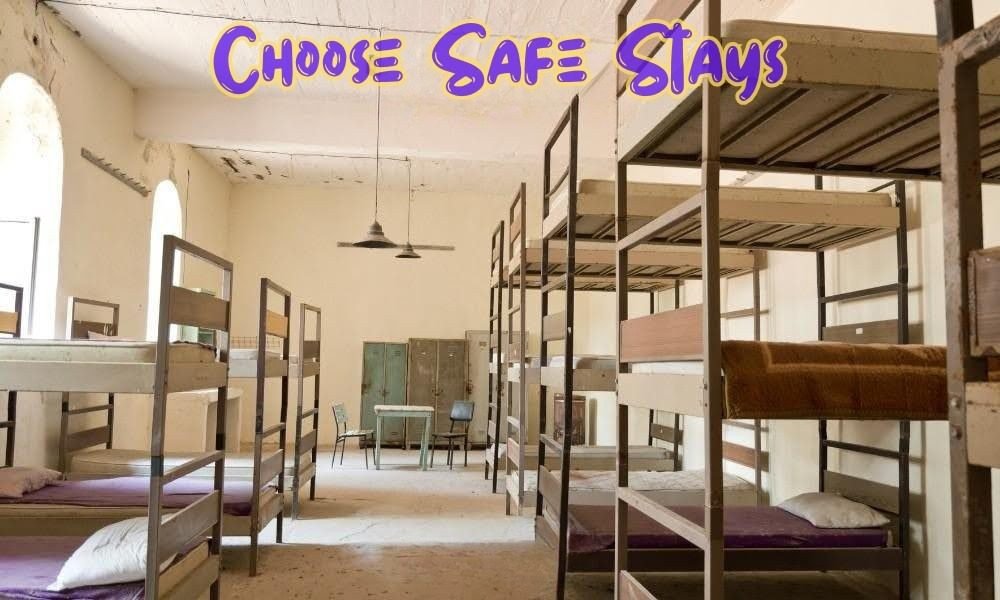
Older travelers often prefer hotels or private Airbnbs for quieter rooms and more personal space, and that’s just as valid a choice. Whatever you book, inspect the room on arrival: confirm windows lock properly, check that no one can enter from outside, and report broken locks before settling in. A portable door wedge alarm adds an extra layer of protection even if the lock itself is weak.
How to Stay Safe in Every Taxi and Rideshare You Take
Track your ride on a map from the moment you get in, and watch that the driver is following a sensible route to your destination. An unexpected detour is a clear red flag. Share your location with a friend before every journey; it takes ten seconds, and if anything feels off, someone already knows your route.
I once took a taxi that veered off the main road toward a dark, unfamiliar area. I called a friend out loud and read the number plate clearly; the driver corrected course without another word.
Book rideshare apps over random taxi stands whenever possible, and check the driver’s rating before you get in; a poor rating is worth the wait to cancel and rebook. Avoid late-night journeys where public transport is your only option, and stick to well-lit, busy routes instead of a shortcut through empty streets. Agree on a fare before getting in if there’s no meter, sit behind the driver rather than beside them, and stay off your phone during the ride so you stay alert to your surroundings the entire way.
A quick note on the “night rules”: most reported incidents involving solo travelers happen after dark, in low-traffic areas, often on the walk home from a bar or restaurant alone. It’s not about fear; it’s simple risk reduction. If you’re out at night, plan your return route before you leave, stick to busy and well-lit streets, and have your accommodation address ready to show a driver.
Tip 8: Watch Your Drinks and Limit Alcohol
Getting intoxicated while traveling alone in an unfamiliar place is a real risk; alcohol lowers your guard and slows your reactions fast. Staying smart about drinking isn’t about missing out on fun; it’s about getting home safely at the end of the night.
Stay attentive to your surroundings even on a good night out; visible intoxication reads as vulnerability to the wrong people. Never leave a drink unattended around people you don’t fully trust; drink spiking is a real and well-documented risk in nightlife scenes worldwide. While living in South Korea, I heard a story through a local expat group that stayed with me for years: a woman had her drink spiked after accepting a round from strangers and had no memory of leaving the bar.

Keep at least one person in your group sober through the night, or if you’re alone, pace your drinks deliberately. Two over an evening still lets you enjoy yourself without losing awareness. Trust your gut about anyone pushing drinks on you; staying sharp is what keeps a good night good.
Tip 9: Trust Your Instincts and Get Loud If You Must
Your gut instinct is the one travel companion that never lets you down; it picks up on danger before your conscious brain processes it. Learning to trust your intuition is one of the most powerful safety skills any solo traveler can build.
Many women are conditioned to stay polite even when something feels deeply wrong. That habit can pull you directly into danger; being firm and saying no clearly matters more than keeping the peace with a stranger. Practice listening to your instincts in small, everyday moments, not just big ones; the more you listen, the sharper it gets.
When something feels off, act immediately:
- Move away from the situation without hesitating or explaining yourself
- Change your route, your plans, or your pace the moment something feels wrong
- Walk into a busy, well-lit space if someone is bothering you on the street
- Use your voice, loudly and clearly, to draw attention if you need help
I once felt uneasy about a man standing too close in several different spots around Lisbon. My instincts told me to change direction fast, and that single decision kept me completely safe.

Apps like One Scream trigger a loud alarm through your phone with a single shout, and a panic button app sends your location to backup contacts instantly during distress. These work best paired with sharp instincts and a solid backup plan. Never wait for a situation to escalate before reacting.
Tip 10: Have Emergency Contacts and Safety Apps Ready
Be Prepared Before an Emergency Happens
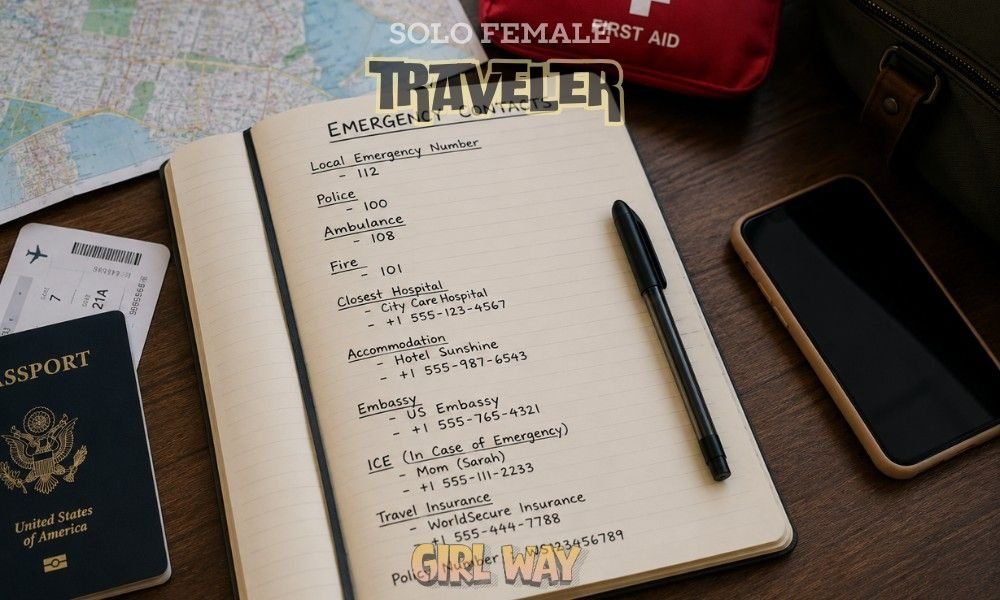
Knowing what to do before a crisis hits is what separates a stressful trip from a genuinely dangerous one. Building your backup plan before you land, not after something goes wrong, is the smartest move you can make.
Emergency numbers aren’t standardized worldwide. Save the right one for your destination before you need it:
| Region | Emergency Number | Notes |
|---|---|---|
| North America | 911 | Works across the US, Canada, and Mexico |
| Europe | 112 | Universal EU emergency number, works across most of the continent |
| United Kingdom | 999 | Also accepts 112 as a backup |
| China | 119 | Fire-specific; use 110 for police, 120 for ambulance |
| Not sure of the local number? | TripWhistle app | Auto-detects your location and shows the correct local emergency number instantly |
Tell friends and family exactly where you’re going before each leg of your trip, and share your accommodation details as they change. Your local support network back home is your first line of safety, and if you’re a US citizen, enrolling in STEP means your embassy already has your itinerary on file.
When you arrive somewhere new, build a small local support system quickly: ask your hotel concierge for trusted contacts and safe-area advice, carry a printed card with your accommodation address in the local language, and don’t underestimate a quick conversation with a local for insight no app provides. I once asked a concierge in Vietnam to write emergency contacts on a small card for me; it stayed in my pocket every day and made me feel genuinely backed up in an unfamiliar city.
Organizations like the International Greeter Association connect you with local volunteers who show you around their hometown for free, a low-effort way to build both insight and local support fast.
Never rely on a single point of help. Save emergency numbers offline, keep a physical contact card in your bag, and build a small network of trusted local contacts at each destination.
Top Safety Apps for Solo Female Travelers
| App | What It Does |
|---|---|
| Navigation | |
| Google Maps | Walking routes, live traffic, and public transport in most major cities |
| Citymapper | Sharper, more detailed public transport routing in big cities |
| Maps.me | Works fully offline ideal for remote areas with no signal |
| TripWhistle | Instant access to the correct local emergency number, no data required |
| Personal Safety | |
| bSafe | Sends emergency alerts to trusted contacts; includes a fake-call feature to exit uncomfortable situations |
| TravelSafe | Covers medical assistance and emergency services by country; pairs well with travel insurance |
| Life360 | Real-time location sharing with family and friends |
| Watch Over Me | Monitors your journey and auto-alerts contacts if something feels wrong |
| Language | |
| Duolingo | Builds basic language skills before you arrive |
| Google Translate | Reads signs and menus and supports live conversation through your camera |
| Community | |
| Couchsurfing | Connects you with vetted local hosts offering free accommodation |
| Meetup | Surfaces local events for meeting like-minded travelers in a group setting |
| Finance | |
| Revolut / Monzo | Low-cost currency exchange and real-time spending alerts |
| Wise | Reliable for ATM withdrawals abroad with transparent exchange rates and minimal fees |
I once lost signal in rural Japan with no offline maps saved; that single experience is what pushed me to build a proper app system I never travel without now.
Not Ready to Go Fully Solo? Consider a Women-Only Group Tour
Solo travel doesn’t have to mean traveling completely alone every step of the way. Women-only group tours have grown quickly as a middle-ground option. You get the confidence and empowerment of choosing to go without a partner, plus the built-in structure, vetted logistics, and community of a group.
This is worth considering for a first trip to a destination that feels intense to navigate alone, or simply on days when you’d rather not handle every logistic solo. Many solo female travelers mix formats entirely, flying in on their own, joining a women-only tour for part of the trip, then breaking off to explore independently again. There’s no rule that says it has to be one or the other, and our guide to the best places to travel solo flags which destinations tend to suit each style.
| Aspect | Fully Solo | Women-Only Group Tour |
|---|---|---|
| Flexibility | Total control over pace, route, and plans | Fixed itinerary, less room to improvise |
| Cost | Usually cheaper, but watch for solo-supplement fees | Higher upfront cost, but often bundled and predictable |
| Safety net | Built entirely by you: apps, contacts, research | Built in local guides, vetted logistics, group support |
| Social connection | Depends on effort hostels, meetups, local groups | Instant a ready-made group of like-minded women |
| Best for | Confident travelers, repeat destinations, tight budgets | First trips to intense destinations, solo-hesitant travelers |
Bonus Tips Every Solo Female Traveler Needs to Know
Carry a Personal Safety Tool
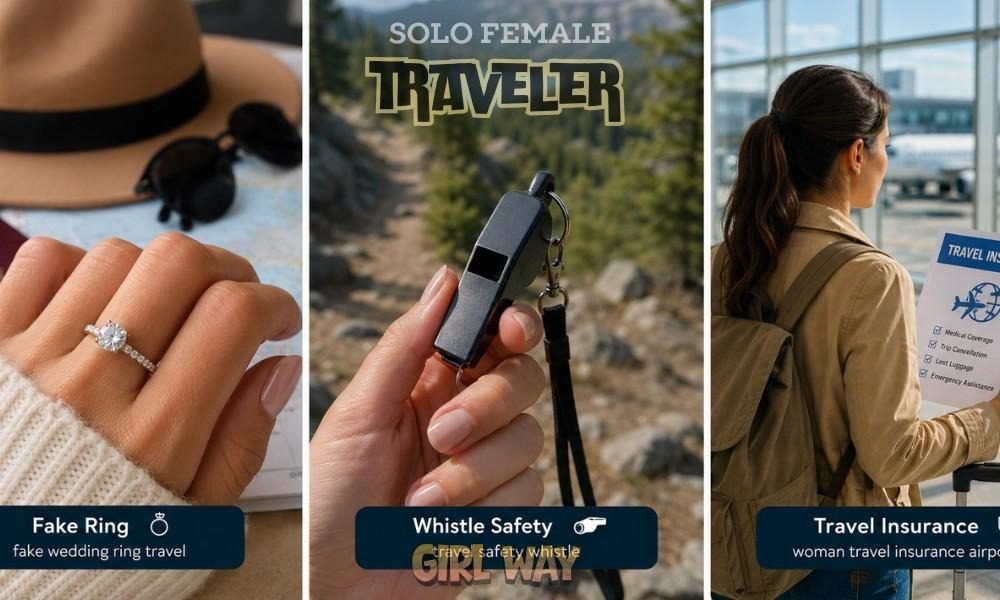
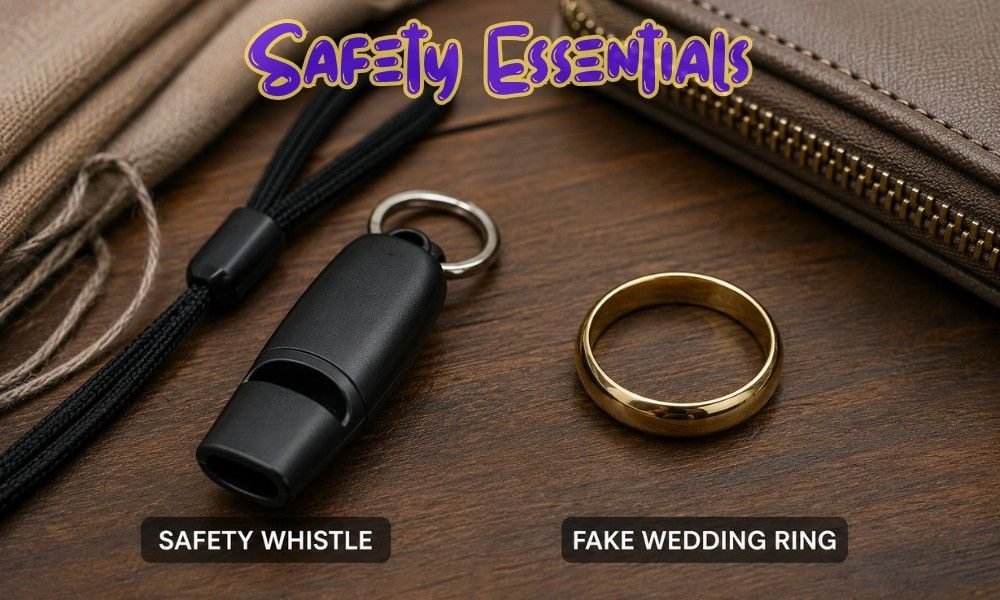
- A loud safety whistle is legal almost everywhere and draws immediate attention in a crisis
- Pepper spray is effective but banned in several countries; always check local laws before packing it
- A small pocketknife serves practical, everyday purposes and can double as a defense tool if needed
- Keys held between your knuckles are a last-resort option many women use instinctively
I started carrying a whistle after a dark walk back to my hostel felt deeply wrong. It cost almost nothing and completely changed how secure I felt.
Stay Smart on Social Media During Your Trip
- Avoid real-time location tagging while you’re still at that location
- Posting your exact spot publicly can signal that you’re solo and currently there
- Share your stories after you’ve moved on, not while you’re still on-site
- Even in a hyper-connected world, oversharing your solo movements in real time carries real risk
Wear a Fake Ring: A Small, Effective Trick
A ring that reads as a wedding band signals you’re married rather than traveling solo. In certain destinations, this alone reduces unwanted attention. It isn’t dishonest; it’s a quiet, low-effort safety measure that many experienced solo travelers swear by.
Get the Right Travel Insurance: Non-Negotiable
Never skip travel insurance. It’s one of the most important line items in your trip budget, and an uninsured international hospital visit can devastate your finances in a single incident. Coverage should include:
- Medical emergencies and international hospital stays
- Trip cancellations and delayed flights
- Lost luggage, theft, and stolen belongings
- Emergency evacuation and repatriation
SafetyWing is built for digital nomads and long-term travelers, with flexible, affordable plans. World Nomads suits adventure travelers doing hiking, diving, or other outdoor activities.
I once dealt with lost luggage and a minor medical emergency on the same solo trip. My World Nomads policy covered both without argument, a single decision that saved me well over a thousand pounds in unexpected costs.
Pack for Your Health, Not Just Your Itinerary
Healthcare access and even the legality of certain medications and reproductive health products vary significantly by country. Pack any prescriptions, contraception, or health items you might not easily find abroad, and check your destination’s health guidance the US State The department’s women travelers page is a useful starting point for understanding how local laws might affect your healthcare options while traveling.
FAQs
Yes, with the right preparation, awareness, and safety tools, solo female travel is safe for the vast majority of trips. Millions of women travel confidently alone every year, and safety consistently comes down to preparation rather than luck.
Thorough pre-trip research. Check crime data and safety indices for your destination, download offline maps, sort your travel insurance, and share your itinerary with trusted contacts before you leave.
Use an anti-theft bag, carry padlocks, keep your bag in front of you in crowds, and never leave valuables unattended in public areas or hostel dorms.
Trust your gut immediately. Move to a busy, well-lit area, use your voice loudly, and activate a safety app like bSafe or a panic-button app right away.
Yes, without exception. Travel insurance covers medical emergencies, lost luggage, trip cancellations, and stolen belongings, protecting both your safety and your budget at once.
Neither is inherently safer; they suit different travelers and different trips. A women-only group tour adds built-in structure and community, which can ease a first trip to an unfamiliar destination, while solo travel offers total flexibility. Many women use both formats across a single trip.
Conclusion
Solo female travel is one of the most rewarding decisions you’ll ever make. Every tip in this guide exists for one reason: to keep you safe, confident, and fully in control of your own journey.
Safety isn’t about fear; it’s about being prepared enough to enjoy every moment without constant worry. The women who travel best aren’t the bravest; they’re simply the most informed.
Trust your gut. Protect your belongings. Share your location. These three habits alone will carry you further than any single piece of gear ever could.
Pack your bags, download your apps, sort your travel insurance, and go. Your next adventure is already waiting. If you’re still deciding where, our guide to the safest countries for solo female travelers is a good place to start.
About the Author
Katherine writes about solo female travel safety, packing, and destination planning at Girl Way, drawing on years of solo trips across Europe, Asia, and Latin America. She checks every safety tip against current travel advisories before publishing.
