
Is Chiang Mai Safe for Solo Female Travellers? The Short Answer
Yes, Chiang Mai is safe for solo female travellers, and it is one of the easiest first cities in Southeast Asia for a woman travelling alone. The Numbeo Safety Index ranked Chiang Mai the number one safest city in Southeast Asia in both 2025 and 2026, with a score of 77.9 and a 19th place ranking globally in February 2026. That ranking is a perception index, built from what residents and visitors report feeling, not a count of police crime statistics, so read it as a measure of how safe the city feels day to day. The official advice points the same way. Thailand sits at Level 1, exercise normal precautions, on the US State Department advisory issued on 7 July 2026, with no Chiang Mai specific warning, and the exceptions in that advisory sit far away in the southern provinces of Yala, Pattani and Narathiwat and near the Thai-Cambodian border. The safety detail for the whole country is our Thailand safety guide, and the places it fits with are our best places in Thailand for solo female travellers.
Why Chiang Mai Is the Confidence Builder City
Chiang Mai builds confidence because it is small enough to learn in a day and busy enough that a woman alone never feels out of place. The old city is a square about a mile and a half across, ringed by a moat and old walls, and most of what a first timer wants sits inside it or a short walk outside it. Temples, cafes, markets, cooking schools and hostels share the same streets, so the city rewards walking, and walking is how a new place stops feeling strange. Other solo women are everywhere here, in hostels, in cooking classes, on day trips to the mountains, and that matters more than any ranking. A city where women travel alone openly is a city where a woman alone is normal, not noticed.
The pace helps too. Chiang Mai moves slower than Bangkok, the traffic is lighter, the streets are flatter, and the evenings start early and end early. A first timer can eat dinner at a night market, walk back to a guesthouse on a lit street, and be in bed by ten without feeling she missed the city. That slow rhythm is why Chiang Mai works as a first stop, and why so many nervous first timers say the city settled them within a day.
Where to Stay in Chiang Mai: Old City and Nimman
Stay in the Old City or in Nimmanhaemin, known as Nimman, and the trip gets easier from the first night. The Old City is the walkable base, with temples on nearly every street, guesthouses and hostels inside the walls, and the Sunday Walking Street filling the main road once a week. The streets are well lit, the cafes stay open late, and a woman walking back after dinner is one of many people on the same street. Nimman sits west of the old city, around the university, and it is the modern base, with cafes, bookshops, boutiques, night markets and hostels that run meetups and walking tours. Nimman suits a longer stay, a slower morning, and a traveller who wants to work from a cafe for a few hours before heading out.
Pick the base by the trip, not by the price. The Old City suits a short first stay, three or four nights, when temples and markets are the plan and walking is the transport. Nimman suits a longer stay, five nights or more, when the plan includes a cooking class, a day trip, and a slow day with no plan at all. Either way, book a place with 24 hour reception, a keycard or a code lock, and a locker in the room, and read reviews from solo female travellers before booking, because a review that mentions a lit street and a helpful front desk tells more than a star rating. Staying in either base puts the night markets, the temples and the cafes within walking distance, and the cafes are the reason to stay a few days longer.
What to Watch After Dark: Loi Kroh and Santitham
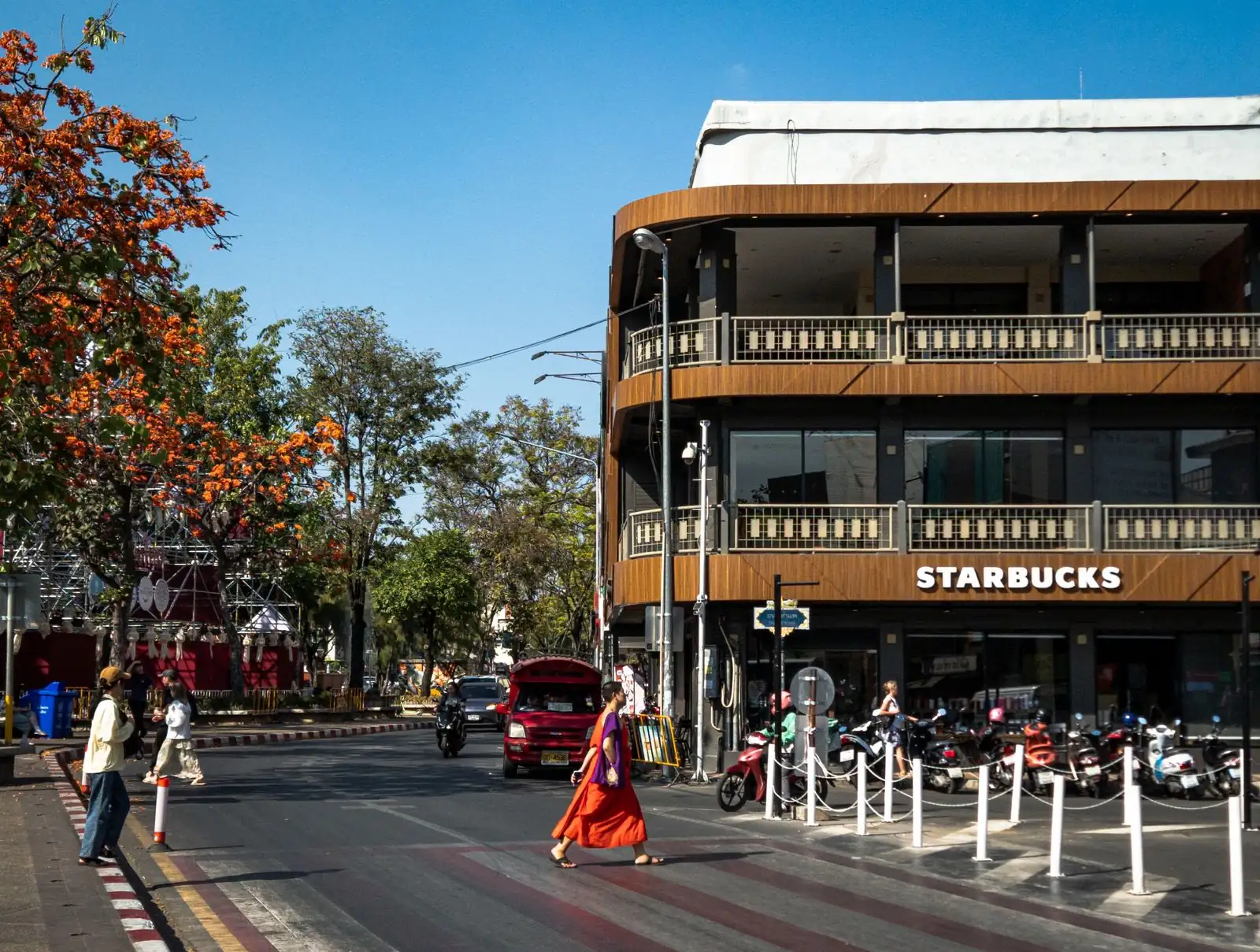
Chiang Mai after dark is calm in most places and loud in one, and knowing which is which keeps the evenings easy. Loi Kroh Road, on the east side of the old city, is the nightlife strip, with bars that stay open late and a crowd that gets rowdier as the night goes on. Walking through it in the early evening is fine, but a woman alone late at night is better on the main roads around Tha Pae Gate, where the light and the people stay thick. The rule is simple and it works in every city: stay where the light and the people are, and leave a street when both thin out.
Santitham, the quiet neighbourhood north of the old city, needs the same care for a different reason. Its small lanes, called sois, are residential and dark after dark, with few shops open and few people walking. A guesthouse there can be lovely in daylight and hard to find at night, so if the stay is in Santitham, take a Grab back after dark rather than walking the last stretch. None of this is a warning against Chiang Mai at night. The night markets run until late, the old city stays busy, and a woman who picks a lit main road and a Grab for the last stretch has an easy evening. The caution is narrow, and it is only about two small areas after dark.
The Biggest Risk Is Not Crime: Scooters
The biggest risk in Chiang Mai is not crime. It is scooters. Scooter and motorbike accidents are the leading cause of serious injury and death among visitors in Thailand, and Chiang Mai, with its mountain roads and its rental shops on every corner, is where that risk shows up most for first timers. The rental looks easy and cheap and the helmet looks optional, and every part of that feeling is wrong. Mountain roads turn sharply, rain makes them slick, and a visitor who has never ridden a scooter in traffic is learning on roads she does not know, in a country that drives on the left.
Skip the rental. Use Grab for anything further than a walk, use a songthaew, the shared red truck taxi, for short hops around the old city, and book a driver or a small group tour for the mountain temples and the day trips. A Grab costs little, the driver knows the roads, and the trip is tracked on the phone. If a day trip needs a scooter, go with a licensed tour that provides a driver, not a self ride. Travel insurance that covers road accidents matters here more than anywhere else on the trip, so check the policy before booking, because many standard policies exclude scooter riding entirely. The city is safe to walk, safe to ride in a car, and safe to explore by tour. The one thing to avoid is a scooter with no experience behind it.
Petty Theft, Tuk Tuks and Gem Shop Scams
Petty theft is the crime that actually happens in Chiang Mai, and it happens in crowds, not in dark streets. Night markets, the Sunday Walking Street and the busy temple gates are where a bag left open or a phone left on a table goes missing, so wear a crossbody bag in front, keep the phone in a pocket when the crowd thickens, and leave the passport in the hotel safe with a photo of it on the phone. A bag left on a cafe chair while its owner orders at the counter is the most common loss in the city, and it is the easiest to prevent. Chiang Mai is not a pickpocket city the way some European capitals are, but a crowded market is a crowded market anywhere, and the same habits work here.
Tuk tuk drivers near the temples and the night markets quote high prices to visitors who look new, so agree the price before getting in, or use Grab and skip the negotiation entirely. Gem shop scams follow a familiar script in Thailand: a friendly stranger, often near a temple, mentions a special gem sale or a lucky day, and a shop that looks official sells stones worth a fraction of the price. Walk away from any shop a stranger recommends. Drink safety matters on nights out too, so watch the drink being made, keep it in hand, and never accept a drink from a stranger. These are small habits, and they cover nearly all of the crime a first timer will ever meet in Chiang Mai.
Getting Around Chiang Mai Alone
Getting around Chiang Mai alone is easy once the first Grab is booked. Grab works across the city, the price shows before the ride, and the trip is tracked, so a woman alone at night has a car with a known driver and a known route. Songthaews, the red shared trucks, run set routes around the old city and out to the temples, and they are cheap and safe in daylight, with a fixed fare agreed before boarding. Walking is the best transport inside the old city, because the streets are flat, the distances are short, and the temples reward the traveller who arrives on foot.
For the mountain temple of Wat Phra That Doi Suthep, take a songthaew from the old city or book a small group tour, because the road climbs steeply and the shared ride is the normal way up. For day trips further out, book a tour with a licensed operator and a driver. A woman alone on a group day trip meets other travellers, shares the transport, and has a guide who knows the roads.
Burning Season and the Best Time to Go
The best time to visit Chiang Mai is November to February, when the air is cool and dry, the mornings are fresh, and the heat of the Thai summer has not arrived. This is the season to pick for a first trip, because the walking is easy, the mountain views are clear, and the Yi Peng lantern festival lights the city in November. Hotel prices rise in this season and the city fills up, so book the first nights early, and expect the Sunday Walking Street to be at its busiest. The cool season is the reason Chiang Mai feels at its best, and it is the season most first timers remember.
Burning season, from late February to mid April, is the time to avoid if the trip can move. Farmers burn fields across the north, and the smoke settles over the city, pushing PM2.5 levels to levels that can reach hazardous on the worst days. A traveller with asthma or a breathing condition should not plan a trip in this window. The hot season that follows, from March to May, brings heat that makes midday walking hard, so plan the temples for the early morning and the cafes for the afternoon.
What to Do If Something Goes Wrong
If something goes wrong, the number to call is the Tourist Police on 1155, an English speaking line that handles exactly the problems a visitor meets, from a lost bag to a scam to a road accident. The local police number is 191 and the ambulance number is 1669, and the full emergency detail is our Thailand safety guide. Save 1155 in the phone before the trip, along with the hotel address in Thai script, because a Grab driver reads Thai faster than English and a late night arrival goes smoother with the address ready. A photo of the passport, a photo of the travel insurance card, and the hotel name on the phone cover most of what a bad evening can ask for.
For a medical problem, the private hospitals in Chiang Mai are well equipped and used to foreign patients, so ask the hotel front desk for the nearest one and go there rather than waiting. For a lost passport, the Tourist Police can help with the report a replacement needs. For a scam, walk away first and report second, because the money is rarely recoverable and safety matters more than the argument.
FAQs: Is Chiang Mai Safe for Solo Female Travellers?
Yes. Chiang Mai was ranked the number one safest city in Southeast Asia by the Numbeo Safety Index in both 2025 and 2026, with a score of 77.9 and a 19th place global ranking in February 2026. Thailand is Level 1, exercise normal precautions, with no Chiang Mai specific warning. Stay in the Old City or Nimman, use Grab at night, and skip the scooter rental.
Stay in the Old City for a short first stay, with temples, markets and hostels inside the walls, or in Nimman for a longer stay, with cafes, bookshops and meetups around the university. Both are walkable and well lit. Book a place with 24 hour reception, a keycard or code lock, and a locker, and read reviews from solo female travellers before booking.
Yes, on the main roads and in the night markets, where the light and the people stay thick. Be more careful late at night on Loi Kroh Road, the nightlife strip, and in the dark residential sois of Santitham. Take a Grab back to the hotel after dark rather than walking the last stretch on a quiet lane.
Scooter and motorbike accidents are the leading cause of serious injury and death among visitors in Thailand, not crime. Skip the scooter rental, use Grab or a songthaew in the city, and book a driver or a group tour for mountain roads. Check that travel insurance covers road accidents before the trip.
November to February is the best time, cool and dry, with clear mountain views and the Yi Peng lantern festival in November. Avoid burning season, late February to mid April, when smoke can push PM2.5 to hazardous levels, and plan midday around the heat in the hot season from March to May.
Check the visa rules on the official advice and the embassy page before booking, because the rules have changed repeatedly and sources disagree on the details. Do not trust a blog post from three years ago. This post does not give a stay length, because the number is not settled.
Chiang Mai is the calmer first stop, with a walkable old city, a slower pace and a big solo travel community, while Bangkok is the bigger first base, with more transport and more to see. Many first trips use both, a few nights in Bangkok first and then Chiang Mai to slow down. The Bangkok stays guide in this series covers where to base in Bangkok, and the Thailand hub covers how to put the two together.